No Tabaski in Bamako: terrorism steals the joy of Eid in Mali
For the past 30 years, Alfa Amadou has made it a habit to spend Eid al-Adha in his hometown of Bamako. But this year, he finds himself forced to give up his usual journey.
Amid a blockade imposed on Mali’s capital by terrorists from the Group for the Support of Islam and Muslims (linked to Al-Qaeda), Muslims are being forced to celebrate Eid al-Adha—locally known as “Tabaski”—away from their families, as return routes have been cut off.
-
Terrorism in Mali: Al-Qaeda Targets “Dozo” Hunters with Drones
-
Warnings of Escalating Terrorism in Mali After European Troops Withdraw
Alfa, 40, originally from Mopti in central Mali, has abandoned his usual trip home. He told Agence France-Presse: “For the first time in 30 years of living in Bamako, I will celebrate Eid here.”
Since late April, terrorists affiliated with Al-Qaeda’s Sahel branch have imposed a ground blockade on major roads leading to the capital, burning dozens of buses and transport trucks.
Although the blockade is not total, images of charred vehicles have led many transport companies to suspend operations and have discouraged travelers from returning to their villages.
Eid al-Adha in Mali goes beyond its religious dimension, serving as a major social occasion that brings together families separated by work.
-
No Tabaski in Bamako: terrorism steals the joy of Eid in Mali
-
Terrorism map in Mali: seven organizations and intertwined networks
“No Tabaski”
This year, however, the holiday looks different: Bamako’s bus stations, once bustling with activity, are now quiet due to the security situation and a fuel shortage that has also affected the transport sector.
A local travel agency owner, speaking on condition of anonymity, said: “We are not only suffering from a lack of diesel; we have also lost buses in recent events. It is a major economic loss.”
A transport company manager said: “We usually transported more than 50,000 people from Bamako to other regions within a week for Tabaski. This year, we are not planning any trips.”
-
Terrorism in the Sahel enters a phase of influence management through an increasingly exposed Mali
-
Mali Between Fuel Crisis and Expanding Terrorism: Is Al-Qaeda Approaching the Gates of Bamako?
Warra Bagaïouko used to prepare his car every year to travel with his family to Ségou in central Mali for the celebrations. But this time, he is likely to stay in the capital, as even private vehicles have become targets.
He said: “This is the first time in 30 years that I will not celebrate Eid in my village. The road has become extremely dangerous.”
Omar Diarra noted: “We used to travel about 20 people together on motorcycles to Sikasso in the south to celebrate. This year, we will stay in Bamako.”
Despite this, some minibuses still reach the city via secondary roads or under military escort.
-
Terrorism in the Sahel: Mali Accuses Ukraine and Warns the West
-
Mali accuses Algeria of supporting “international terrorism”: diplomatic showdown at the UN
Livestock shortage
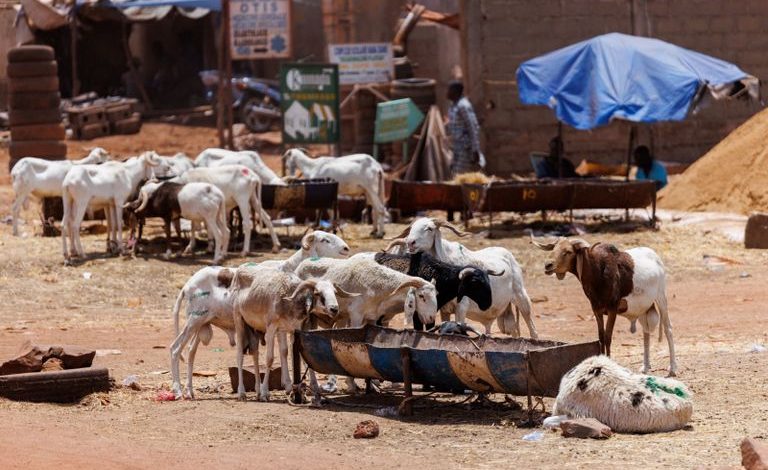
Transport disruptions have crippled the livestock trade, which is essential for sacrificial rituals during Tabaski.
Due to the blockade, herders and traders struggle to bring animals to Bamako, the country’s main consumer market.
Alassane Méïga said the cost of transporting a single animal, which previously ranged between 2,500 and 2,750 francs (about $5), has risen this year to between 15,000 and 18,000 francs (26–31 dollars).
-
Terrorism spreads in Burkina Faso: isolated bases become a new target
-
Terrorism escalates in Nigeria ahead of elections: a western hotspot and a struggle for influence
As a result, sheep have become scarce and expensive in a country where the monthly minimum wage is no more than 40,000 francs.
According to Bamako trader Hamy Ba, “terrorists have burned many sheep transport trucks… I usually have more than a thousand animals, but today I have none.”
Another resident, Eiye, searching for an affordable sacrificial animal, said: “The sheep we used to buy for 75,000 francs is now sold for 300,000.”
-
Somalia’s “Danab” Unit: From Counterterrorism to Accusations of Theft
-
Continued Terrorism Confrontation by Somalia Against Al-Shabaab
Power cuts
The security crisis has seeped into daily life, worsened by the deterioration of essential public services.
Bamako is experiencing long electricity outages and severe shortages of drinking water. Even festive clothing, known as “selifini,” remains unfinished in tailoring workshops due to frequent power cuts.
Tailor Alou Diallo said: “We tried using a small solar panel, but it cannot replace electricity.”
-
Crisis cell and 16 presidential directives: full mobilization in Mali to prevent collapse
-
Iyad Ag Ghali, the desert fox threatening Mali
Families are also worried about food preservation during the holiday. A mother living on the outskirts of Séra Koro asked: “How can we preserve meat without electricity? Buying an expensive sheep only for it to spoil within 24 hours because of power cuts is worrying.”
In recent days, authorities announced the arrival of hundreds of fuel tankers in the capital, offering some hope of improvement.
But for many, the road home to celebrate the holiday already seems closed.
-
First official appearance of Mali’s military council leader since the Saturday attacks
-
Al-Qaeda before the Malian storm: leadership changes and the choking of arteries
-
Gunfire near the palace: what is happening in Mali?