The Pentagon deploys a new weapon as part of its operations in Iran
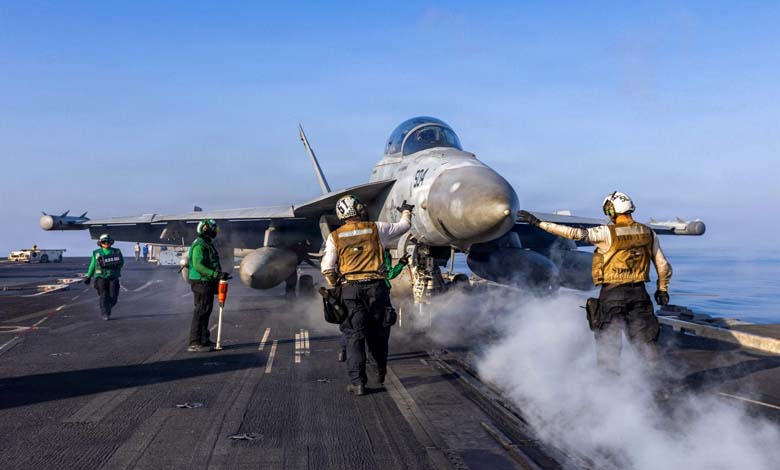
As part of its military operations in Iran, the U.S. Department of Defense announced the use of a new weapon whose deployment had never previously been made public.
The Pentagon stated that the United States has deployed unmanned fast boats to conduct patrols as part of its operations targeting Iran, marking the first time Washington has confirmed the use of such vessels in an ongoing conflict.
The deployment of these boats, which can be used for surveillance or to carry out suicide attacks, had never been announced before. This comes despite a series of setbacks the U.S. Navy has faced over the years in its effort to build a fleet of unmanned vessels, according to a Reuters report last year.
The importance of unmanned vessels has become more evident in recent years after Ukraine used fast boats loaded with explosives to inflict significant damage on Russia’s Black Sea fleet.
Iran has used naval drones to attack oil tankers in the Gulf on at least two occasions since the United States and Israel launched their strikes about a month ago. There has been no indication that the United States has used unmanned vessels in attacks.
In response to Reuters’ questions, Tim Hawkins, spokesperson for U.S. Central Command, said that unmanned boats produced by Maryland-based company Black Sea, known as the “Autonomous Global Reconnaissance Vehicle,” took part in patrols within the framework of the U.S. campaign against Iran, dubbed “Epic of Wrath.”
Hawkins added: “U.S. forces continue to employ unmanned systems in the Middle East, including unmanned boats such as the Autonomous Global Reconnaissance Vehicles. This particular type has logged more than 450 hours of sailing and traveled more than 2,200 nautical miles during maritime patrols in support of Operation Epic of Wrath.”
Hawkins declined to provide details about other unmanned systems involved, and Black Sea also declined to comment.
For years, the United States has sought to build a fleet of unmanned ships and boats operating above and below the water’s surface as a less costly and faster-deploying alternative to crewed ships and submarines, particularly in response to China’s growing naval influence in the Pacific.
However, this effort has fallen behind schedule and has encountered numerous technical challenges, cost concerns, and a series of obstacles during testing phases.
Reuters reported last year that the angular, approximately five-meter-long fast boat of the Autonomous Global Reconnaissance Vehicle experienced multiple performance and safety issues, including a high-speed collision with another vessel during a military test.
An informed source said that a boat of this type malfunctioned during another failed test in the Middle East in recent weeks.
Hawkins declined to comment on the obstacles encountered during testing.
He said: “The Autonomous Global Reconnaissance Vehicle system represents an emerging capability and is part of a fleet of unmanned surface vessels operated by the U.S. Fifth Fleet to enhance situational awareness in territorial waters.”
Earlier, the United States announced the deployment of the first squadron of low-cost attack drones, “LUCAS,” in the Middle East.
By deploying the “LUCAS” drones, the Pentagon is adding a low-cost, easily deployable tool capable of responding rapidly to emerging threats, reflecting a shift toward more flexible deterrence in a volatile region.