The Sudanese army’s bombardment in Kutum opens an investigative inquiry into the targeting of a wedding ceremony and allegations of a catastrophic error in North Darfur
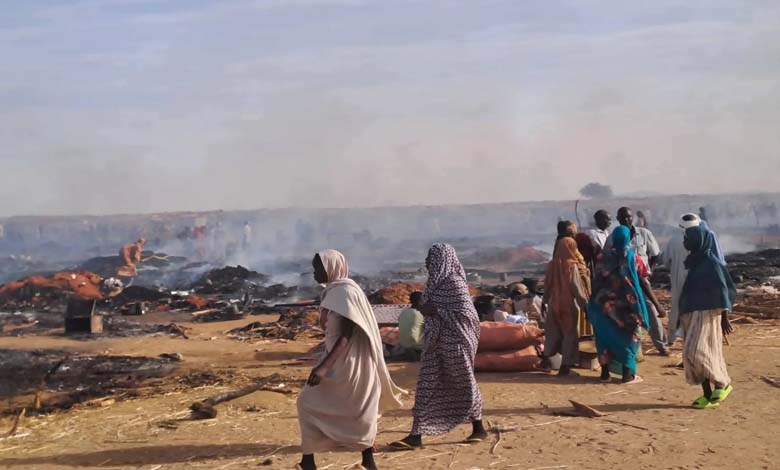
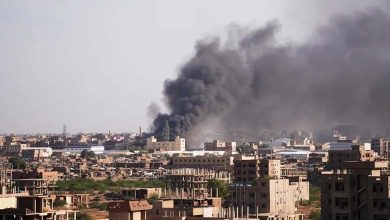
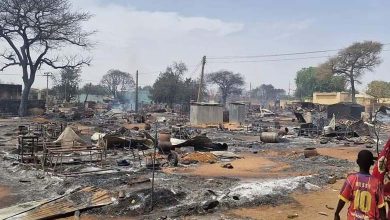
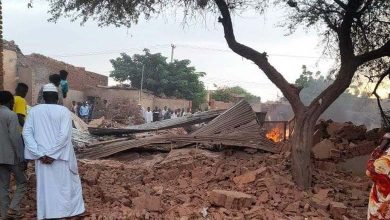
On the evening of April 8, 2026, the town of Kutum in North Darfur State did not expect a moment of joy to turn into one of the deadliest incidents in the ongoing Sudanese conflict. The Al-Salama neighborhood was alive with a traditional wedding celebration, bringing together families and neighbors in a normal festive atmosphere, before everything changed within moments when a projectile dropped by a drone struck, killing around 30 civilians, according to local sources and eyewitnesses.
What may initially appear to be a routine shelling incident within the context of war reveals, upon closer examination, a series of complex questions regarding the nature of the targeting, the accuracy of intelligence, the mechanisms of military decision-making, and the level of compliance with international humanitarian law in conflict zones.
Field accounts that differ in detail but agree on the outcome
Testimonies from residents of Al-Salama in Kutum converge on one essential point: there was no military activity in the area at the time of the strike. The location was dedicated to a wedding ceremony, attended by civilians of various ages, including a large number of women and children. One witness stated that “the explosion was sudden and so violent that it was impossible at first to understand what had happened,” while others described a state of collective panic that immediately followed the shelling.
Despite differences in specific details, all accounts agree on one element: the victims were entirely civilians and the site showed no sign of military use.
The question of the target: how are locations selected in drone strikes?
In modern conflicts, armed parties increasingly rely on drones to conduct airstrikes, raising complex challenges related to targeting accuracy. These systems typically depend on intelligence data collected from multiple sources, such as aerial surveillance, communications, or human intelligence.
But in the case of Kutum, a fundamental question arises: was the information used accurate, or was there an error in target identification?
Former military sources have indicated in similar contexts that identification errors may occur when relying on incomplete data or when operational environments are subject to interference. In such cases, a civilian gathering may be classified as a suspicious target, particularly if the surrounding area experiences military activity.
However, even if this explanation were accurate, it does not absolve legal and moral responsibility, as the rules of engagement under international humanitarian law require rigorous verification before any strike that may affect civilians.
The absence of warning and the timing of the strike
One of the striking aspects of the Kutum incident is the absence of any prior warning to residents. In many military operations, especially in populated areas, warning or monitoring measures are sometimes used to reduce human casualties. In this case, however, the bombardment occurred directly and immediately.
The timing of the attack during a wedding ceremony increases the sensitivity of the incident, as it raises the possibility of “an error in timing selection” or “a misjudgment of the nature of the activity.”
Fragile medical infrastructure amplifies the number of victims
Immediately after the shelling, residents faced significant difficulties in assisting the wounded. Local sources confirmed that medical capabilities in the area are extremely limited and that the nearest hospital lacks sufficient equipment to handle mass casualties of this scale.
This factor played a direct role in increasing the death toll, as some of the injured were unable to receive timely treatment. This highlights another dimension of the crisis, related not only to the shelling itself but also to the collapse of infrastructure in conflict zones.
Drones and the transformation of the nature of warfare
The use of drones in Sudan reflects a shift in the nature of warfare from traditional confrontations to technology-driven remote conflict. While this shift theoretically provides greater precision, in practice it increases the likelihood of fatal errors when intelligence information is incomplete.
In the case of Kutum, no confirmed information is yet available regarding the type of drone or the party that carried out the strike, further complicating the situation and making the investigation more difficult.
International humanitarian law under scrutiny
Under the rules of international humanitarian law, targeting civilians or civilian gatherings is strictly prohibited. The principle of distinction between military and civilian targets is one of the fundamental pillars of the laws of war.
If it is proven that the strike targeted a civilian gathering without imperative military necessity, this could constitute a serious violation, potentially opening the door to international investigations.
The absence of an official narrative
At the time of writing this report, no official authority has issued a detailed explanation of the incident. This absence creates a significant information vacuum, allowing multiple narratives and speculation to spread, thereby increasing tension and uncertainty.
Calls for an international investigation
Human rights organizations have called for an independent investigation involving the collection of field evidence, analysis of munition remnants, and hearing testimonies from victims. These steps, although difficult in a deteriorating security environment, are considered essential for establishing accountability.
Preliminary investigation conclusion
The Kutum incident is not merely another figure in the casualty count, but a clear example of the complexities of modern warfare in Sudan, where technology intersects with weak intelligence and the fundamental mechanisms for civilian protection collapse.
What happened raises a broader question beyond “who carried out the strike?” to a deeper inquiry: how have civilian gatherings become potential targets in a conflict that is supposed to adhere to international law?