Walking Backward: A Health Trend That May Not Be as Revolutionary as It Sounds
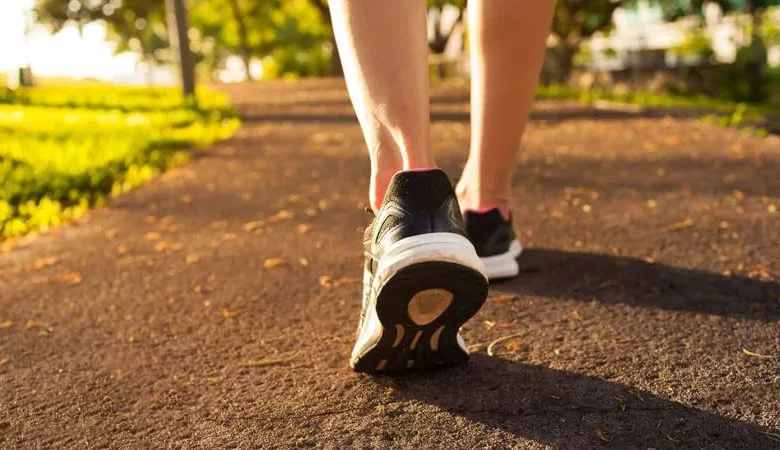
Walking backward in a park or on a treadmill may look strange, even slightly amusing. Yet the practice has been gaining attention on social media, where it is sometimes promoted as a simple way to strengthen the legs, improve balance, protect the knees or even burn more calories.
But does walking backward really need to become part of your exercise routine?
Not necessarily.
Backward walking, also known as “retro-walking,” is not a new invention. It has been used for years in certain rehabilitation and training programs. What is relatively new is the idea that it might be some kind of upgraded version of ordinary walking.
The research tells a much more nuanced story.
It is not a pointless exercise
Walking backward makes the body move differently. The legs do not work in exactly the same way, certain muscles are challenged differently, and the person has to pay much more attention to foot placement and what is behind them.
That change in movement can place greater demands on some of the muscles involved in walking, as well as on systems responsible for balance and coordination.
This is also where some of the more interesting evidence comes from: rehabilitation.
Several studies have examined backward walking as an addition to conventional exercise in people with knee osteoarthritis. A randomized controlled trial published in 2019 found that six weeks of backward walking were associated with improvements in pain, functional disability and quadriceps strength.
Another randomized trial published in 2022 also reported improvements among people with knee osteoarthritis. However, it did not find statistically significant differences between backward and forward walking for several of the outcomes measured. In other words, backward walking appeared useful, but it was not clearly superior to ordinary walking.
There is one detail that social media videos often leave out
This may be the most important part.
When you walk forward, you can see relatively clearly where you are going. When you walk backward, you cannot. An unexpected obstacle, a step or an uneven surface can quickly become a problem.
For someone who already has balance difficulties, is older or has certain musculoskeletal problems, casually practicing backward walking outdoors may therefore not be the smartest approach.
An exercise is not automatically better simply because it is harder or more unusual.
That distinction matters in fitness, where unfamiliar movements are sometimes presented as superior simply because they look more challenging.
What about the knees?
This is probably where backward walking deserves the most attention.
Recent research suggests that programs incorporating backward walking may help reduce pain and functional limitations in people with knee osteoarthritis. A 2026 meta-analysis of 13 randomized controlled trials found that backward walking combined with conventional rehabilitation was associated with reductions in pain and disability. The authors also emphasized the need for further research, particularly on long-term effects and on backward walking used by itself.
That qualification matters. The findings are encouraging in rehabilitation settings, but they do not justify turning backward walking into a universal health prescription.
For healthy people, ordinary walking is still perfectly useful
This may be the least exciting part of the story, but it is probably the most useful.
If the goal is simply to move more, improve fitness and spend less time sitting, there is no need to make exercise unnecessarily complicated.
Regular walking, taking the stairs, cycling, swimming or choosing an activity that you can actually maintain over time are all valuable ways to stay active.
Backward walking can be used as an additional exercise, particularly in a supervised training or rehabilitation program. But there is currently no strong reason to believe that a healthy person needs to replace part of their normal walking routine with backward walking to achieve better overall health.
The real benefit may simply be variety
Rather than thinking of backward walking as a “miracle walk,” it makes more sense to see it as a way of challenging the body with a different movement pattern.
For someone who already exercises, adding a few controlled backward-walking drills in a safe environment can be a useful way to work on coordination, balance and leg control.
There is no need, however, to spend an entire walk moving backward to get those potential benefits.
A few minutes in a controlled setting are very different from attempting a long backward walk along a crowded sidewalk.
So, is it a good or bad idea?
The answer lies somewhere in between.
Backward walking is not inherently a bad idea. There is interesting evidence for its use in people with knee osteoarthritis and in certain rehabilitation settings.
But it is not a miracle technique that makes ordinary walking obsolete.
Its potential value comes mainly from changing the way the muscles and balance systems are challenged. It can therefore have a place in a well-designed exercise program, particularly when introduced gradually and practiced in a safe environment.
For most people, however, the most useful type of walking is probably the one they can do regularly, comfortably and without increasing their risk of falling.
Sometimes the best health trend is simply the one that does not make a good habit more complicated than it needs to be.