What Does the Approach of Humanoid Robots to Their ChatGPT Moment Mean?
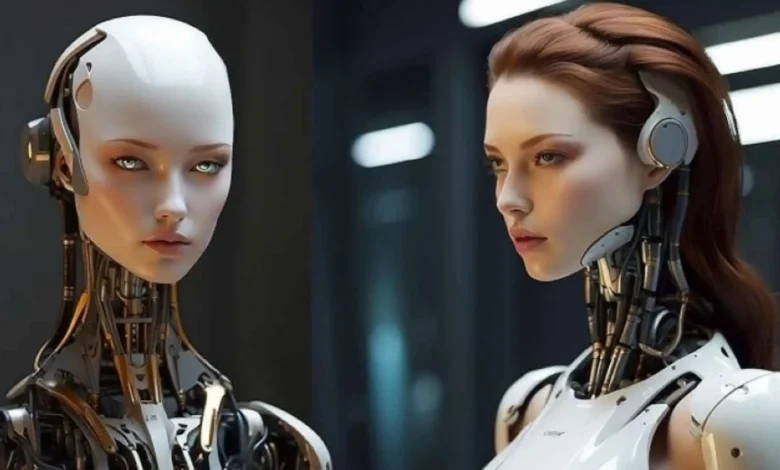
The CEO of Chinese company Unitree believes that humanoid robots are approaching a stage where they could perform between 70% and 80% of everyday tasks without specific training or programming, despite persistent technological challenges and fluctuations in the company’s share price following its stock-market listing.
The chief executive of Unitree, one of China’s leading unicorn start-ups specializing in humanoid robotics, said on Thursday that the sector was rapidly moving toward what he described as a “ChatGPT moment” for the artificial brains of machines.
-
Google Responds to ChatGPT: AI for Web Search
-
For a Better Experience: 7 Mistakes to Avoid When Using “ChatGPT”
The remarks came after the company’s successful listing on the Shanghai Stock Exchange, reflecting Beijing’s ambitions to take the lead in the next generation of AI-powered machines.
Unitree shares fell by around 11% on Thursday, just one day after soaring to nearly six times their offering price during their first trading session on the Shanghai Stock Exchange. The movement highlighted investors’ strong appetite for the humanoid robotics sector, which enjoys substantial government support in China.
The company’s founder and CEO, Wang Xingxing, said during his participation in the World Robot Conference in Beijing that the industry was “moving rapidly” toward a “ChatGPT moment” in the field of embodied artificial intelligence.
-
ChatGPT Back Online After Brief Outage
-
Energy Consumption: “ChatGPT” Exacerbates Environmental Issues
The global AI boom, which broadly took off in late 2022 with the mass adoption of ChatGPT, has reshaped numerous economic and scientific sectors. Robotics, however, has yet to experience a comparable breakthrough. So-called “world models” — systems designed to enable machines to understand physical environments and predict what will happen when certain actions are carried out — remain at an advanced but incomplete stage of development.
According to Wang, the anticipated breakthrough would allow robots to enter unfamiliar environments and perform most tasks based on simple voice or text commands, rather than requiring prior training or programming for every individual task.
He hopes that a robot entering a home for the first time could perform around 80% of tasks simply after receiving a voice or text instruction. He considers reaching this stage a “critical turning point” that could propel the robotics industry into a period of explosive growth.
-
VALL-E: After ChatGPT, here’s a new artificial intelligence capable of reproducing your voice by listening to it for 3 seconds
-
Understanding the Difference Between AI Agents and Chatbots: Two Related but Fundamentally Distinct Technologies in Purpose Design and Intelligence
Wang nevertheless remained cautious about when this leap might occur. He said a major breakthrough in robotics software could be achieved within two to three years under the most optimistic scenario, or within five to ten years according to a more conservative estimate.
George Steller, head of automation at a robotics-focused consulting firm, said Wang appeared to be “very realistic and objective” about the actual capabilities of robots, despite the enthusiasm surrounding the World Robot Conference and Unitree’s strong stock-market debut.
According to industry data, Unitree is the world’s largest manufacturer of robotic dogs and the second-largest producer of humanoid robots by shipment volume. The company became known for demonstrations featuring robots dancing or performing movements inspired by Chinese martial arts, particularly kung fu, before expanding into industrial applications.
-
Artificial Intelligence at Work: A Tool or a Threat to Your Professional Image?
-
How Artificial Intelligence Helps in Exam Preparation
The company’s IPO prospectus shows that most of its current customers are universities and research institutions, as Unitree seeks to move beyond demonstrations and testing toward practical commercial and industrial applications.
Wang said that the accumulation of data and further technological breakthroughs could make it possible to reach this stage within the projected timeframe.
Most of Unitree’s investment and human resources are currently focused on developing “world models”, which are intended to give robots a better ability to understand their physical surroundings, plan actions and navigate within them. Wang acknowledged, however, that the company is still “lagging behind” in the practical application of physical AI models in the real world.
-
Google Launches Gemini for iPad – A New Era of Mobile AI
-
To Prevent Unsafe Content Generation: Google Launches a Child-Friendly Version of Gemini
In China, the focus is not limited to hardware development. Hundreds of start-ups specializing in humanoid robots have emerged, while local governments are investing in training centers where robots are remotely operated by humans in order to collect data that can be used to train AI models.
According to media reports, this model provides Chinese companies with huge amounts of physical data needed to develop “embodied AI”. At the same time, however, it raises questions about the true scale of commercial demand, since part of the market is driven by government support.
According to data reported by Reuters, China delivered more than 40,000 humanoid robots during the first half of 2026 and accounted for approximately 97% of global deliveries, highlighting China’s clear dominance in the early manufacturing phase of the industry.
-
Mistral AI: A Strong Competitor to Large-Scale AI Models
-
Strong Measures to Prevent Google from Monopolizing Online Search
China also possesses a broad industrial base covering batteries, motors, sensors and electronic components. This could help it reduce costs and accelerate large-scale production, while U.S. companies face growing competition in the sector.
The competition extends beyond economics into the realm of national security. The United States has imposed restrictions on certain foreign humanoid and quadrupedal robots, including Chinese models, amid concerns that these machines could contain cameras, microphones and communication systems capable of collecting sensitive data or being remotely controlled.
-
Apple Loses Its Crown as the World’s Most Valuable Company to Microsoft
-
Google Launches 4 New Features for Travel and Tourism
The industry’s real test lies in moving from a robot that can walk, dance or perform a programmed movement to a machine capable of receiving a simple instruction such as “tidy this room,” identifying objects, manipulating them and changing its plan when it encounters a problem.
If this transition is achieved, the robotics industry’s “ChatGPT moment” could mark the beginning of a new era in artificial intelligence, in which AI moves from screens into the physical world. Possession of physical data and the ability to manufacture machines on a large scale could then become decisive factors in determining which country will lead the next generation of technology.
-
Artificial Intelligence: A Tool for Creators or a Competitor?
-
International AI Summit kicks off in Paris today
-
Chinese AI Shakes Up the Tech World: Meet DeepSeek R1