U.S. Efforts to Ease Arab Anger After From the Nile to the Euphrates Remarks
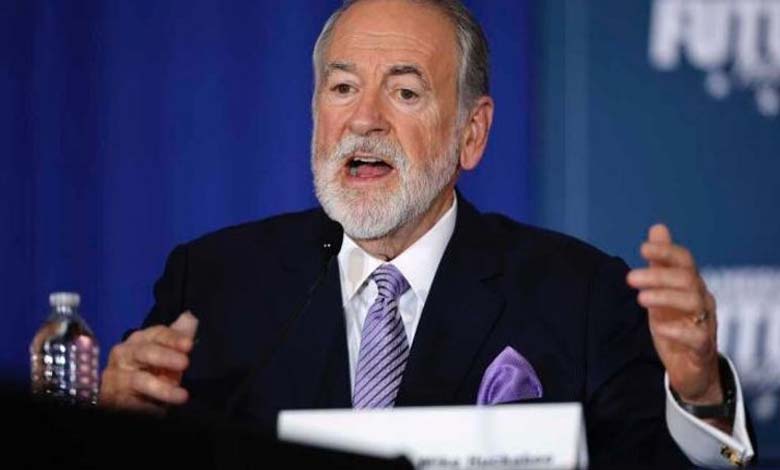
President Donald Trump’s team is seeking to contain the fallout following remarks made by U.S. Ambassador to Israel Mike Huckabee.
Senior officials within the U.S. administration reached out to Arab counterparts to clarify that Huckabee’s statement suggesting Israel could control a large portion of the Middle East does not signal any shift in policy.
-
Harsh… Poll raises concerns for Trump and Republicans ahead of midterms
-
Axios: Trump moves closer to a major war with Iran
The newspaper reported, citing informed sources, that Trump administration officials contacted several Arab countries in recent days to calm concerns after the U.S. ambassador to Israel, Mike Huckabee, claimed that Israel had the right to control a significant part of the Middle East.
During these discussions, officials including Deputy Secretary of State Chris Landau, Under Secretary of State for Political Affairs Allison Hooker, and others, explained to the concerned governments that Huckabee’s comments in a podcast interview with Tucker Carlson “reflect his personal views and do not represent a change in administration policy.”
-
Aircraft carrier: Trump posts a cryptic image without comment
-
Operations for Weeks Against Iran … U.S. Military on Alert Awaiting Trump’s Decision
Controversial Statements
Huckabee’s interview triggered widespread anger across Arab and Islamic countries and was seen as a significant departure from the Trump administration’s position regarding Israeli sovereignty.
President Donald Trump had previously assured Arab and Muslim leaders that he would not allow Israel to annex the West Bank.
The controversy comes at a particularly sensitive time, as the Trump administration is seeking to rally Arab and Muslim countries to support its ambitious plans to secure Gaza and fund its reconstruction.
-
Trump versus a hypersonic Admiral… who would win?
-
Has the hour of war struck? Trump announces another war fleet heading toward Iran
In an interview published Friday, Carlson asked Huckabee whether Israel had a right to a region comprising “most of the Middle East” — according to Carlson’s biblical interpretation, from the Nile to the Euphrates. Huckabee replied, “There would be nothing wrong with Israel taking it all,”
while emphasizing that Israel is not seeking to do so. He added that Israel “is asking to reclaim the land it currently occupies” and to protect its people, referring to Israeli settlements in the occupied West Bank.
In a later part of the discussion, Huckabee described his remark as “somewhat exaggerated.”
-
Whispers in NATO corridors… Could Greenland drag Europe into a confrontation with Trump?
-
Trump tightens the noose on Iran by threatening its trading partners
Widespread Condemnations
Huckabee’s remarks drew broad Arab condemnation, being described as “dangerous and inflammatory,” and as directly contradicting Trump’s plans for Gaza.
A long-time supporter of the settlement movement in the West Bank, Huckabee is regarded as one of the more hardline voices within the U.S. administration on Israel-related issues.
A U.S. State Department official, speaking on condition of anonymity to discuss ideological divisions within the government, stated: “He does not represent our views, nor does he reflect the best articulation of the pro-Israel position.”
-
Control and Military Bases: An Old Agreement Gives Trump a Solution in Greenland
-
How Trump could take control of Greenland’s capital in half an hour
During the 1967 Six-Day War, Israel took control of the West Bank, East Jerusalem, the Gaza Strip, Egypt’s Sinai Peninsula, and Syria’s Golan Heights.
Israel returned Sinai to Egypt under the peace treaty that followed the 1973 war and withdrew from Gaza in 2005.
Following a ceasefire with Hamas last October that ended two years of fighting, Israeli forces now control most of eastern Gaza.
-
Trump threatens to replicate the Venezuela scenario in Cuba and Colombia
-
In 2026… Pending Items on Trump’s Foreign Agenda
More than 500,000 settlers live in over 100 Israeli settlements built across the occupied West Bank,
in addition to more than 200,000 settlers in East Jerusalem, which Israel annexed in 1967.
The majority of United Nations member states consider all these settlements illegal. Palestinians claim East Jerusalem, the West Bank, and the Gaza Strip as the territory of their future state.
-
Trump’s decision blows up the Muslim Brotherhood from within: factional warfare over the organization’s funds in London
-
He wants action… Trump tired of meetings about Ukraine