Geopolitical Tensions in the Arctic: Canada Needs a Three-Tier Fortress
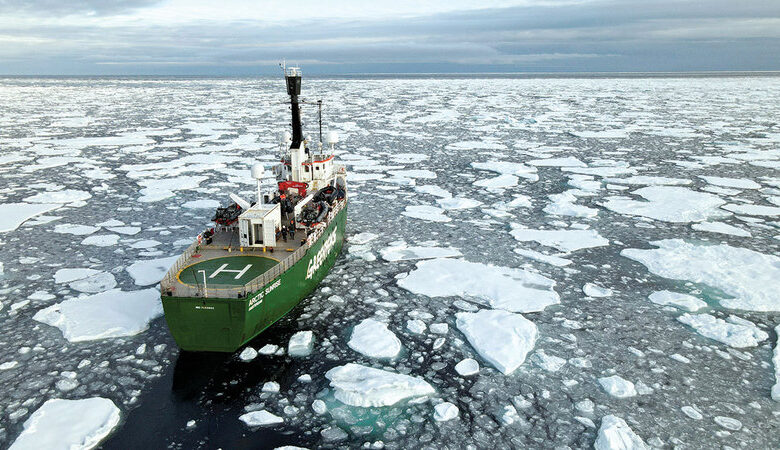
The emergence of strategic maritime passages through the Arctic ice, combined with shifting global geopolitical dynamics, is exposing Canada to growing security threats and compelling it to strengthen its defensive posture.
In this context, the American magazine The National Interest has examined the concept of an “Arctic Fortress,” a strategy designed to protect Canada against accelerating geopolitical and climate-related changes around the world.
-
U.S. withdrawal from NATO… legal battle and constitutional constraints
-
NATO arms itself with artificial intelligence against Russia: a semi-automated defense project
According to the magazine, “Canada needs to develop a new defense strategy to confront the rapidly evolving geopolitical landscape in the Arctic region and reinforce its sovereignty over its northern territories,” a concept it describes as the “Arctic Fortress.”
The analysis praises Canada’s decision to cancel the Nanisivik naval base project, arguing that the initiative had not been adequately planned and that Ottawa requires a more comprehensive and effective defense strategy.
The report emphasizes that the international environment has become increasingly unstable due to intensifying competition among the United States, Russia, and China. It also refers to statements made by U.S. President Donald Trump regarding the possible annexation of Canada or the acquisition of Greenland.
-
Hybrid attacks… what NATO fears from Russia
-
An Unwinnable War: A Nuclear Message from NATO to Russia
According to the analysis, Canada should not rely on the assumption that friendly relations with the United States will continue indefinitely. Instead, it should strengthen its independent capacity to defend its own territory.
The strategic importance of the Arctic continues to grow as climate change accelerates the melting of sea ice, opening new shipping routes and improving access to natural resources. These developments could reshape the region’s economic and military balance of power, making Canada’s northern territories more strategically significant than ever before.
The report proposes establishing an integrated defense network beginning with Sachs Harbour on Banks Island and Mould Bay on Prince Patrick Island, identifying both locations as strategic positions for monitoring western maritime routes and securing Canada’s Arctic archipelago.
-
Massive Russian Attack on Ukraine and NATO Alert in Poland
-
On NATO’s Doorstep… A New Russian Facility Raises Western Concerns
Rebuilding the abandoned Mould Bay base would strengthen Canada’s control over the Queen Elizabeth Islands while enabling the early detection of any Russian or Chinese military activity.
Canada could also develop Cambridge Bay into the country’s principal Arctic military base by taking advantage of its central location, deep-water harbor, and existing infrastructure.
The proposed Arctic Fortress strategy also calls for expanding the air base, constructing a longer runway, permanently stationing a squadron of F-35 fighter aircraft, and deploying long-range drones to monitor the Arctic’s maritime and air domains.
-
Zelensky Relies on NATO “Guarantees” to End the War
-
Zelensky torn between “nuclear” and “NATO”… and Russia renews the “red line”
Successfully implementing this strategy would also require improvements to transportation infrastructure, including the construction of a railway linking southern Canada to Tuktoyaktuk through the Mackenzie River corridor and the Dempster Highway, thereby facilitating the rapid movement of troops and supplies to northern bases.
The analysis further emphasizes the need to establish an additional military base north of McClure Strait to protect the northernmost islands, which are considered particularly vulnerable to potential threats.
The strategy also includes establishing expanded air and maritime identification zones, integrating the new defense architecture with the North American Aerospace Defense Command (NORAD), and potentially connecting it with the proposed U.S. missile defense initiative known as the “Golden Dome.” In addition, it recommends deploying an underwater acoustic sensor network capable of detecting hostile submarines and preventing them from transiting Canadian waters.
-
Putin is ready for negotiations and NATO will not expand eastward
-
The Zebra in the Ukraine War: A Russian Weapon Designed to Deceive Drones
The report also addresses the modernization of the Royal Canadian Air Force, noting that the United States favors the integration of the two countries’ defense systems, making the operation of F-35 fighter aircraft essential for North American defense missions.
However, it argues that Sweden’s Gripen E fighter aircraft could be better suited for overseas operations and for supporting Canada’s commitments within the North Atlantic Treaty Organization (NATO) in Europe.
As part of strengthening ground defense capabilities, the magazine suggests reorganizing the Canadian Rangers—whose ranks are largely composed of Indigenous personnel—by converting approximately half of their members into full-time regular infantry units equipped with anti-tank weapons, man-portable air defense systems, drones, and specialized equipment designed for operations on snow and ice.
-
Ukraine Misleads Russian Missiles with Lima… A €58,000 Defense System
-
Fearing attacks, Ukraine fortifies its border with Russia’s ally
These forces would be organized into three battalions based in Whitehorse, Yellowknife, and Iqaluit, enabling them to conduct delaying and defensive operations against any invading force until reinforcements arrive.
To improve rapid deployment capabilities, the analysis also recommends acquiring at least eighteen Twin Otter CC-138 transport aircraft capable of operating from short, icy, or water-based runways, allowing troops and supplies to be delivered quickly to remote Arctic locations.
-
Russia raises nuclear readiness: Iskander missile system in focus
-
Deaths and missing persons: an unprecedented Russian escalation in Ukraine
Canada should also deepen its cooperation with NATO in defending the Arctic region, particularly with Norway, Denmark, and Sweden. The report further recommends pre-positioning military equipment in Greenland so that Canadian forces could deploy rapidly to defend the island if necessary, thereby strengthening collective deterrence and complicating any hostile plans targeting the region.
Ultimately, the proposed Arctic Fortress strategy represents a long-term investment in Canada’s national security. It aims to reinforce Canadian sovereignty over its northern territories, strengthen military capabilities, enhance coordination with allies, and safeguard Canada’s interests in a region whose strategic importance continues to grow year after year.
-
Russia raises the bar of nuclear deterrence… Sarmat ready with a range exceeding 35,000 kilometers
-
Russian drones, the stars of April battles in Ukraine