Leased for One Dollar… U.S. Embassy Land in Jerusalem Sparks Controversy
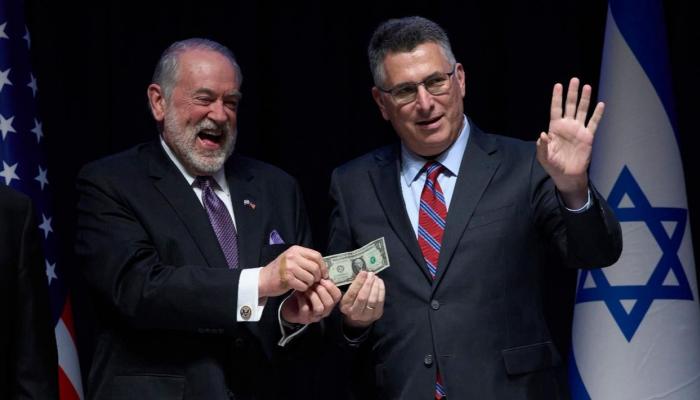
An agreement between Israel and the United States grants Washington a plot of land in Jerusalem for the symbolic rent of one U.S. dollar to build the permanent headquarters of its embassy.
The agreement was signed by Israeli Foreign Minister Gideon Sa’ar and U.S. Ambassador to Israel Mike Huckabee, in the presence of Jerusalem Mayor Moshe Lion, according to a statement issued by Israel’s Ministry of Foreign Affairs.
-
Peace Between Lebanon and Israel: Progress in Negotiations as the United States Identifies the Only Obstacle
-
Tehran proposes a collective security system without the United States and Israel
During the signing ceremony, Huckabee stated: “The United States not only recognizes Jerusalem as the eternal capital of the Jewish people, but it will also raise the American flag over Jerusalem through a new permanent embassy.”
The U.S. ambassador stood on the podium holding up a one-dollar bill and said: “The land lease is for 99 years, and the United States will pay Israel one dollar.”
He added: “We will plant our flag—the American flag—on the soil of Jerusalem by constructing a new, permanent embassy complex that will serve as the main headquarters for our diplomatic activities here in Israel.”
-
Gadi Eisenkot, Netanyahu’s Opposite, Seeks to Become Israel’s Prime Minister
-
Axios: Washington and Tehran Agree to Halt Attacks and Resume Talks
The permanent U.S. embassy will be built at the Allenby compound, south of Jerusalem.
Meanwhile, the Israeli human rights organization Adalah condemned the construction of the embassy on the designated site, arguing that the move “perpetuates a profound historical injustice.”
In a statement, the organization said that the site “is located on land confiscated from Palestinian owners under Israel’s discriminatory 1950 Absentees’ Property Law,” noting that it had previously filed an objection on behalf of the heirs of the original owners.
The signing of the agreement to build the permanent embassy headquarters comes after the United States and Israel jointly waged a months-long war against Iran, and following a period of reported tensions between Donald Trump and Israeli Prime Minister Benjamin Netanyahu over disagreements concerning efforts to end the conflict with Tehran.
-
Brain Drain Hits the Pillars of Israel’s Economy Since the October 7 Attacks
-
Intelligence Report: Iran’s Support for Its Regional Proxies Will Not Be Affected by Understandings with Washington
A Decision Dating Back to Trump’s First Term
During his first presidential term, in December 2017, U.S. President Donald Trump officially recognized Jerusalem as Israel’s capital and ordered the relocation of the U.S. Embassy from Tel Aviv.
The embassy’s temporary headquarters was officially inaugurated in May 2018.
Trump’s decision marked a departure from decades of U.S. policy, which had maintained that Jerusalem’s final status should be determined through negotiations between Israelis and Palestinians.
At the time, the decision drew widespread international criticism, with many countries describing it as “a violation of the international consensus regarding the status of Jerusalem.”
-
Washington Understandings: Conflicting Reports Over a Partial Israeli Withdrawal from Southern Lebanon
-
U.S.–Iran Agreement on a Mechanism to End the Lebanon War and Reopen the Strait of Hormuz
For decades, the status of Jerusalem has remained one of the central and most contentious issues in the Israeli–Palestinian conflict.
After Israel captured East Jerusalem during the 1967 war, it declared the city its unified capital, a move that has not received broad international recognition.
The Palestinians seek East Jerusalem as the capital of their future state.
For this reason, most countries have kept their embassies in Tel Aviv, maintaining that Jerusalem’s status should be resolved through peace negotiations, in accordance with international law and relevant United Nations resolutions.
-
Post-agreement complications between the United States and Iran rival the difficulty of the negotiations themselves
-
Israel Negotiates with the United States Over Maintaining Its Forces in Lebanon
-
Six Challenges That Could Prevent the United States and Iran from Reaching a Final Agreement