History Competes with War: The Memory of Massacres Strains the Warsaw–Kyiv Alliance
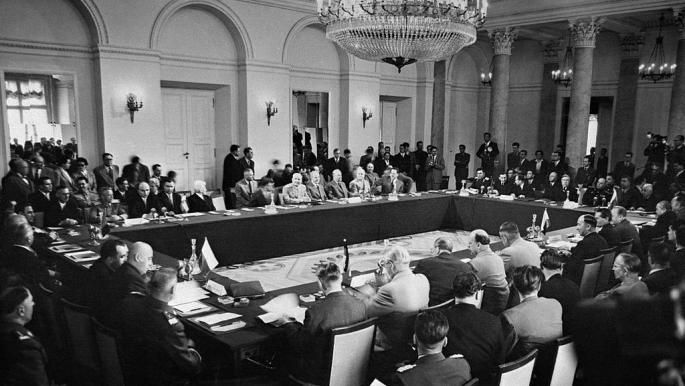
Although Poland and Ukraine share a common adversary—Russia—the dispute over the massacres that took place eight decades ago is increasingly being used as a political weapon in the domestic politics of both countries.
According to the American magazine Politico, the controversy began in May when Ukrainian President Volodymyr Zelensky designated a Ukrainian military unit as the “Heroes of the Ukrainian Insurgent Army.” The move sparked outrage in Poland, as the Ukrainian Insurgent Army killed tens of thousands of Poles during the Second World War in an ethnic cleansing campaign carried out in what is now western Ukraine.
-
Ukraine’s Weapon Reaches France: Tank-Hunting Technology Capable of Striking from Deadly Angles
-
Diplomatic Summons and Warnings… Europe Responds to Russian Escalation in Ukraine
In Poland, the growing controversy surrounding Zelensky‘s decision threatens to influence next year’s crucial general elections, with the nationalist camp viewing it as an opportunity to score political points against the pro-European Union centrist bloc.
For Ukrainians, however, the dispute has become a fundamental red line concerning whether any external power has the right to dictate which national heroes they should honor. The issue has also become politically significant for President Zelensky.
Kyrylo Budanov, head of Zelensky‘s office, stated: “No one will dictate to Ukrainians which heroes they should honor, which holidays they should celebrate, or which history they should teach.”
-
Russian security services thwart a terrorist attack and arrest two agents working for Ukraine
-
Ukraine cannot be divided: UN support for Kyiv on the anniversary of the war
Genocide or Freedom Fighters?
While Poland regards the massacres committed by the Ukrainian Insurgent Army as genocide, Ukraine considers its members to be freedom fighters who resisted the Soviet Union during and after the Second World War. Their legacy continues to inspire Ukraine’s resistance against Russia.
In response to Kyiv’s decision, Polish nationalist President Karol Nawrocki revoked Poland’s highest state decoration, the Order of the White Eagle, which had been awarded to Volodymyr Zelensky.
Zelensky promptly placed the decoration in a box and returned it to Warsaw. He also declined to attend a major conference held last week in the northern Polish city of Gdańsk on Ukraine’s recovery and reconstruction.
-
Ukraine Confronts Its Fears in the Fifth Year of War: A War of Attrition
-
Large-scale Russian attack on Ukraine’s energy sector, Poland activates its air defenses
For the pro-European coalition government led by Prime Minister Donald Tusk, the emergence of tensions within one of the most important wartime alliances represents an unfortunate distraction from what it considers the real priority: maintaining a united front against Russia.
Nevertheless, given the sensitivity of the issue within Poland, Tusk has urged politicians on both sides to ease tensions, accusing both parties of making a “strategic mistake” by allowing the historical dispute to escalate.
As Tusk prepares for next year’s elections, the key question is whether his coalition will lose ground to the nationalist Law and Justice Party, allied with President Karol Nawrocki, who could strengthen his position through cooperation with the far-right forces opposed to Ukraine.
-
Battle of Huliaipole… Russian Superiority Tightens the Noose on Ukraine
-
Three contentious issues threaten a Ukraine settlement… traps cloud the optimism
Ukrainians Become a Political Issue
The controversy has also placed Ukraine—and the approximately two million Ukrainians living in Poland, including nearly one million who arrived after the outbreak of the war in 2022—at the center of the election campaign. Public dissatisfaction has grown over the pressure refugees place on public services, creating an opportunity for the far right to capitalize politically.
Although Donald Tusk’s government is politically opposed to Nawrocki, it has reduced social benefits available to Ukrainians, including assistance provided to elderly people and young children.
Volodymyr Zelensky argued that Nawrocki’s decision to revoke the Order of the White Eagle was driven by Poland’s domestic politics. He said: “They have elections in 2027. This is not our concern; it is an internal matter for them.”
-
Collapse of Armored Forces and Recruitment Crisis: Ukraine Faces Its Gravest Challenge Since the War Began
-
After battlefield stagnation… Ukraine turns to Flamingo and its counterparts
Karol Nawrocki rejected the accusation, stating: “Dear Volodymyr, Mr. President, this dispute has absolutely nothing to do with Poland’s internal affairs. There is no such connection because every Pole knows and understands the scale of the crimes committed by Ukrainian nationalists against Poland, its women, its men, and its children.”
Nawrocki, whose presidential campaign slogan last year was “Poland First!”, also warned that Warsaw could block Ukraine’s accession to the European Union unless Kyiv officially acknowledged the massacres and issued an apology.
-
Russia Accuses Dbeibah’s Government of Supporting Ukraine to Spread Chaos in the African Sahel
-
The Thousand Cuts – Russia’s New Weapon to Wear Down Ukraine as Winter Approaches
These threats represent a significant setback for two countries that have spent decades attempting to overcome their difficult shared history. Leaders from both nations had previously inaugurated memorials dedicated to the wartime massacres, while Kyiv recently agreed to allow the exhumation and reburial of victims of the Ukrainian Insurgent Army.
Arkadiusz Mularczyk, a Member of the European Parliament from the Law and Justice Party, told Politico that Poland’s political class “knows very well who Zelensky is.” He added: “They know how Ukrainians behave and that this state still operates with a post-Soviet mentality, where diplomacy and soft approaches are ineffective. I would even say that strength and arrogance prevail.”
-
A Night of Fire: Russia Strikes Ukraine with 500 Drones and 40 Missiles
-
Wide Advance on All Fronts: Russia Steps Up Offensive in Ukraine
A Deeply Rooted Dispute
Renata Mieńkowska-Norkiene, a political scientist at the University of Warsaw, said the dispute is deeply rooted in Polish politics.
She explained: “The president realized that public sentiment had increasingly shifted toward hostility against Ukraine and Ukrainians. He concluded that he had virtually nothing to lose by taking this position.”
She added: “The historical dispute enables him to consolidate support among nationalist and conservative circles around both himself and his decisions, and this will be particularly important in the period leading up to the elections.”
-
Massive Russian Attack on Ukraine and NATO Alert in Poland
-
Washington’s Bet on Banning ATACMS Does Not Threaten Ukraine… What Is the Secret?
Since winning the presidency last year, Karol Nawrocki has moved the Law and Justice Party further toward the far right by forging alliances with the libertarian Confederation Party and the anti-Semitic Confederation of the Polish Crown, both of which hold strongly anti-Ukrainian positions.
A survey conducted by a state polling institution found that many Poles support policies prioritizing their own interests over those of Ukrainians, whom respondents believe are “violating their rights in Poland.”
-
On NATO’s Doorstep… A New Russian Facility Raises Western Concerns
-
Russian Advance in Donetsk: The Battlefield Outpaces Diplomacy in Ukraine
Social assistance for Ukrainians has become an increasingly sensitive political issue, despite economic studies indicating that Poland has benefited from the arrival of working-age Ukrainians.
Finally, a poll conducted earlier this month by SW Research found that 51.9% of respondents reported that their opinion of Ukraine and President Zelensky had deteriorated following the decision concerning the Ukrainian Insurgent Army.
-
Ukraine War: 5 Possible Scenarios for the Final Chapter
-
Fiery Ping-Pong Between Ukraine and Russia: Deaths, Fires and Concerns
-
Ukraine’s Patriot and Russian Sanctions: A Decisive U.S. Move or a Trial of Frontlines?