Trump presents to the public his justification for a potential attack on Iran
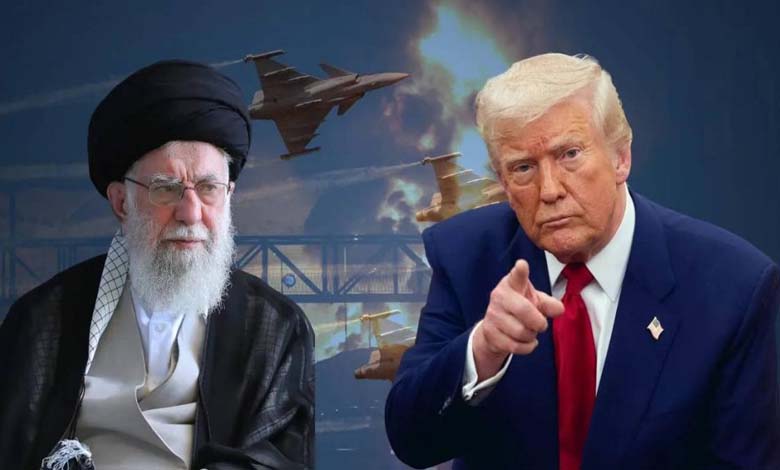
The U.S. president accuses Iran in his State of the Union address of resuming its nuclear program and developing missiles that will “soon” be capable of reaching the United States.
U.S. President Donald Trump briefly outlined his arguments for a potential attack on Iran during his State of the Union address before Congress on Wednesday (Tuesday in the United States), stating that he would not allow the “world’s largest state sponsor of terrorism” to acquire a nuclear weapon.
-
Trump and Iran: three military paths on the decision table
-
Iran protests put Trump to the test between escalation and dialogue
Despite the significant buildup of U.S. military forces in the Middle East, Trump did not provide a detailed public explanation for pushing the United States toward what would be its most substantial military action against the Islamic Republic since the 1979 revolution.
In his speech, he cited Tehran’s support for armed groups, its deadly repression of protesters, and its missile and nuclear programs as threats to the region and to the United States.
After approximately 90 minutes of his annual address to a joint session of the Senate and House of Representatives, he stated: “The (Iranian) regime and its murderous proxies have spread nothing but terror, death, and hatred.”
-
After Trump’s threats, Iran affirms readiness for war and dialogue
-
Iran Warns Trump Against Intervention and Draws the Red Line
He accused Iran of resuming its nuclear program and working to produce missiles that will “soon” be capable of reaching the United States. He also blamed Tehran for bombings that killed American soldiers and civilians. Iranian media report that Tehran is developing a missile capable of reaching North America.
The period leading up to the speech was marked by a reinforcement of U.S. military forces in the Middle East and preparations for a potential conflict with Iran that could last weeks if Tehran does not reach an agreement to resolve the longstanding dispute over its nuclear program.
Trump has repeatedly expressed frustration over negotiators’ failure to reach a deal. “They want to make a deal, but we have not heard those key words: ‘We will never have a nuclear weapon,’” he said.
-
Trump Announces Ceasefire Between Israel and Iran
-
Behind Trump’s Deal: How Iran and Israel Agreed to End the War
Iran maintains that its nuclear research is intended solely for civilian energy production.
The president also criticized the Iranian government for the deaths of thousands of protesters during anti-government demonstrations last month. The specific figure he cited — 32,000 deaths — is significantly higher than most public estimates.
Hours before the address, Secretary of State Marco Rubio briefed the congressional “Gang of Eight,” composed of the leaders of both chambers and the heads of the intelligence committees, on Iran.
-
Energy Investments: Iran’s New Card to Woo Trump and End Sanctions
-
Trump’s Pressure Pushes Iran to Accept U.S. Demands on Nuclear File
Senate Democratic Leader Chuck Schumer stated at a press conference prior to the closed-door session: “First and foremost, if they intend to take action in Iran — and no one knows exactly what that is — they must announce it and discuss it publicly, not conceal it. Conducting such military operations in secret always leads to longer wars, tragedies, greater expenses, and mistakes.”
Advisers had urged the president to focus on the economy, immigration, and other domestic policy issues, and he devoted most of his nearly two-hour speech to those topics.
Trump rose to the highest office in American politics with the backing of a political base committed to his “America First” doctrine and his pledge to end the era of “endless wars,” such as the prolonged conflicts in Iraq and Afghanistan.
-
Iran’s Nuclear Program Back in the Spotlight… and Trump Seeks Political Breakthrough
-
Between Escalation and De-escalation: How Will Trump Handle Iran?
However, opinion polls suggest that the Republican Party may struggle to maintain control of Congress.
Surveys also indicate that Americans are wary of foreign conflicts. A Reuters/Ipsos poll conducted in January found that 69 percent of respondents agreed that the United States should use its military only when facing a direct and imminent threat, while 18 percent disagreed. The remaining respondents were undecided or did not answer.
Trump ordered strikes on Iran last year and stated in July that the strikes had “destroyed” Iranian nuclear facilities. However, his aides have recently said that Iran is very close to acquiring the capability to produce nuclear bombs.
-
Trump and Iran: 4 Possible Scenarios, Including “Shock and Awe”
-
Trump’s Return Pushes European Powers to Demand Increased Pressure on Iran
Addressing this issue in his speech, Trump said: “They (Iran’s leaders) want to start over, and at this very moment they are once again pursuing their evil ambitions,” adding that he prefers to achieve peace and listing global conflicts he claims to have helped end or ease.
“As president, I will work to bring peace wherever possible, but I will never hesitate to confront threats facing America if necessary,” he concluded.
-
Iran Keeps Door Open for Dialogue with Trump and Prepares for New Sanctions
-
Bomb Diplomacy: The Douhet Strategy and Washington’s Options on Iran
-
One Single Step Trump Is Waiting for to Strike Iran