Israel attacks the Resilience Flotilla off the coast of Greece
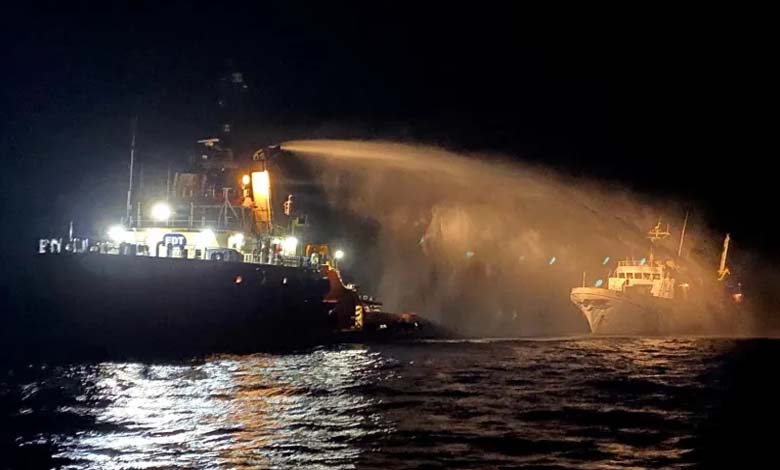
The Israeli Ministry of Foreign Affairs confirmed the transfer of 175 activists from more than 20 boats of the Resilience Flotilla to Israel.
At dawn on Thursday, the Israeli army began attacking the vessels of the “International Resilience Flotilla” in international waters as they were heading toward the Gaza Strip to break the blockade. The flotilla initially announced the loss of contact with 11 ships, before later confirming that Israeli forces had seized 21 boats after attacking them several miles from Greek territorial waters.
-
Last Vessel of the Flotilla of Resilience Continues Sailing Toward Gaza
-
The Flotilla of Resilience Heading to Gaza Announces Entry into High-Risk Zone
For its part, the Israeli Ministry of Foreign Affairs stated that the army is currently transferring 175 activists from more than 20 flotilla boats to Israel.
Earlier, army radio reported that the navy had begun taking control of ships heading toward Gaza far from Israeli shores, adding that the Israeli navy had initially taken control of 7 ships out of a total of 58.
According to the radio, this is the farthest operation ever carried out by the navy in intercepting flotillas seeking to break the Gaza blockade, noting that “Israel decided this time to stop the flotilla hundreds of kilometers from its shores, in the area of Crete” in Greece.
-
Israel Intercepts Freedom Flotilla: International Outrage, Strikes, and Diplomatic Expulsions
-
Second Vessel of the Caravan of Resilience Reportedly Targeted by Drone Attack
The Hebrew website Walla! reported that the Israeli navy “has already taken control of some ships and may tow them to the port of Ashdod on the Mediterranean,” without specifying a number.
It added that before beginning the operation to take control of the ships, Israeli forces had taken over the radios on board, claiming that they “asked the activists to change course and warned them that continuing to sail toward Gaza would endanger their safety.”
The site stated that Israeli forces “arrived near the ships early, around 7 p.m. Israel time.”
The Resilience Flotilla announced in a post early Thursday on its account on the X platform that “Israeli military boats illegally surrounded the flotilla in international waters (in the Mediterranean) and threatened to abduct it and use violence against it.”
-
The Peace Council mobilizes for Gaza… Italy offers police training while Europe observes
-
Massive destruction as thousands of displaced Palestinians return to Gaza
It added: “Communications with 11 ships have been cut. Governments must act immediately to protect the Freedom Flotilla (the flotilla’s ships) and hold Israel accountable for these blatant violations of international law and for the ongoing genocide committed against the Palestinian people.”
About three hours earlier, the flotilla said in another post on X that “fast military boats approached our vessels identifying themselves as Israeli.”
It added that these boats directed “laser beams and semi-automatic offensive weapons” at the flotilla’s boats and “ordered participants to move to the front of the boats and kneel on their hands and knees.”
The flotilla continued: “Boat communications are being jammed, and a distress call has been issued.”
Criticizing Tel Aviv’s actions, the Resilience Flotilla stated: “The same scenario, in a different year. The Israeli navy believes that a radio warning is enough to silence voices calling for justice. You (Israel) call it a maritime security blockade, while the rest of the world sees it as a crime scene.”
For her part, the United Nations Special Rapporteur on the situation of human rights in the occupied Palestinian territories, Francesca Albanese, said Thursday that Israel’s aggression against the “Resilience Flotilla” off the Greek coast should shock Europe.
Expressing outrage, she wrote on X: “How is it possible that Israel is allowed to attack and seize ships in international waters off Greek/European coasts?”
-
Gaza on the fire of waiting… Is a “crescent” of truce appearing on the horizon?
-
Gaza Latest: Evacuation Orders in the North and Humanitarian Ship Intercepted at Sea
She continued: “Regardless of what comes to mind about racist Israel and its leaders involved in genocide, this should cause shock throughout Europe.”
She concluded her post with the phrase “borderless apartheid,” referring to Israeli practices toward the Palestinian people whose land is occupied and who are denied the independent state provided for in international resolutions.
The movement Hamas described Thursday’s Israeli attack on the “Resilience Flotilla” as a “terrorist attack, a crime, and piracy.”
-
Tunisia Denies Drone Strike on Freedom Flotilla Ship
-
Amputees in Gaza: a symbol of unfulfilled promises
In a statement, the movement said: “We strongly condemn the Zionist terrorist attack carried out by the occupation navy against the flotilla’s ships heading to the besieged Gaza Strip while they were near the Greek coast of Crete,” adding that “this Zionist piracy, far from the shores of Gaza, constitutes a crime and brutality carried out by the occupation government in full view and hearing of the world, without deterrence or accountability.”
It called for condemning the attack on civilian activists, taking international action to release the detainees, and holding Israel fully responsible for their safety.
On Wednesday evening, the International Resilience Flotilla said that most of its boats were being jammed as it continued sailing in the Mediterranean toward the Gaza Strip to break the blockade.
-
What happened in the first talks between Washington and Hamas since the Gaza truce?
-
Closed since the start of the war with Iran, Israel reopens the Zikim crossing to allow aid into Gaza
The flotilla, which carries humanitarian aid for Gaza, wrote on Instagram: “The flotilla is under attack. The ship Bianca (Italy) is being approached, and most boats are being jammed.”
Hours earlier, Hebrew media had reported that Israel was preparing to intercept the flotilla, which includes about 100 boats carrying around 1,000 activists from several countries, while other reports say the flotilla includes 65 boats.
On Sunday, the “Spring 2026 Mission” of the Global Resilience Flotilla departed from the Italian island of Sicily to break the Israeli blockade on Gaza and deliver humanitarian aid to Palestinians in the territory, after completing its final preparations.
-
Palestinian Analyst: Gaza Welcomes Eid Amid an Unprecedented Humanitarian Disaster
-
Israel announces the killing of 20 militants in Gaza and the destruction of a rocket manufacturing site and a tunnel
The flotilla is a civil initiative established in 2025 by representatives of civil society organizations, activists, and volunteers from different countries to deliver humanitarian aid to Gaza.
This is the second initiative following the September 2025 attempt, which ended with an Israeli attack on the ships in October of the same year while they were sailing in international waters, and the arrest of hundreds of international activists before the start of their deportation.
Israel has imposed a blockade on the Gaza Strip since 2007, and about 1.5 million Palestinians out of approximately 2.4 million residents of the territory are now homeless after their homes were destroyed by what is described as a genocidal war.
-
We will repeat the Gaza scenario: Israel plans a large-scale ground invasion in Lebanon
-
Israel prepares to apply the Gaza model in Lebanon
A ceasefire agreement was reached after two years of war launched by Israel on October 8, 2023, with U.S. support, resulting in more than 72,000 Palestinian deaths and over 172,000 injuries.
The territory has been experiencing an unprecedented humanitarian and health crisis since the beginning of the war, which has led to massive destruction of infrastructure, including hospitals and healthcare facilities.
The territory also suffers from strict Israeli restrictions on the entry of fuel and medical supplies, in addition to a severe shortage of medicines and equipment.
-
Demographics in the West Bank and Gaza: UN Warning over Israeli Plans
-
Israeli soldier killed in Gaza Strip by friendly fire