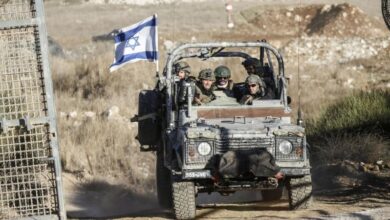
Israel is wiping out an entire Lebanese village near the border
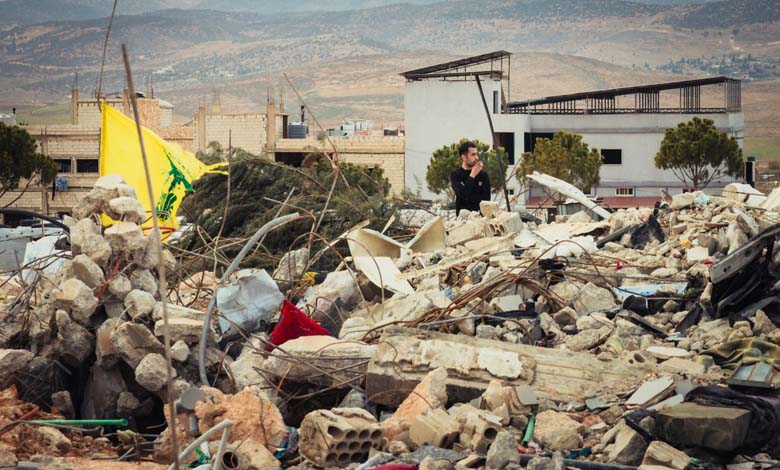
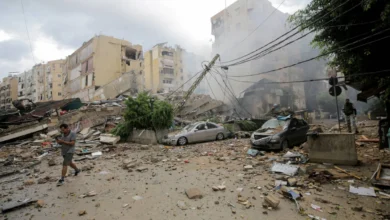
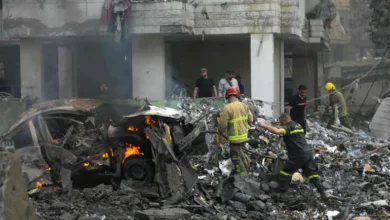
Israeli forces are carrying out systematic demolitions and using bulldozers to erase villages such as Kfar Kila, turning areas that were once vibrant into barren lands that appear devoid of life.
In a garbage-filled parking lot near Beirut’s Mediterranean coastline, Hassan Yahya attached a cardboard sign to a traffic pole beside a tent that has now become his home. Written in fine handwriting on the sign are the words: “Kfar Kila welcomes you.”
The worn-out sign evokes the memory of a road sign that once stood dozens of miles away at the entrance to the historic village of Kfar Kila, whose history dates back decades.
-
Leaked Hezbollah footage from tunnels: teenagers as fuel for death
-
He will pay with his head: Israel escalates against Naïm Qassem and Hezbollah
Kfar Kila is one of more than ten villages along southern Lebanon’s border that have been gradually flattened by waves of Israeli bombardment over the past two and a half years. Now, with Israeli forces advancing, carrying out calculated demolitions and using bulldozers, villages are effectively being erased, and areas that were once full of life are turning into desolate expanses where life seems to have vanished.
Like tens of thousands of southern residents, Yahya stands helpless as his ancestral land is transformed into a “buffer zone” that Israel is clearing entirely to secure its border.
In Lebanon, villages hold deep cultural significance in the hearts of their inhabitants: they serve as places of origin for families spread across the country and the world, who maintain their roots by investing in homes and sustaining community ties through weddings, celebrations, and olive harvests.
-
Israel claims it killed 150 Hezbollah members, while the group remains silent
-
Through incitement and protests, Hezbollah seeks to obstruct Lebanon–Israel negotiations
Almost everyone knows their ancestral village, or “dayaa,” even if it was left generations ago.
The sudden disappearance of these residential areas has displaced hundreds of thousands of people.
Yahya, 58, sitting on a plastic chair in his tent while a generator hums behind him, said: “Like a fish, if it leaves the water, it dies. It is impossible for us to leave; we will die.”
Israeli forces say that Kfar Kila and other destroyed villages served as strongholds for Hezbollah, which has been engaged in military confrontations with Israel since the attacks led by the Palestinian Islamic Resistance Movement (Hamas) on southern Israel on October 7, 2023, after which the region entered a cycle of turmoil.
-
Beirut under fire… Israel expands its strikes against Hezbollah
-
Israel announces the killing of the secretary to the Secretary-General of Hezbollah and his nephew
The Israeli military stated that it classified Kfar Kila as a “key Hezbollah village,” saying it contained “extensive terrorist infrastructure,” some of it located in homes and schools.
It added that Israeli forces seized weapons equivalent to the load of 90 trucks there in 2024, and confiscated more this year. It also stated that it worked hard to minimize harm to civilians.
The latest round of fighting has displaced 1.2 million Lebanese people, nearly one-fifth of the population.
It erupted early last month when Hezbollah launched rockets toward Israel in solidarity with its ally Iran during its exposure to U.S.-Israeli attacks.
-
Israel–Hezbollah war: UN concern and European call
-
Iran and Hezbollah carry out simultaneous attacks on Israel
To visualize life in one of Lebanon’s vanished villages, I spoke with five former residents of Kfar Kila who have ended up on different paths across the country, and used satellite imagery, social media posts, as well as photos and videos they and others shared to understand what has become of the residents.
Some of the earliest references to Kfar Kila appear in the travel accounts of Al-Maqdisi, one of the most prominent Arab geographers of the 10th century, and later in Ottoman tax records and surveys conducted during the British mandate period.
Before the outbreak of war in 2023, about 5,500 people lived there, according to Hassan Chait, the mayor of Kfar Kila.
-
Youssef Hashem… Israel announces the killing of Hezbollah’s southern front commander
-
Israel expands its operations in Lebanon… evacuation alerts and dozens of Hezbollah members killed
Agriculture was the main activity. The distinctive climate allowed the cultivation of a wide range of crops, from wheat and grapes to watermelon, as well as tobacco, tomatoes, parsley, beans, and olives.
He added that the village was known for its olive oil, which was sold nationwide and attracted buyers from as far away as Beirut.
Daily life was lively around bakeries, restaurants, and cafés, where residents gathered to play cards, chat, and exchange jokes.
During weddings, celebrations would last for an entire week.
On the day of Ashura, residents would gather in the center of the village to commemorate the martyrdom of Imam Hussein, the grandson of the Prophet Muhammad, and would climb onto rooftops to watch men dressed in period clothing reenact the Battle of Karbala, in which Hussein was killed 1,300 years ago.
-
Israel intensifies strikes against Hezbollah: senior leaders killed and evacuation orders issued
-
New escalation between Israel and Hezbollah after hours of calm
Chait recounts that the village of Kfar Kila experienced relative prosperity during most of the two decades preceding the October 7 attacks, with schools and clinics opening, rising education levels, and expanded opportunities thanks to roads connecting it to the city of Nabatieh and other nearby centers. Expatriates in Europe, the Gulf, and Africa sent remittances to their families.
Yahya’s nephews, who live in Sweden, were able to build a house near the “Fatima Gate,” a historic border crossing that became a local destination with the spread of restaurants near a structure inspired by the Dome of the Rock in Jerusalem, along with widespread graffiti on the wall built by Israel along the border.
Yahya himself built a three-story house of concrete and stone in the village and set up an oven on the ground floor to make pastries for his friends.
-
How Iran’s Revolutionary Guard reorganized Hezbollah’s ranks
-
Disarming Hezbollah: Damascus Hesitates Despite U.S. Green Light
A few days after the attacks, Hezbollah launched a “support war” for Hamas and fired rockets toward Israel. The Israeli border town of Metula was heavily struck, and Israeli media reported that hundreds of homes were destroyed or damaged.
Israel responded with an intense air and ground campaign, largely concentrated in the south. By January 2024, Kfar Kila was nearly deserted, according to Chait.
In the following months, Israel said it had destroyed dozens of underground facilities and hundreds of Hezbollah weapons found in the village.
Hezbollah officials repeatedly condemned the demolition of villages and denied deploying military infrastructure in civilian residential areas. Its media office has not yet responded to a request for comment on the demolitions and the Israeli army’s statement regarding Kfar Kila.
-
Washington mobilizes to designate the Revolutionary Guards and Hezbollah as terrorist organizations
-
A rare admission: why did the Israeli army conceal estimates of a Hezbollah attack?
Before the war, Hezbollah did not conceal its plans to invade northern Israel and had previously invited journalists to observe its fighters simulating such an attack, describing its tunnel network as extensive. At least one of the four tunnels discovered by Israel in 2018 extends from Kfar Kila under the border to Metula.
Shortly after the war began, Yahya moved north from Kfar Kila before eventually settling in Beirut. His neighbor and childhood friend, Khodr Hammoud, settled near the Syrian border.
As for Jamil Fawaz, a grocery store owner whose shop and home were destroyed, he first fled to the southern town of Habbouch, then to a school in the coastal city of Sidon that shelters hundreds of people who lost their homes.
Fawaz, sitting beside a wall in the school covered with dozens of paper signs placed by displaced people bearing the names of villages destroyed by the war, including Kfar Kila, said: “Everything has turned to ashes.”
-
Smoke over Hezbollah headquarters… southern Beirut suburbs flare up again
-
After its involvement in the Iran war, Lebanese calls grow to ban Hezbollah
The ceasefire in November 2024 encouraged some residents to return. Chait said that at that time, about 85 percent of Kfar Kila’s buildings had been destroyed, including the newly built Yahya family home completed just before the war.
Some residents, including Hammoud, set up prefabricated homes near the ruins in the hope of rebuilding.
In February of this year, Prime Minister Nawaf Salam visited Kfar Kila and promised residents that reconstruction would begin soon. However, fighting resumed within a month.
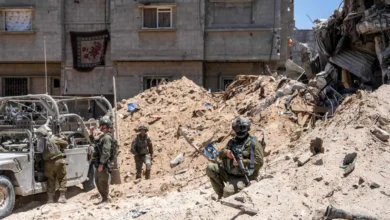
This time, Israeli forces carried out demolition operations using controlled explosions and bulldozers.
In a video first posted on social media in late March, a bulldozer is seen moving along the western outskirts of the town. Reuters was unable to verify the identity of its operator.
-
Hezbollah and Iran’s war: Lebanon fears the cost of supporting Tehran
-
Hezbollah disarmament: a rare opportunity amid fears of escalation reshaping the landscape
An Israeli military official, speaking on condition of anonymity to discuss security matters, said that Israeli forces had destroyed more than 90 percent of the homes in Kfar Kila by the end of April.
As hopes of a near return diminish, many former residents of Kfar Kila now rely on intermittent communications to maintain family ties.
Yahya says that in cases of death, they settle for offering condolences over the phone. Chait adds that weddings, if they take place at all, are often held without celebrations.
Although Israel says the buffer zone is temporary, many Lebanese fear it may become permanent. Israel annexed the Golan Heights in 1981, which it had captured from Syria in the 1967 war. The West Bank, also captured in that war, is now home to hundreds of thousands of Israeli settlers.
-
Israel arrests a member of the Islamic Group and kills another from Hezbollah in southern Lebanon
-
The volcano of Hezbollah’s internal conflicts spews its lava: Wafiq Safa exposes what was hidden
One day this month, Hammoud drove his worn-out sedan from the northern mountains to a parking lot in Beirut to visit Yahya. Together, they walked, reminiscing about their youth, with Hammoud leaning on his late mother’s cane, one of the few items he managed to save from his home.
He said: “We will not be able to compensate for these homes in our lifetime, nor recover the livelihoods we had. Everything in the old village carries meaning and special symbolism. The old houses are those of our parents and grandparents, and all of this holds great symbolic value.”
Chait echoed this sentiment while sitting in his uncle’s house in a village in the central mountains, where he had taken refuge. He added: “There is a spiritual and psychological bond, deep roots that tie us to this land. It is an extremely strong connection. This is fundamental for Kfar Kila… it will certainly take time, but when we return, we will rebuild.”
He paused for a moment, then added: “This is not just talk… we will return.”
-
A US senator cuts short his meeting with the Lebanese army chief over Hezbollah
-
Israel kills a Hezbollah air defense unit official
-
Hezbollah souvenirs in an Aladdin’s cave: Iranian influence under scrutiny in a British investigation
-
Israel cripples Hezbollah’s artillery unit as missile platforms are targeted