Washington seeks to form an international coalition to secure the Strait of Hormuz
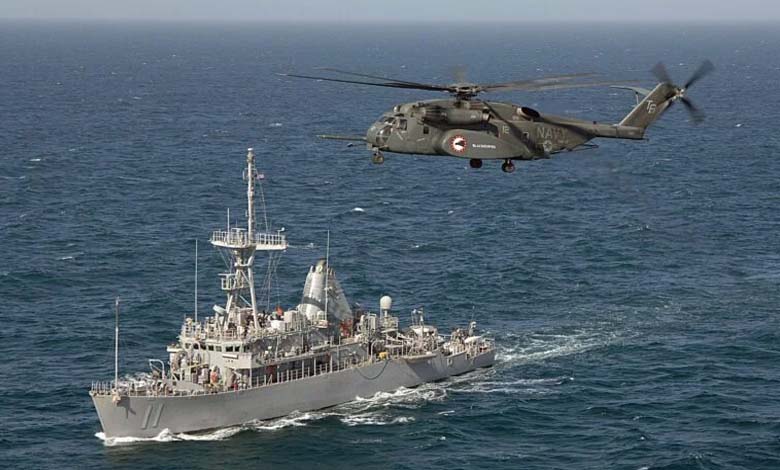
A cable from the U.S. Department of State reveals that establishing what is referred to as “Maritime Freedom Construction” represents a crucial first step toward building a maritime security architecture for the Middle East in the post-conflict phase.
A cable from the U.S. Department of State shows that the administration of President Donald Trump is seeking to engage other countries in order to form an international coalition aimed at restoring freedom of navigation in the Strait of Hormuz, amid disagreements between Washington and several European and Western countries over the war.
-
Iran war threatens submarine cables in the Strait of Hormuz
-
Iranian proposal to reopen the Strait of Hormuz and end the war in exchange for delaying the nuclear issue
The cable, dated April 28, states that U.S. Secretary of State Marco Rubio approved the creation of “Maritime Freedom Construction,” describing it as a joint initiative between the Department of State and the Department of Defense.
It notes that “Maritime Freedom Construction” constitutes a decisive first step toward establishing a maritime security framework for the Middle East in the post-conflict period. This framework is considered essential to ensuring long-term energy security, protecting critical maritime infrastructure, and preserving the rights and freedoms of navigation in strategic sea lanes.
The cable explains that the State Department-led component will act as a diplomatic hub between partner countries and the maritime transport sector, while the Department of Defense component, operating from the headquarters of U.S. Central Command in Florida, will coordinate maritime traffic in real time and maintain direct communication with vessels transiting the strait.
-
Hormuz and the nuclear issue: Iranian blackmail threatens the fragile truce
-
Tehran closes the Strait of Hormuz again in a tug-of-war with Washington.
The Wall Street Journal was the first to report on this U.S. initiative.
The cable states that U.S. embassies are required to present this initiative verbally to partner countries by May 1, excluding Russia, China, Belarus, Cuba, and “other adversaries of the United States.”
It indicates that participation may take diplomatic forms, information sharing, sanctions enforcement, naval presence, or other forms of support.
The cable adds: “We welcome all levels of participation and do not expect your country to divert its naval assets and resources away from existing regional maritime structures and organizations,” noting that the initiative is unrelated “to the maximum pressure campaign adopted by the president or to the ongoing negotiations.”
-
Hormuz Alliance: Nearly 40 countries meet to discuss restoring freedom of navigation
-
An international initiative led by France and the United Kingdom to reopen the Strait of Hormuz
During the war, Trump called on countries dependent on oil passing through the Strait of Hormuz to assume responsibility for securing this strategic maritime passage, in statements reflecting a U.S. approach aimed at encouraging Washington’s partners to play a greater role in protecting global energy routes amid ongoing military escalation in the region.
Countries such as France, the United Kingdom, and Germany refused to participate in the war against Iran but have for some time sought to contribute to securing navigation in the Strait of Hormuz, following threats made by the Islamic Revolutionary Guard Corps in a passage through which 20 percent of global oil and gas flows.
Many European and Western countries have been affected by the continued blockade in the Strait of Hormuz while calling for the success of negotiations between Iran and the United States, under Pakistani mediation, in order to overcome the crisis.
-
Legal challenges facing Iran in imposing transit fees in the Strait of Hormuz
-
Maritime threat level in the Strait of Hormuz at its highest
-
Advanced techniques and striking power: how the United States besieges Iran and clears the Strait of Hormuz
-
U.S. threats push oil tankers to avoid the Strait of Hormuz
-
Report: Iran cannot open the Strait of Hormuz, even if it wanted to