Charles de Gaulle heads to the Mediterranean… supporting allies and containing escalation risks in the region
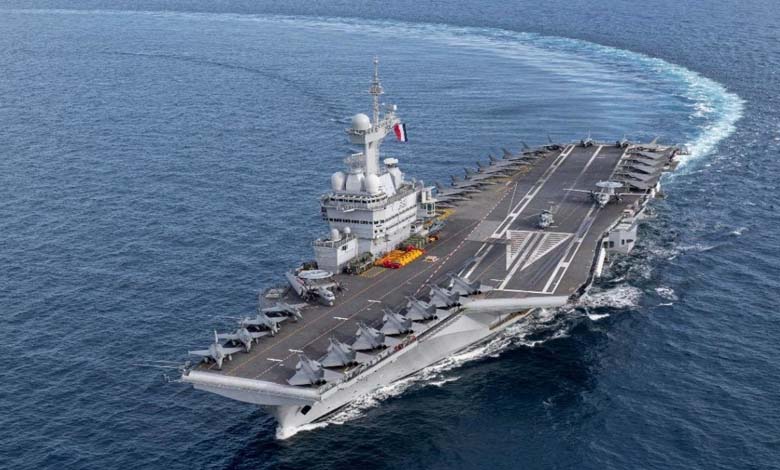
In a move reflecting growing international concern over the expansion of tensions in the Middle East, the French aircraft carrier Charles de Gaulle is heading to the Mediterranean Sea. This deployment aims to support allies, strengthen military deterrence, and contain the risks of escalation in the region.
The move reflects a new phase in France’s military role in the region as the war involving Iran intensifies. French President Emmanuel Macron announced the deployment of France’s only aircraft carrier, the Charles de Gaulle, to the Mediterranean.
-
From the Atlantic to the Seine: France shifts its military course to affirm its operational readiness
-
An Army of Security Forces to Secure the Opening of the Paris Olympics
According to the French television channel Franceinfo, the deployment is intended to protect French interests, its forces, and its allies at a time when the risk of a widening conflict continues to grow.
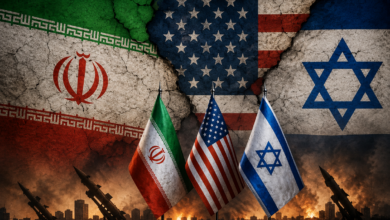
In a televised address on Tuesday evening, Macron said he had sent military reinforcements to the Middle East, including the aircraft carrier Charles de Gaulle and a group of accompanying frigates. The move comes days after the outbreak of war following U.S. and Israeli strikes on Iran and the subsequent military response launched by Tehran against several countries in the region.
-
France/Roissy: technical failures forced passengers to take off without their luggage
-
Terrorists Out of Prison: A Backlash at the Heart of France
Macron explained that the decision comes amid an expanding war, emphasizing that France is compelled to take measures to protect its security, its citizens, and its military bases, as well as to safeguard its allies in the region such as the United Arab Emirates, Qatar, Kuwait, Jordan, Iraq, and the Kurdistan Region of Iraq.
He stated: “I have ordered the aircraft carrier Charles de Gaulle, with its air capabilities and its accompanying frigates, to head to the Mediterranean Sea.”
The Charles de Gaulle is the flagship of the French Navy and a major instrument of military deterrence. It allows France to launch air operations from the sea and to monitor both maritime and airspace in conflict zones, while also supporting defensive operations and protecting forces and allies in the region.
-
Preparations for 2027: Macron Seeks to Shield France from a Potential Far-Right Rise
-
France moves closer to banning the Muslim Brotherhood: what is new?
A strategic step
The French aircraft carrier Charles de Gaulle effectively functions as a mobile air base that enables France to conduct military operations from the sea without relying on land bases.
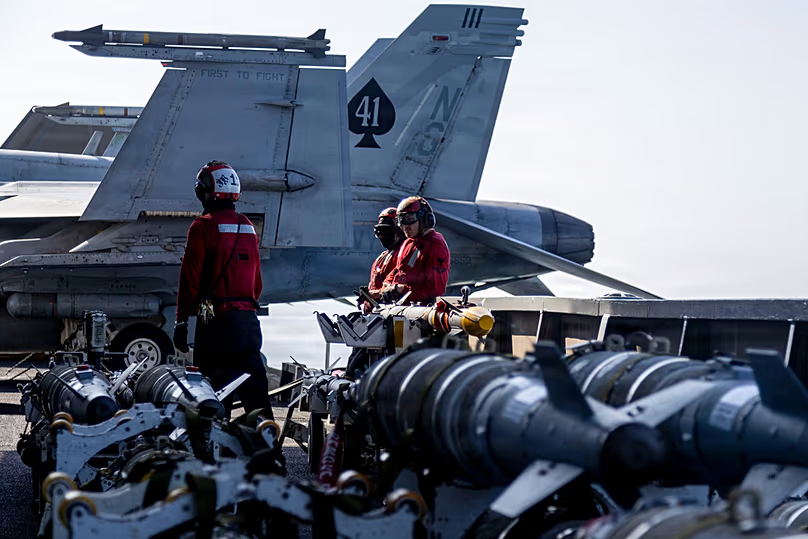
On board the Charles de Gaulle is a group of Rafale Marine fighter jets capable of carrying out long-range precision strikes, along with early warning aircraft and military helicopters. These capabilities allow for air patrols and surveillance of both maritime and airspace domains in the eastern Mediterranean region, while also providing the French military with rapid intervention capability in the event of escalating tensions or the need to protect forces and allies in the area.
-
Irregular migration: confusing figures in France raise serious questions
-
Extremism knocks on France’s door amid political crisis
An advanced military command center
The importance of the Charles de Gaulle extends beyond serving as a platform for aircraft operations; it also functions as a fully integrated command and operations center. It is equipped with advanced communication and surveillance systems that enable coordination between naval and air forces, as well as participation in international coalitions or joint operations with NATO forces, according to the French newspaper Le Parisien.
Through these capabilities, the carrier can manage large-scale military operations in the region should the crisis escalate.
-
New Protests in France: Public Anger Rises Against Lecornu
-
France’s Muslim Brotherhood… warnings over infiltration and calls to address its root causes
A tool of deterrence and power projection
The deployment of an aircraft carrier in a region experiencing tensions sends a strong military and political message. The presence of the Charles de Gaulle in the eastern Mediterranean demonstrates France’s ability to project military power far beyond its territory and aims to deter any potential threats to French interests or those of its allies.
The carrier is typically accompanied by a naval strike group that includes air defense frigates, attack submarines, and logistical support ships, making it part of an integrated naval force capable of protecting itself and conducting a wide range of combat missions.
-
France ends its chapter in Senegal… Dakar faces the challenges of sovereignty and security gaps
-
Kuwait and France Strengthen Economic Cooperation with Strategic Partnership Agreement
Protecting French interests
The deployment also provides a security umbrella for French military bases in the Middle East and can support evacuation operations for French citizens should the security situation deteriorate, according to the official website of the French Navy.
It can also be used to support humanitarian or military operations during crises, making it a versatile tool within France’s defense policy.
An advanced platform for surveillance and intelligence
The Charles de Gaulle is equipped with advanced radar and sensing systems as well as aircraft specialized in reconnaissance and early warning, giving it significant capacity to monitor military movements across the region.
These systems are capable of detecting aircraft, missiles, and even drones, enabling the collection of crucial intelligence that helps assess the security situation and guide appropriate military decisions.
-
France Leads European Initiative to Ban the Muslim Brotherhood… What’s New?
-
New European Sanctions Await Russia… France Seeks U.S. Coordination
Technical capabilities
The aircraft carrier Charles de Gaulle is approximately 261 meters long and has a displacement of more than 40,000 tons. Nearly two thousand military personnel serve on board. It is powered by two nuclear reactors, allowing it to remain at sea for extended periods without refueling, and it can carry between 30 and 40 aircraft and helicopters.
It is currently the only operational aircraft carrier in the French Navy, making it one of the most important instruments of French military power abroad.
For her part, the French Minister of Defense confirmed that Paris’s move falls within a defensive posture aimed at securing the region rather than entering into a direct confrontation, while France is also working to strengthen its defensive capabilities in the Middle East through the deployment of additional fighter jets and air defense systems.
-
The Last Base Extinguished… Côte d’Ivoire Deepens France’s Losses in Africa
-
France Fights ISIS in Syria: Strikes on “Specific Targets”
In his speech, Macron held Iran primarily responsible for the crisis, referring to its nuclear program, which he described as dangerous, as well as its support for armed groups in the region and its repression of internal protests.
At the same time, he criticized the U.S. and Israeli strikes against Iran, arguing that they were carried out outside the framework of international law.
The French president also warned Israel against launching any ground operation in Lebanon, stating that such a move could represent a dangerous escalation and a strategic mistake, while also affirming that Hezbollah had made “a major mistake” when it initiated attacks against Israel.
As the French aircraft carrier moves toward the eastern Mediterranean, Paris believes that its military presence there will enable it to deter any further escalation and protect its interests and those of its allies in a region facing one of the most serious geopolitical crises in recent years.
-
New Security Warning in France: The Muslim Brotherhood, “the Greatest Internal Threat”
-
The ‘La France Insoumise’ party rallies to impeach Macron