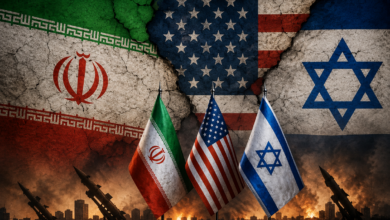
The war against Iran will shape the future of the West Bank
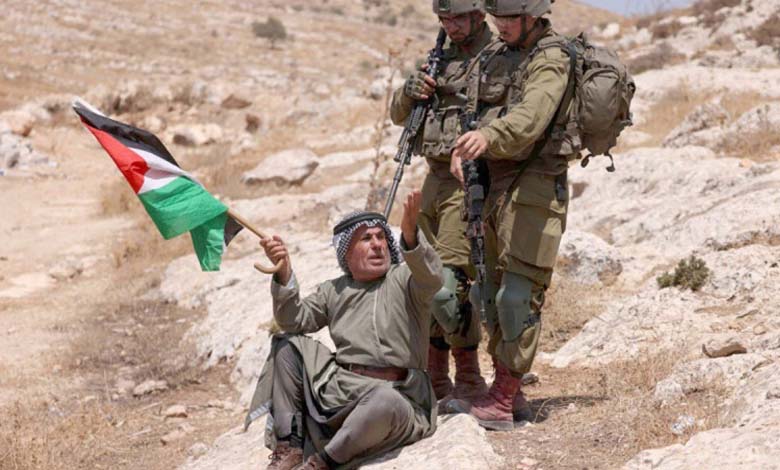
The Israeli government may take advantage of any reinforcement of its military superiority to expand the scope of its control, including by advancing plans to annex additional territories.
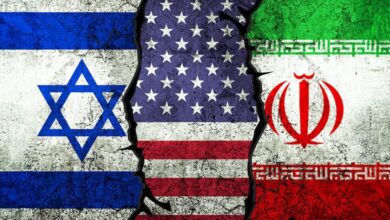
As military operations carried out by the United States and Israel against Iran intensify, experts are raising important questions about the potential repercussions of this war on the Palestinian territories, particularly the West Bank, which could undergo strategic transformations depending on the evolution of the regional confrontation. The open conflict between Tel Aviv and Washington on one side and Tehran on the other is not merely a struggle distant from the Palestinian arena; it may also significantly influence Israel’s future policies there.
-
Israeli Government Keeps Meeting Locations Secret for Fear of Iranian Retaliation
-
Advanced Israeli-American consultations on an independent Palestinian government in Gaza
Palestinian political analyst Ahmed Aboulheija asserts that the outcomes of this war could reshape the strategic map of the region. According to him, any significant shift in the regional balance of power would directly affect the nature of Israeli policies toward the West Bank. Aboulheija argues that the Israeli government could exploit any strengthening of its military and diplomatic superiority to broaden the extent of its control, including by reviving plans to annex additional lands or by consolidating its influence in sensitive areas.
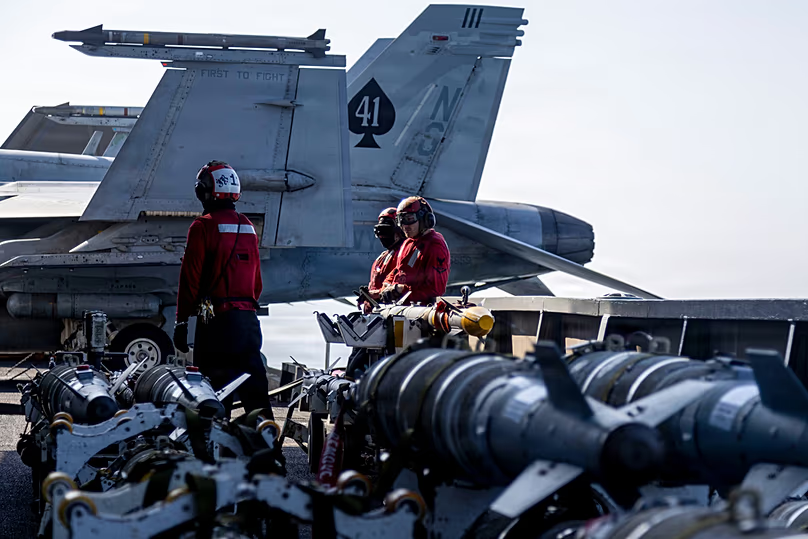
These analyses come amid a series of intensive attacks on Iran, including U.S. and Israeli airstrikes, to which Tehran has responded with missiles and drones targeting sites in Israel as well as American bases across the region. In this context, questions arise about whether Tel Aviv will rely on battlefield developments to implement its regional vision in the West Bank, particularly given the complex demographic reality there, which includes around three million Palestinians alongside more than 700,000 Israeli settlers distributed across numerous settlements and outposts.
-
Rare Acknowledgment: Israeli Court Orders Government to Stop Starving Palestinian Prisoners
-
The rejection of the two-state solution by the Israeli ambassador disappoints the British government
The Palestinian expert adds that any Israeli effort to strengthen its strategic superiority could translate into concrete steps on the ground, such as expanding settlement activity or implementing projects aimed at informally annexing vast areas through the use of legal and administrative tools designed to consolidate control over Palestinian land. He notes that the Israeli government has recently adopted legal mechanisms allowing land in the area classified as “Area C” to be converted into state property, a move considered one of the most sensitive since 1967. This area covers approximately 61 percent of the West Bank.
According to Aboulheija, these measures are part of a broader Israeli policy aimed at gradually establishing a reality of incremental annexation. This approach includes restructuring local administration in line with Israeli security and political interests, as well as gradually integrating the Palestinian economy into the Israeli economy. Such a process reduces Palestinians’ ability to build an independent economic structure and increases their dependence on Israeli control.
-
Far-right promotes banning gender integration in the Israeli army
-
Israeli sources rule out a Washington–Tehran agreement in Geneva
The analyst further explains that the Israeli strategy also includes what he describes as a policy of “slow displacement,” relying on a series of incremental measures such as building restrictions, land confiscations, and settlement expansion, alongside stricter security measures. These policies aim to indirectly push Palestinians to leave certain areas without resorting to direct mass expulsions. He notes that these measures have accelerated in specific regions, despite regional and international attention being largely focused on other conflicts, particularly the war in Gaza and the confrontation with Iran.
Recent Israeli measures also include increased restrictions in Jerusalem, most notably limitations on access to the Al-Aqsa Mosque and the prohibition of Tarawih prayers during the month of Ramadan, in addition to tighter constraints on the activities of civil institutions in the city. These steps appear to be part of an effort to reshape the public space in accordance with Israel’s long-term policies.
-
Gaza and Iran outside the Israeli decision… Who controls them then?
-
Iran draws up a list of Israeli and U.S. targets in response to a potential attack
In this context, the Palestinian expert believes that the future of the West Bank is closely tied to the outcome of the regional war. If Israel succeeds in strengthening its strategic position, it could be encouraged to formally announce the annexation of parts of the West Bank and accelerate settlement expansion and displacement processes. Conversely, if regional balances remain relatively unchanged, the current situation may persist, accompanied by a gradual rise in tensions and confrontations without a fundamental shift in the legal and political status.
Although the direct impact of the war on Gaza is considered less significant compared to its potential consequences for the West Bank, the continuation of the conflict or its transformation into a prolonged war of attrition could also reshape dynamics there. This highlights the deep interconnection between the various conflict arenas across the region. The close link between the confrontation with Iran and developments in the Palestinian arena makes the West Bank a decisive space where the results of the regional conflict could manifest directly, whether through accelerated annexation projects or through managing the conflict at a lower intensity while waiting for shifts in the balance of power.
-
Israeli media reveal approval of three countries to send forces to Gaza
-
Israeli forces raid the UNRWA headquarters in Jerusalem
The report concludes that the West Bank will remain a reflection of the broader regional war’s effects. Every military or political development in Iran or in the Israeli-American confrontation may carry potential repercussions for the Palestinian population and Israeli policies, making the monitoring of the war’s evolution essential to understanding the future of control and territorial expansion in the West Bank.
-
The Israeli army silences him after he shuts down his station over political programming
-
The Abu Shabab militia will oversee the reconstruction security in Rafah with Israeli approval