Trump faces the challenge of resolving a war that has failed to achieve its objectives
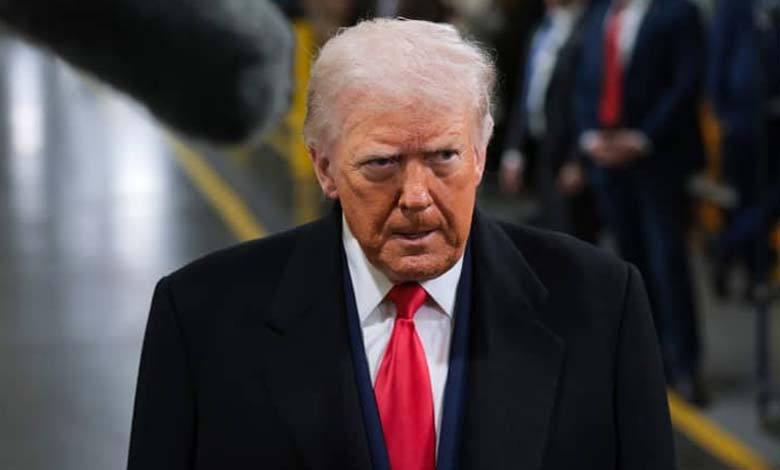
The Republican Party believes that the crisis does not bode well, considering that an unresolved conflict is likely to lead to continued global economic repercussions.
-
Trump and Iranian nuclear fuel: a strategic move to decide the war
-
Trump and Iran: three military paths on the decision table
More than two months after the outbreak of a war that has produced no decisive military or diplomatic victory, President Donald Trump faces the prospect of a prolonged conflict with Iran, without a clearly defined end, leaving the United States and the world confronting a more serious situation than before the war began.
With each side expressing confidence that it holds the upper hand and with their positions far apart, no clear way out is visible, even after Tehran presented a new proposal to resume negotiations, which Trump quickly rejected on Friday.
For the U.S. president and the Republican Party to which he belongs, the crisis is troubling. An unresolved conflict is likely to lead to continued global economic repercussions, including rising gasoline prices in the United States, increasing pressure on Trump, whose approval ratings are declining in polls, and reducing the chances of Republican candidates ahead of the congressional midterm elections in November.
-
Trump and Iran: 4 Possible Scenarios, Including “Shock and Awe”
-
The war with Iran and the constraints of Congress… Trump surpasses the 60-day deadline
Unmet objectives
These repercussions highlight a deeper problem: the war has failed to achieve many of the objectives announced by Trump. Certainly, U.S. and Israeli strikes have significantly weakened Iran’s military capabilities. Nevertheless, many of the often-changing war objectives set by Trump — from regime change to preventing Iran from acquiring a nuclear weapon — have not yet been realized.
Concerns about a prolonged stalemate increased when Trump canceled the trip of U.S. negotiators to Islamabad at the beginning of last week, then rejected an Iranian proposal to end the war, which has seen a ceasefire in place since April 8.
Tehran proposed postponing discussions on its nuclear program until the official end of the conflict and the conclusion of an agreement on reopening the Strait of Hormuz. Trump deemed this unacceptable, demanding that the nuclear issue be addressed first.
-
Mutual criticism… the Iran war reignites the rift between Trump and Merz
-
Iran to Trump: we did not request the extension of the truce, and the loser does not set the terms
A glimmer of hope appeared on Friday when the Islamic Republic News Agency reported that Tehran had sent a revised proposal through Pakistani mediators, causing global oil prices — which had risen sharply since Iran effectively closed the strait — to fall. Trump told reporters that he was “not satisfied” with the proposal, while noting that phone contacts were continuing.
Failing to regain control of this vital maritime route for Iranian oil shipments at the end of the conflict would be a severe blow to the U.S. president’s legacy. Laura Blumenfeld, a Middle East expert at Johns Hopkins University in Washington, said: “People will remember him as the president who made the world less safe.”
White House spokeswoman Olivia Wells said that “Iran’s desperation is increasing due to military and economic pressures,” asserting that “Trump holds all the cards and has all the time he needs to secure the best deal.”
-
We destroyed their forces and nuclear laboratories: Trump outlines the results of the war against Iran
-
Trump keeps Iran under pressure and anticipates an imminent end to the war
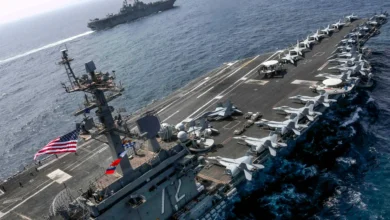
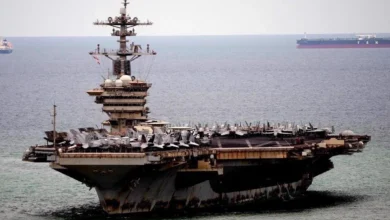
With uncertainty surrounding his next steps and no clear end to the crisis, Trump raised in private meetings the possibility of imposing a prolonged naval blockade on Iran, perhaps for several more months, to increase pressure on its oil exports and force it to agree to abandon its nuclear program.
Iran, however, continues to show defiance, having exerted significant pressure on the United States and its allies, causing an unprecedented shock to energy supplies by constricting navigation in the strait, through which one-fifth of the world’s oil previously flowed freely before the war.
Analysts say Tehran will feel emboldened by realizing that this leverage will remain at its disposal even after the war. John Alterman of the Center for Strategic and International Studies in Washington said: “Iran realized that even in a weakened state, it can close the strait whenever it wishes… This realization makes it stronger than it was before the war.”
-
Trump’s deadline enters its decisive hours… Iran under bombardment and warning about trains
-
U.S. President Donald Trump threatened to destroy bridges and power stations in Iran
Uranium stockpile
Trump — who took office promising to avoid foreign interventions — has also failed to achieve his main declared objective in attacking Iran on February 28, namely blocking its path toward acquiring a nuclear weapon.
It is believed that a stockpile of highly enriched uranium remains buried since the air raids carried out by the United States and Israel last June, and it could be retrieved and further processed into bomb-grade material. Iran demands that the United States recognize its right to enrich uranium for what it says are peaceful purposes.
Olivia Wells stated that Trump “has met or exceeded” all military objectives, including taking measures “to ensure that Iran will never possess a nuclear weapon.”
-
Trump mobilizes for a Hormuz alliance and broader international involvement in the war against Iran
-
Trump, CNN and the speech of Iran’s new Supreme Leader: four minutes that reignite the war
Another war objective announced by the U.S. president — forcing Iran to stop supporting allied groups in the region such as Hezbollah in Lebanon, the Houthis in Yemen, and Hamas — has also not been achieved.
Defense Secretary Pete Hegseth denied before Congress that the conflict had turned into a “quagmire,” even though Trump had initially predicted it would end within four to six weeks.
Resuming peace talks is unlikely to lead to a quick solution given the wide gap between the two sides. Although Trump says he will accept nothing less than a long-term solution that ends the Iranian threat, he has at times shown signs of seeking an exit strategy from a conflict that lacks broad support among Americans.
-
Trump studies Iran’s future after the war and keeps an eye on Khamenei’s successor
-
Iran protests put Trump to the test between escalation and dialogue
The risk of a “frozen conflict”
With negotiations at a standstill, some analysts have suggested that the war could turn into a frozen conflict for which a permanent solution would be difficult to find. This could prevent Trump from significantly reducing troop numbers in the Middle East.
The United States is already bearing new strategic costs, including friction with traditional European allies whom Trump did not consult before launching the war.
Trump strongly criticized NATO partners for not sending warships to help reopen the strait and last week spoke about the possibility of withdrawing troops from Germany, Spain, and Italy.
-
After Trump’s threats, Iran affirms readiness for war and dialogue
-
Iran Warns Trump Against Intervention and Draws the Red Line
The U.S. president must also deal with a more hardline Iranian leadership dominated by the Revolutionary Guards, who took control after the strikes killed several senior figures, including Supreme Leader Ayatollah Ali Khamenei.
Trump’s call at the start of the conflict for the Iranian people to overthrow their rulers went unheeded. Domestically, the U.S. president faces pressure to end a war that, according to a Reuters/Ipsos poll, has driven his approval rating down to 34 percent, the lowest of his term, and pushed gasoline prices above four dollars per gallon ahead of midterm elections in which Republicans risk losing control of Congress.
Another White House spokeswoman, Taylor Rogers, said Trump is committed to maintaining his party’s majority in Congress and that high gasoline prices represent only “short-term disruptions” that will be overcome as the conflict subsides.
-
Trump Announces Ceasefire Between Israel and Iran
-
Behind Trump’s Deal: How Iran and Israel Agreed to End the War
Nevertheless, Iranians are aware of the domestic difficulties Trump faces and may be willing to wait until the end of his term. The question that remains is how long they can avoid an economic catastrophe.
Sina Toossi, a senior fellow at the Center for International Policy in Washington, wrote on the X platform that “Iran is neither divided nor collapsing, but is trying to buy time.”
-
Energy Investments: Iran’s New Card to Woo Trump and End Sanctions
-
Trump’s Pressure Pushes Iran to Accept U.S. Demands on Nuclear File
-
Iran’s Nuclear Program Back in the Spotlight… and Trump Seeks Political Breakthrough