Golden passports and illusory palaces… this is how Iranian leaders conceal their wealth
While large segments of the Iranian population struggle under severe economic hardship, Tehran’s leaders secretly weave an extraordinarily complex financial network that has turned sanctions evasion into a refined form of engineering that disregards borders and laws.
The new Supreme Leader, Mojtaba Khamenei, is no exception. His wealth, estimated at three billion dollars, does not sit in Tehran’s banks but moves across world capitals, hidden behind layers of multiple nationalities, shell companies, and luxury towers, according to a report by the American magazine The National Interest.
-
Who are the most prominent Iranian leaders killed since the start of the war?
-
List of Iranian leaders killed since the start of the war: mapping the collapse of the power structure
Dissecting this system reveals a transcontinental “criminal model” that combines geographic agility with legal sophistication in exploiting loopholes in the global financial system, turning every golden passport and every shell company into a brick in the financial fortress that shields the price of blood and destruction.
Businessman Ali Ansari stands at the heart of this structure as the ideal front for an empire of opacity. Born in Iran in 1968, no Iranian trace appears in his global activities. He is a Cypriot citizen and carries in his pocket another passport from Saint Kitts and Nevis if needed, while his legal address amounts to nothing more than a post office box in Dubai.
-
Who is Mojtaba Khamenei, before whom Iranian leaders bow?
-
The people are stronger than our leaders: Iranian president’s son reveals secrets of a strategy-less war
From this virtual hub, his companies branch out to the Isle of Man and Luxembourg, enabling him to acquire Hilton hotels in Frankfurt as well as luxury residential properties in England, Spain, and Germany.
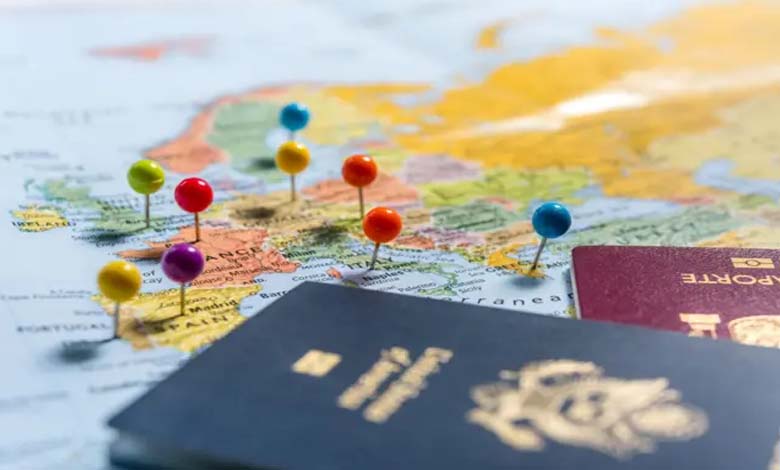
The game began with the purchase of nationalities—those “golden passports” that have become a strategic commodity in the international evasion market, allowing criminals and sanctioned individuals to conceal their true identities behind the citizenship of small states that do not question the source of funds.
-
Israel strikes the Iranian leadership complex, the regime’s most central and strategic headquarters
-
Iranian Movement Bridges Gap Between Coordinating Framework Leaders
Hossein Shamkhani, son of Ali Shamkhani, former advisor to Ali Khamenei, followed the same path, obtaining a passport from the Dominican Republic for one hundred thousand dollars. The mastermind behind sanctions-circumvention networks had likewise adopted this nationality before it was later revoked.
In a move that puzzled allies, the United States Department of the Treasury withdrew last February its warning regarding Saint Kitts golden passports, despite documented risks, leaving the door ajar for more illicit funds.
After the mask of nationality comes the role of shell companies, the most lethal weapon in Iran’s concealment arsenal. Ansari’s hotels in Frankfurt do not belong to him directly but are tied to a complex network of fronts spanning Germany, the Netherlands, and Luxembourg, ultimately ending in an unidentified entity in the Caribbean.
This legal engineering is not unique to Ansari. Iran has used shell companies to obtain prohibited American technologies later used in drones targeting U.S. forces, while Shamkhani managed dozens of fictitious entities that laundered billions of dollars from illicit oil revenues and cash for the benefit of the regime.
-
Detention of an Iranian woman in the United States in connection with an arms network linked to Sudan
-
Large segments of Iranian society fear a further deterioration in living conditions as a result of the conflict’s repercussions
Each time authorities track down one company, another appears behind it, then another, in a maze that ends only at the wall of silence provided by opaque safe havens.
If shell companies are the vehicles, luxury real estate is the final destination: a safe haven for dirty money combining stable value, discreet cash purchases, and minimal scrutiny.
This clandestine financial system—from golden passports to shell companies to luxury towers—does not merely protect an individual’s wealth but pumps the financial oxygen that keeps Iran’s war machine alive.
-
Refugees in the West Bank face shrapnel from Iranian missiles
-
The Iranian regime under bombardment: weakened control, divisions, and fear
As Washington continues to pursue its adversaries, this reality reveals a troubling truth: the loopholes in the global financial architecture exploited by Khamenei, Ansari, and Shamkhani are not inevitable but political choices that can be addressed.
Pressuring states that sell citizenship, immediately revoking the passports of Iranian officials and members of the Revolutionary Guard, and shutting down the American golden passport program itself are initial steps toward draining this swamp.
Tightening oversight of shell companies through full enforcement of corporate transparency laws and resisting attempts to dismantle them, alongside compelling allied capitals in Europe, Asia, and the Middle East to enact laws preventing suspicious funds from flowing into both residential and commercial real estate sectors, remains the only path to unmasking the system.
-
Trump threatens to seize Iranian oil
-
An Iranian newspaper: Tehran expands its target bank in the Gulf
-
Iran war enters day 21: bombardment and leadership bleeding
-
A chilling call between the Mossad and a senior Iranian commander
-
Israel reports shortage of interceptor missiles in the face of Iranian attacks