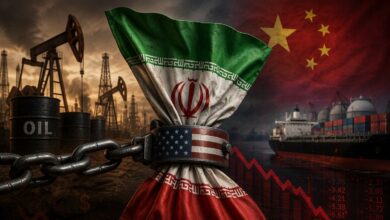
Iran officially calls on Gulf states to close U.S. bases
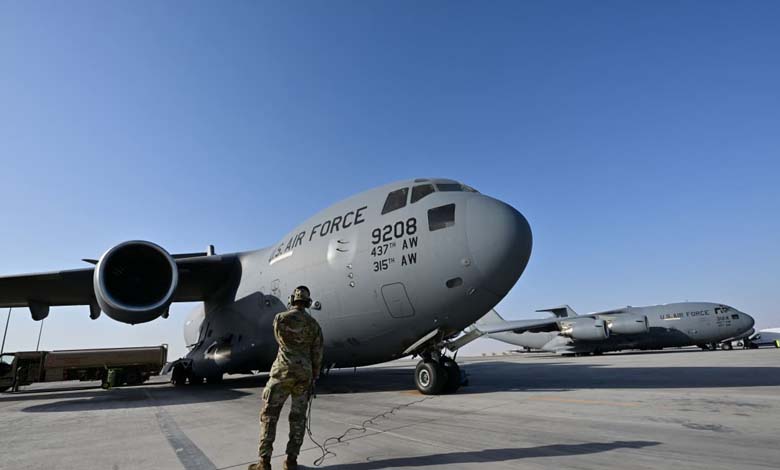
The Speaker of the Iranian Parliament has called on regional countries to establish security independently of U.S. intervention, despite ongoing Iranian attacks on Gulf states.
Iranian Parliament Speaker Mohammad Bagher Ghalibaf said on Tuesday on state television that countries in the region had been informed of the need to end the U.S. military presence on their territories, adding that “the American presence will not bring security and the Americans must leave.” This comes as Gulf states continue to emphasize the importance of maintaining cooperation with the United States across various fields and even strengthening it, particularly in light of repeated Iranian attacks.
Ghalibaf stressed that the U.S. military presence in the Middle East does not ensure security, noting that regional security should be established by the countries of the region themselves.
He added: “The face and order of the Middle East will change, but not according to American plans. We, the Islamic countries of the region, will establish regional order and security in both economic and security dimensions.”
The new Iranian Supreme Leader, Mojtaba Khamenei, upon assuming leadership after succeeding his father Ali Khamenei—who was killed at the beginning of the war—had called for the withdrawal of U.S. forces from the Middle East, explicitly urging Gulf countries to stop hosting such bases.
Meanwhile, several leaders of the Islamic Revolutionary Guard Corps called for the removal of American troops from the region, the closure of military bases, and the payment of war compensation by Gulf states to end the conflict, demands that appear unlikely to receive a favorable response.
Media sources reported days earlier that the United Arab Emirates does not intend to close U.S. military bases on its territory, following an Iranian request in this regard.
NBC reported, citing UAE Ministry of Foreign Affairs official Lana Nusseibeh, that her country rejects Iranian demands to close these bases. She also noted that her country, along with several regional states, continues to favor diplomatic solutions to address regional tensions.
For its part, Doha, which hosts the U.S. Al Udeid Air Base, confirmed the continuation of its military partnership with the United States and its intention to strengthen defense cooperation even after attacks targeting bases on its territory. It is also unlikely that Saudi Arabia and Bahrain—home to the headquarters of the U.S. Fifth Fleet—will respond positively to these calls, particularly amid unprecedented Iranian escalation.
During the conflict, Tehran targeted U.S. bases using drones and ballistic missiles, resulting in the deaths and injuries of American soldiers, while also launching attacks on civilian sites and infrastructure.
On the ground, attacks against Gulf states continued. In Abu Dhabi, one person was killed, and a fire broke out in an industrial area in the Emirate of Fujairah on Tuesday morning following ballistic missile debris and a drone strike. Qatar also reported a fire in an industrial area caused by debris from an intercepted missile, while Kuwait and Saudi Arabia announced intercepting missile and drone attacks.
The Fujairah Government Media Office said in a statement that “the competent authorities confirmed a fire in the Fujairah oil industries area resulting from a drone attack, with no casualties reported.”
The statement added that “civil defense teams in the emirate responded immediately and brought the incident under control.” Earlier, the UAE Ministry of Defense had announced it had dealt with “missile and drone attacks originating from Iran.”
Subsequently, the Abu Dhabi Media Office stated that “the competent authorities in the Emirate of Abu Dhabi handled an incident resulting from falling debris in the Bani Yas area following the interception of a ballistic missile by air defense systems, which led to the death of a Pakistani national.”
Meanwhile, the Saudi Ministry of Defense announced in five statements that it had intercepted and destroyed 14 drones targeting the country’s Eastern Province at dawn on Tuesday, without providing further details.
In Kuwait, the army stated in a statement that it had intercepted missile and drone attacks targeting the country, without additional details.
Meanwhile, Qatar’s Ministry of Interior said on Tuesday morning that civil defense “is dealing with a limited fire in the industrial area caused by falling debris following the interception of a missile, with no injuries reported.”