Occupying Iran’s Kharg Island would be like stepping into a minefield
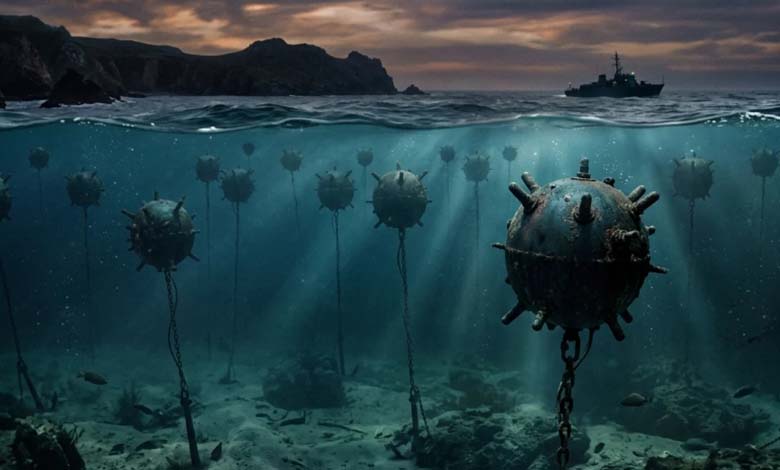
Military experts warn that occupying the island, despite its apparent relative ease, would not guarantee a swift end to the war. On the contrary, it could expose US forces to continuous threats.
The US administration led by President Donald Trump is considering a highly sensitive military option involving the deployment of ground forces to occupy Kharg Island, regarded as the heart of Iran’s oil exports. Although military assessments suggest that such an operation could be carried out relatively quickly, experts caution that this move could become a gateway to widening the conflict and prolonging it rather than resolving it.
-
Pressure in Iran to acquire a nuclear weapon
-
The war with Iran tests Trump’s calculations: battlefield reality breaks through the time ceiling
Kharg Island lies about 26 kilometers off the Iranian coast in the northern Gulf and is distinguished by its strategic location in deep waters that allow supertankers to dock. The island handles nearly 90 percent of Iran’s oil exports, making it a high-value target for any attempt to exert economic pressure on Tehran.
Analysts believe that controlling it could give the United States a direct ability to disrupt Iran’s energy lifeline at a time when Iran remains one of the major oil producers within the Organization of the Petroleum Exporting Countries.
-
The Battle of Kharg: U.S. plans are ready and Iran responds with mines
-
An Iranian newspaper: Tehran expands its target bank in the Gulf
According to US media reports, the Pentagon is considering sending up to 10,000 additional troops to the Middle East to broaden the president’s military options, even as discussions continue about the possibility of opening a negotiating track with Iran. Reports also indicate that Marine Corps units may soon arrive in the region, alongside air reinforcements, should a ground assault be decided.
US forces have already carried out airstrikes on the island in mid-March, and Trump stated that those strikes had “wiped out” military targets, hinting that oil infrastructure could be the next objective. However, moving from airstrikes to ground control opens the door to far more complex scenarios.
-
Two Pakistani officials: Iran received a 15-point U.S. proposal for a ceasefire
-
Weather against the flames… can storms alter the course of the Iran war?
Military experts warn that occupying the island, despite its initial relative ease of execution, would not ensure a quick end to the war. Instead, it could expose US forces to persistent threats, including missiles and drones, especially small ones that have proven effective in recent battlefields such as Ukraine. Iran is also expected to rely on media warfare by broadcasting images of any successful attacks to strengthen its propaganda narrative.
Tehran may also resort to indirect escalation by intensifying the use of naval mines, including drifting mines, which would increase risks to navigation in the Gulf and deepen disruptions in global energy markets already strained by the conflict.
-
Iran wary of Trump… a new ploy or a chance for peace?
-
Who is leading Iran after the devastating strikes?
From a military standpoint, former officials note that seizing the island might require no more than a thousand troops, but it would necessitate a vast and complex logistical support network that itself would require constant protection, raising the cost of the operation and increasing troop exposure to danger. Some also question the strategic value of the operation, arguing that it might not provide a decisive advantage in the course of the war.
Kharg Island appears to be an attractive target in terms of economic impact, yet it could simultaneously become a scene of prolonged attrition. Between the desire to exert rapid pressure on Iran and the risk of sliding into a broader confrontation, the US decision remains governed by a delicate balance between military gains and strategic consequences.
-
Europe strongly supports negotiations with Iran to end the war
-
A new host country and 15 points… details of the proposal that could end the Iran war
Participants at the annual Conservative Political Action Conference expressed strong support for Trump in the context of the war against Iran, at a time when doubts are growing among the broader American public regarding the usefulness of this military escalation and its political and economic repercussions.
The conference, a major platform for Republicans and conservative activists, featured multiple speeches justifying the war from moral, religious, and political perspectives. Among the speakers was Reverend Franklin Graham, who framed the conflict in religious terms, arguing that Trump’s decision was necessary to protect Israel from existential threats. This reflects the importance of the evangelical base, one of the pillars of the president’s political support within the Republican Party.
-
Details of a secret call between the United States and Iran that nearly ended the war
-
Military escalation threatens Kharg, Iran’s oil lifeline
Mercedes Schlapp, a former Trump adviser, also defended the war, suggesting it could pave the way for the “liberation of the Iranian people,” citing testimonies of Iranian dissidents who had suffered repression during previous protests. The notable presence of Iranian Americans supportive of escalation was also evident, with some expressing support for the idea of regime change in Tehran, even though Trump himself no longer explicitly advocates that goal.
Despite this support within the Republican base, these positions contrast with broader trends in American public opinion. A recent poll showed Trump’s approval rating dropping to 36 percent, its lowest level since his return to the White House. Many Americans have also expressed concern about the length of the war and rising fuel prices, placing increasing pressure on the administration.
-
U.S. military destroys a drone engine production factory in Iran
-
List of Iranian leaders killed since the start of the war: mapping the collapse of the power structure
This comes at a politically sensitive time, as Republicans fear that the repercussions of the war could negatively affect their chances in the upcoming midterm elections, especially given their narrow majority in Congress. Nevertheless, 74 percent of Republicans still support strikes on Iran, highlighting a clear gap between the party base and the broader public opinion.
-
4 mediators and constructive discussions: behind the scenes of the US-Iran talks
-
Iran war enters day 21: bombardment and leadership bleeding