Israel threatens to strike Beirut in response to Hezbollah drones
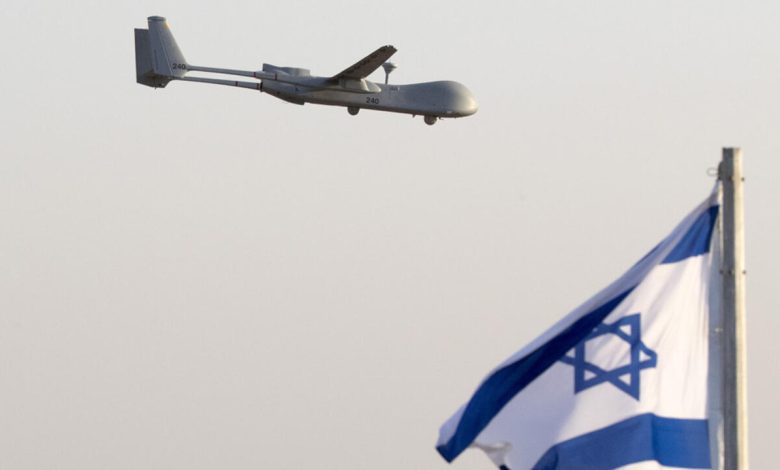
Far-right ministers Itamar Ben Gvir and Bezalel Smotrich are calling for cutting off electricity to Lebanon and demolishing dozens of buildings in Beirut in response to Hezbollah drones.
Israeli Chief of Staff Eyal Zamir has called for renewed strikes on the Lebanese capital, claiming it would be a response to Hezbollah attacks using explosive drones. The remarks coincide with the anniversary of the liberation of southern Lebanon on May 25, 2000, as well as statements by Iranian negotiators suggesting that the Lebanese front must be included in any ceasefire agreement.
-
The United Nations documents war crimes in the confrontation between Israel and Hezbollah
-
Israel announces the killing of the secretary to the Secretary-General of Hezbollah and his nephew
Hezbollah responds to these attacks with operations targeting Israel’s daily and deadly violations of the ceasefire, announced on April 17 and extended until early July. Hezbollah’s Iranian-backed drones, which rely on fiber-optic technology, have become an ongoing challenge for the Israeli military.
On Monday, Israel’s public broadcaster reported that Eyal Zamir said during a restricted security meeting on Sunday: “Beirut must be attacked in response to the threat of Hezbollah’s explosive drones,” a statement widely seen as an escalation aimed at undermining US-mediated negotiations.
In parallel, Israeli National Security Minister Itamar Ben Gvir and Finance Minister Bezalel Smotrich called for cutting electricity to Lebanon and demolishing dozens of buildings in Beirut.
-
New escalation between Israel and Hezbollah after hours of calm
-
Israel cripples Hezbollah’s artillery unit as missile platforms are targeted
Ben Gvir stated: “It is time for the Prime Minister to knock forcefully on US President Donald Trump’s door and tell him we will return to war in Lebanon.”
He added: “We must cut electricity to Lebanon, occupy the Zahrani River, and return to a full-scale war.”
The Zahrani River is about 25 kilometers long, passing through towns and villages in southern Lebanon before flowing into the Mediterranean near Sidon.
Smotrich said the threat posed by Hezbollah’s explosive drones must be eliminated, arguing it is not an inevitable fate.
He added that he approved a special budget of around two billion shekels this week to strengthen defence systems and allow civilian authorities to develop innovative solutions.
-
Messages by Fire… Israel Targets Hezbollah Military Sites in Lebanon
-
Winter fog hides what is most dangerous: Israeli drill amid Hezbollah retaliation fears
However, he stressed that defence alone is not a long-term solution and that the drones must ultimately be defeated.
He further escalated rhetoric, saying: “For every explosive drone, ten buildings in Beirut must collapse, and every serious threat must receive a decisive response.”
Israel suspended strikes on Beirut in April at the request of the United States, amid negotiations with Iran aimed at ending the US-Israeli war on Iran. Washington later extended the ceasefire agreement by 45 days following what it described as “highly productive talks.”
On May 6, the Israeli army assassinated Hezbollah’s Radwan Force commander Ahmed Baloch in an airstrike on Beirut. The Israeli military has also reported almost daily casualties in southern Lebanon due to Hezbollah explosive drone attacks.
-
Israeli Airstrikes on Lebanon’s Bekaa and North: Hezbollah Infrastructure and Missile Sites Targeted
-
Lebanon Dismantles Hezbollah Network with Israeli Support
These drones have become an increasing concern in Israel, with Prime Minister Benjamin Netanyahu describing them as a “major threat” due to their difficulty to detect, urging the military to find countermeasures without success.
These drones rely on a thin fiber-optic cable unwinding during flight, enabling real-time transmission of commands and images without radio waves that can be jammed.
They also do not require GPS or wireless signals, giving them a low electronic signature and making them difficult for the Israeli military to detect.
The public broadcaster reported on Monday that 11 soldiers have been killed in southern Lebanon since the April 17 ceasefire, including six by explosive drones.
-
How Did Israel Target Hezbollah Leaders? Details Emerge to Unveil the Mystery
-
Hassan Bdeir : Hezbollah Leader Targeted by Israeli Airstrike in Beirut
On Monday morning, the Israeli army killed three Lebanese civilians and issued evacuation warnings for ten villages in southern and eastern Lebanon. These developments come amid ongoing violations of the fragile ceasefire extended until early July, despite continuing US-mediated negotiations between Beirut and Tel Aviv.
Since March 2, Israel has launched an expanded offensive on Lebanon, killing 3,151 people and injuring 9,571 as of Sunday evening, while displacing more than one million people, according to official figures.
Israel also occupies areas in southern Lebanon, some for decades and others since the 2023–2024 war, and has advanced up to 10 km inside Lebanese territory during the current offensive.
-
The Secrets of Funding: Israel Warns of Smuggling Operations for Hezbollah
-
The Shadow Game: How Israel Penetrated the Heart of Hezbollah before Hassan Nasrallah’s Assassination