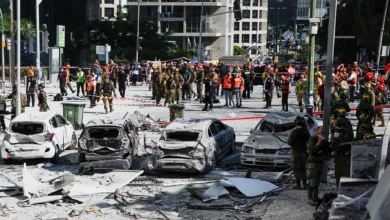
Iran fortifies the home front through executions and arrests
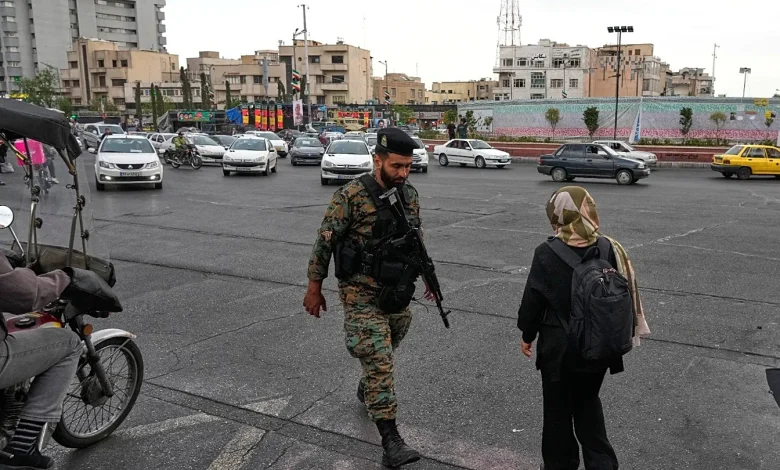
Iran has announced the execution of a man accused of sending information to the United States and Israel about sensitive sites, in the latest execution linked to the recent war, in what appears to be a move aimed more at intimidating the domestic population.
Iran’s judiciary announced on Sunday the execution of an individual accused of transmitting information to the United States and Israel during the war, in the latest case in a series of executions tied to security breaches that accompanied the conflict. The executions target those accused of espionage or transferring sensitive information abroad as part of a broad campaign that authorities say is intended to protect national security and prevent intelligence infiltration.
-
The War on Iran once again avoids the U.S. House of Representatives
-
Negotiating with Iran is a waste of time: American calls to open the Strait of Hormuz by force
The judiciary stated that the individual, identified as Mojtaba Kian, “sent sensitive information regarding a site connected to the defense industries,” adding that “three days after the information was sent, the site in question came under attack and was completely destroyed.”
This is not the first case of its kind. In recent months, Iran has carried out several executions against individuals accused of spying for Israel or the United States. On May 11, Iran executed Erfan Shakourzadeh after convicting him of collaborating with the U.S. Central Intelligence Agency and Israel’s Mossad, and leaking classified scientific information from an institution involved in space and satellite activities.
On May 2, Iranian authorities also executed Yaqoub Karimi Pour and Nasser Bakrzadeh after convicting them of intelligence cooperation with Mossad and gathering information on sensitive locations, including facilities linked to Iran’s nuclear project in Natanz.
-
Iran Responds to New U.S. Proposal for a Settlement to End the War
-
Iran Uses the Truce to Rebuild and Reinforce Its Military Arsenal
On May 13, Tehran announced the execution of Ehsan Afrashteh on charges of espionage, intelligence cooperation with Israel, and transferring information that authorities described as harmful to national security.
This judicial escalation has coincided with a broad security and media campaign against what Tehran describes as “agent networks” and “enemy mercenaries.” The head of Iran’s judiciary stressed that judicial authorities would show no leniency toward those accused of espionage or cooperation with Israel, emphasizing the continued implementation of sentences against individuals convicted in national security cases.
In the same context, authorities intensified pursuit and arrest operations against people accused of photographing military facilities or transmitting coordinates and information via the internet and communication networks to foreign entities. They also imposed broad restrictions on internet usage and tightened surveillance over social media and digital communications to prevent leaks of data related to military movements and sensitive installations.
-
Under pressure from American threats: signs of Iranian concessions to end the war
-
Iran measures the level of the U.S. response against oil stockpiles: war on the horizon
Studies and technical reports indicate that during 2026 Iran resorted to widespread national internet shutdowns and restrictions aimed at strengthening security control over the flow of information.
The Iranian government says these measures came in response to what it considers Israeli and American attempts to infiltrate Iranian military and scientific institutions and exploit internal information during the war. Meanwhile, international human rights organizations argue that executions and trials related to espionage accelerated significantly during the conflict, amid criticism regarding the transparency of judicial procedures and trial conditions.
Combating espionage and information leaks has become one of the Iranian state’s top priorities during the war, with Tehran combining strict security measures and severe judicial punishments, including carrying out death sentences against those accused of cooperating with the United States or Israel or supplying them with data deemed harmful to Iranian national security.
-
From counterintelligence to serving Iran: Washington pursues the defector officer
-
Iran masks alleged sabotage plans in Koweït with a counter-accusation campaign
Iranian authorities also used the war to intensify their crackdown on protesters. Iran’s Tasnim News Agency reported the arrest of 15 people in Fares Province on charges of participating in “riots,” without providing further details about the accusations or the circumstances surrounding the events.
The Iranian regime launched a coordinated and militarized repression campaign aimed at preventing the continuation of any form of opposition activity. In a previous report, Amnesty International said authorities imposed a suffocating militarized atmosphere following massacres linked to protests, marked by widespread arbitrary arrests, enforced disappearances, bans on gatherings, and attacks intended to silence victims’ families.
Diana Eltahawy, Deputy Regional Director for the Middle East and North Africa at Amnesty International, said: “While people in Iran are still trying to recover from the grief and trauma caused by the unprecedented massacres committed during the suppression of protests, the Iranian authorities are carrying out a coordinated assault on people’s rights to life, dignity, and fundamental freedoms in Iran, in a criminal attempt to intimidate and silence the population. Through the ongoing blocking of internet services, the authorities are deliberately isolating more than 90 million people from the rest of the world in order to conceal their crimes and evade accountability.”
-
Iran still retains most of its missile arsenal
-
Stopping Iran’s nuclear program is more important to Trump than the economic situation