Behind the scenes of the Charles de Gaulle mission: a rapid European move to secure Hormuz
France and the United Kingdom are moving swiftly to lead an international coalition aimed at securing the Strait of Hormuz,
amid escalating regional tensions and a stalled diplomatic track between Washington and Tehran, threatening a vital artery of global trade and energy.
Paris and London are holding a video conference on Tuesday to determine the means and capabilities that around forty countries are prepared to provide in order to guarantee freedom of navigation in the Gulf.
Additional European vessels joining
The French newspaper “L’Opinion” revealed the behind-the-scenes details of the Charles de Gaulle aircraft carrier’s mission to protect international navigation, explaining that France and the United Kingdom are working to coordinate a joint mission to secure maritime traffic in the Strait of Hormuz, while negotiations between Iranians and Americans remain deadlocked.
It noted that, amid this tension, only a limited number of ships are now able to leave the Gulf, often with Tehran’s approval, while other European vessels may join the French aircraft carrier in the region.
Djibouti port
Less than a week after crossing the Suez Canal, the French aircraft carrier “Charles de Gaulle” completed its transit through the Red Sea and was docked on Monday at the port of Djibouti, where France maintains a strategically important military base.
According to the French newspaper, “after completing its resupply operations, the flagship of the French Navy is expected, by mid-May, to head to its official deployment area in the Gulf of Aden, and possibly to more distant positions in the Indian Ocean.”
The importance of the Strait of Hormuz
The Strait of Hormuz is a vital artery for the global economy, as a significant share of oil and gas exports passes through it, making it extremely sensitive to any geopolitical tension.
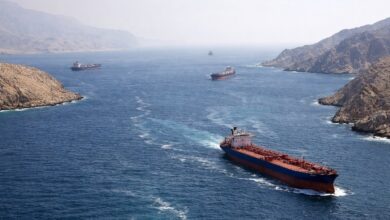
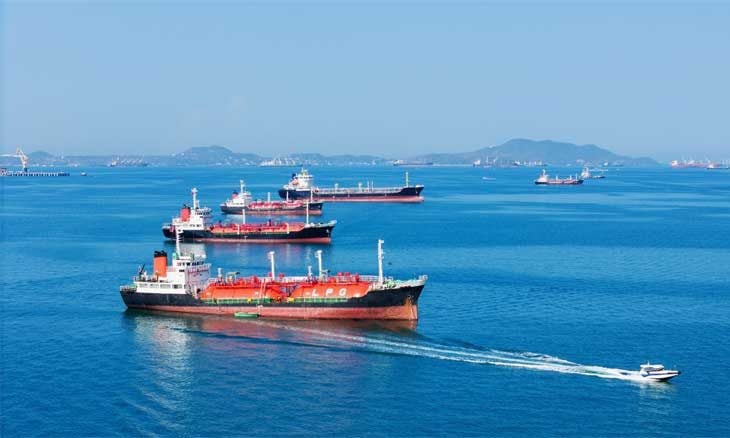
The newspaper pointed out that, with the escalation of the crisis, ship movements have become more cautious, with many tankers leaving the Gulf only under complex conditions, often through indirect understandings with Tehran, reflecting the fragility of the security situation in the region.
According to the newspaper, in parallel with this deployment, Paris and London are working to form a broad international coalition, with a video conference involving around 40 countries to determine each party’s potential military contributions.
The newspaper considers that this initiative aims to establish a joint defensive mission to ensure the reopening and securing of navigation in the strait through coordinated deployment of warships and intelligence sharing, in an effort to avoid any direct threat to commercial vessels.
“L’Opinion” noted that, despite the declared defensive nature of this mission, its underlying context reflects deeper political and security complexities, particularly amid ongoing tensions between Iran and the United States and growing fears of maritime incidents or seizure operations that could lead to an uncontrolled escalation.
The presence of several naval forces in a narrow and sensitive area also increases the likelihood of friction, even if unintended.
The newspaper concluded that the Strait of Hormuz now stands at a delicate balance point between military deterrence and diplomatic easing. While Western powers seek to impose a security reality that guarantees freedom of navigation, the region remains vulnerable to rapid developments that could reshape the rules of engagement in the Gulf and directly affect the stability of global energy markets and trade.