Trump ready to stop the war on Iran without reopening the Strait of Hormuz
Experts believe that ending military operations before reopening the strait is irresponsible and would carry major repercussions for Washington.
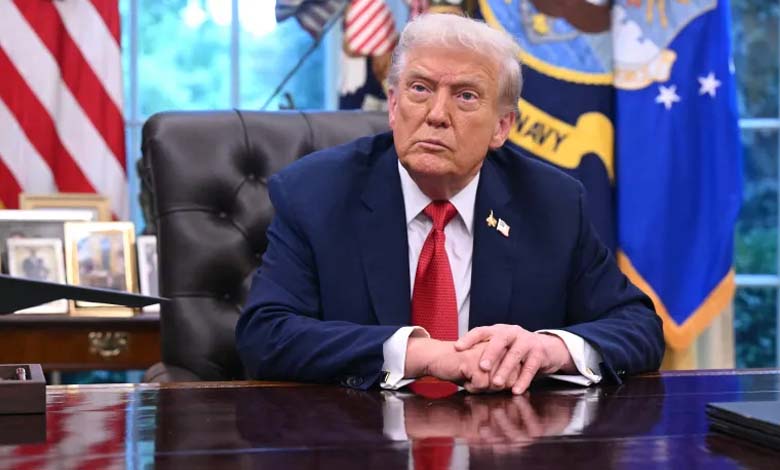
U.S. President Donald Trump informed his aides that he is prepared to end the military campaign against Iran even if the Strait of Hormuz remains largely closed, according to a report by The Wall Street Journal citing officials in his administration. Such a stance would have significant consequences for the course of the war, particularly for the energy sector already affected by the armed conflict.
The American newspaper suggested, in a report published early Tuesday, that this position could prolong Tehran’s firm control over the vital waterway and delay the complex operation to reopen it until later, despite reports indicating the arrival of thousands of U.S. paratroopers in the Middle East on a mission to seize control of Kharg Island and reopen the strait.
The paper said that Trump and his aides concluded in recent days that a mission to reopen the strait by force would push the conflict beyond the timeline he had set, ranging from four to six weeks.
Accordingly, the U.S. president decided that the United States would focus on its primary objectives: weakening Iran’s navy and its missile stockpiles, then reducing the intensity of the current fighting while maintaining diplomatic pressure on Tehran to restore the free flow of trade.
If that fails, Washington will ask its allies in Europe and the Gulf to take the lead in reopening the strait.
The newspaper noted that there are other military options Trump could resort to, but they are not his immediate priority.
During the month of March, the U.S. president publicly expressed contradictory views on how to deal with Iran’s closure of the Strait of Hormuz, in a broader pattern reflecting inconsistency in the war’s objectives and direction overall.
At times, he threatened to bomb civilian energy infrastructure if the strait was not reopened by a specific deadline, while at other times he downplayed the strait’s importance to the United States, saying its closure was a problem for other countries that use it to resolve.
The longer the strait remains closed, the more the global economy is disrupted and fuel prices rise.
Many countries, including Washington’s allies, are suffering from reduced energy supplies that previously passed freely through the passage, as well as industries dependent on fertilizers for food production or helium for semiconductor manufacturing, which are experiencing severe shortages.
Analysts say that without a swift restoration of safe passage through the Strait of Hormuz, Tehran will continue to threaten global trade until the United States and its allies negotiate a deal or end the crisis by force.
The newspaper quoted Suzanne Maloney, an Iran affairs expert and vice president at the Brookings Institution in Washington, as saying that ending military operations before reopening the strait is “incredibly irresponsible.”
Maloney said: “The United States and Israel started the war together, and they cannot walk away from its consequences. Energy markets are inherently global, and there is no way to insulate the United States from the economic damage already occurring, which will worsen significantly if the strait’s closure continues.”
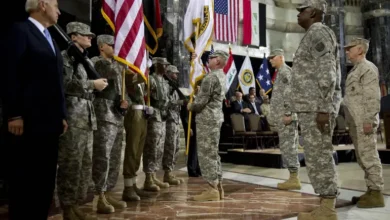
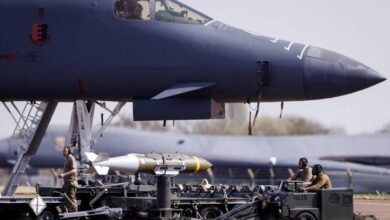
Trump’s desire to end the war quickly contrasts with other moves he is planning. Late last weekend, the amphibious assault ship USS Tripoli and the 31st Marine Expeditionary Unit arrived in the region. He also ordered the deployment of elements of the 82nd Airborne Division and is considering sending an additional 10,000 ground troops to the Middle East.
At the same time, Trump described the war as a “short trip” and a “pleasant stay,” while contemplating a complex and dangerous mission to seize uranium belonging to the Iranian regime.
This month, nearly 40 countries, including the United Kingdom, France, and Canada, pledged to contribute to the efforts required to ensure safe passage through the Strait of Hormuz.
The strait carries about 20 percent of global oil supplies. In 2024, 84 percent of the crude oil and 83 percent of the liquefied natural gas transported through it was bound for Asian markets, according to the U.S. Energy Information Administration.
Iran’s continued control over the strait pushed U.S. crude oil prices to close above $100 per barrel on Monday for the first time since 2022. Some financial analysts expect it could reach $200 per barrel if the crisis continues to disrupt the waterway.