The European measures include members of the political bureau of Hamas, accused of promoting, defending, and justifying acts of violence.
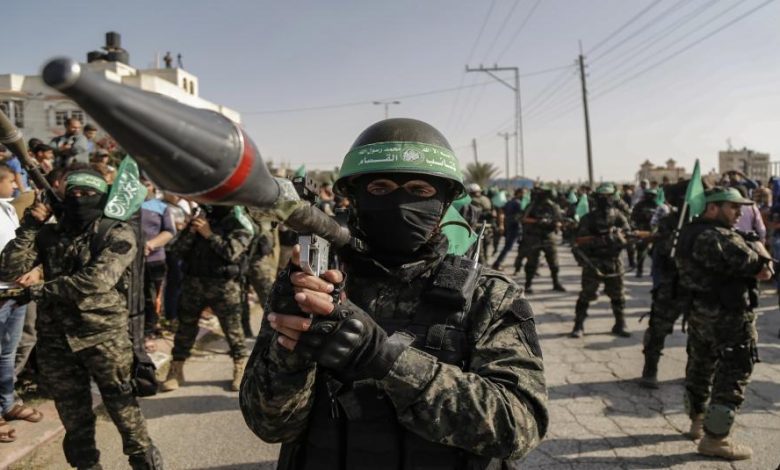
The European Union on Friday imposed additional sanctions on the Palestinian Islamic Resistance Movement (Hamas) and the Islamic Jihad Movement, following a day after decisions targeting organisations and settlers accused of involvement in acts of violence against Palestinians. The bloc appears to be seeking a balance in its approach to this issue.
In a statement, the EU said the new sanctions include members of Hamas’s political bureau, accusing them of “promoting, defending, and justifying acts of violence,” thereby expanding the scope of European restrictive measures, which had previously focused on military wings and entities linked to funding and logistical support.
The European decision comes in a highly complex regional and international context, as Brussels seeks to demonstrate a firmer stance toward armed Palestinian factions while at the same time maintaining a delicate balance in its relations with Israel and the Arab world. This is particularly significant amid growing criticism of European institutions over what observers describe as “double standards” in addressing the war in Gaza.
The timing of the sanctions carries notable political implications, as they came just one day after the European Union announced sanctions against several Israeli settlers involved in acts of violence against Palestinians in the occupied West Bank. Analysts believe that through this approach, Brussels is attempting to send balanced messages to both sides, condemning settler violence on the one hand while tightening measures against Hamas and Islamic Jihad on the other.
However, this policy is facing increasing criticism within human rights circles and in some European capitals, where the EU is accused of placing greater emphasis on punishing Palestinian factions, while being slower to take stricter measures against Israel despite rising civilian casualties and allegations of violations of international humanitarian law in Gaza.
Analysts argue that the bloc is under growing pressure from internal political currents calling for stricter security measures and closer monitoring of funding and propaganda networks linked to groups designated in Europe as terrorist organisations, particularly amid rising security concerns in several countries over the impact of the war on domestic stability and the rise of extremist rhetoric.
At the same time, some European governments fear that a clear bias in favour of Israel, or excessive targeting of Palestinian factions, could complicate Europe’s relations with Arab and Muslim public opinion, as well as undermine its traditional role as a potential political mediator in any future negotiating process related to the Palestinian issue.
This move also reflects a continuing shift in the EU’s approach to the Israeli-Palestinian conflict since the outbreak of the latest war, where security priorities and the fight against what Brussels describes as “incitement to violence” have increasingly taken precedence over the traditional political discourse calling for the resumption of the peace process and a two-state solution.
Observers note that the European Union is seeking through these measures to preserve internal cohesion, amid clear divergences among member states regarding how to handle the issue. Some countries are pushing for stronger pressure on Israel due to the catastrophic humanitarian situation in Gaza, while others continue to prioritise security and political support for Tel Aviv.