CENTCOM Denies Downing of U.S. Air Force Aircraft Near Bushehr
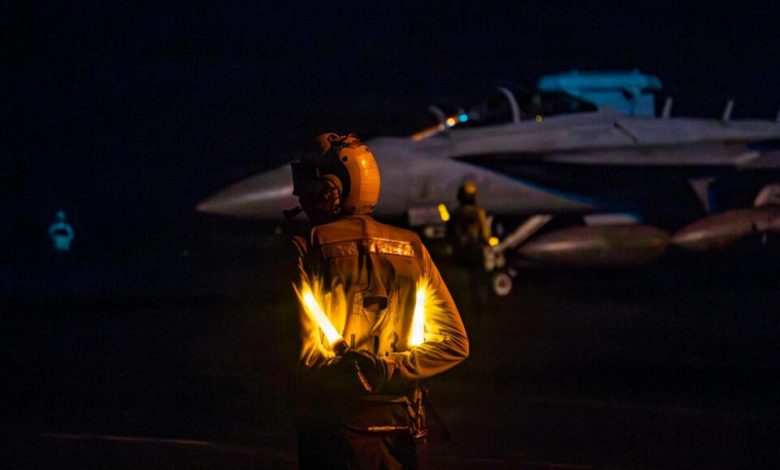
Iran is seeking to promote claims about the downing of American fighter jets as part of its propaganda campaign and to boost the morale of its armed forces.
The U.S. military denied that any of its aircraft had been shot down near the Iranian city of Bushehr, contradicting reports broadcast by Iranian state television amid growing fears of a renewed war between Tehran and Washington following escalating tensions, despite ongoing discussions about the possibility of an imminent agreement to end the military conflict.
Iranian television had earlier reported, citing a local official, that an American aircraft had been destroyed in the Jam region of Bushehr province.
For its part, the U.S. Central Command stated in a post on the X platform: “No U.S. aircraft has been shot down. All air assets remain intact.”
Observers say that Iran is promoting claims regarding the downing of American fighter aircraft for propaganda purposes and to support the morale of its armed forces, although Tehran reportedly succeeded in shooting down several American aircraft during the war.
The ongoing U.S.-Iran war since February 2026 has revealed unprecedented challenges facing the U.S. Air Force, after military and media reports spoke of the destruction or loss of several American fighter jets and drones during reciprocal operations between the two sides.
Available information indicates that the losses were not limited to direct confrontations with Iranian defenses, but also included friendly-fire incidents and attacks targeting military bases used by U.S. forces in the region.
Among the most notable incidents announced was the crash of an American F-15E Strike Eagle fighter jet over southwestern Iran at the beginning of last April, an event that attracted widespread attention because of the complexity of rescuing one of the pilots inside Iranian territory, while American reports confirmed the survival of the second pilot.
Other reports also referred to the downing of three aircraft of the same model over Kuwait during March as a result of friendly fire from Kuwaiti air defenses amid the intense aerial operations and electronic warfare accompanying the battles.
Alongside fighter aircraft losses, the United States also suffered significant losses in its drone fleet, particularly MQ-9 Reaper drones. Circulating estimates suggested that at least twelve drones were lost over various Iranian regions, including Hormozgan, Bushehr, Kerman, and Bandar Abbas.
Iranian attacks also extended to aircraft supporting aerial operations, with reports indicating varying levels of damage to American refueling aircraft and airborne early warning planes during attacks on military bases in Saudi Arabia, including KC-135 and E-3 Sentry aircraft.
Despite conflicting figures and information due to military secrecy maintained by both sides, analysts believe the confrontation demonstrated the capability of Iranian defenses to threaten American air superiority, whether through surface-to-air missile systems, offensive drones, or electronic warfare systems.
Military experts stated during the war that the continuation of this type of attrition could force Washington to reassess its aerial tactics and military deployment in the region in the coming period.