Washington and negotiations for a settlement in Lebanon… The carrot and stick formula
The United States stands at a historic moment, holding an opportunity to end a conflict that has lasted for decades between Israel and Lebanon, if it fulfills its promises of “support.”
-
Hezbollah’s weapons… Netanyahu sets the primary objective of negotiations with Lebanon
-
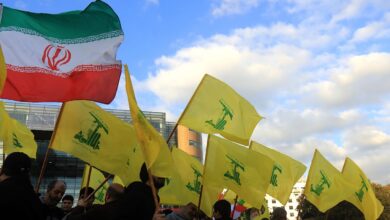
Through incitement and protests, Hezbollah seeks to obstruct Lebanon–Israel negotiations
According to the American magazine The National Interest, President Donald Trump has the chance to accomplish what no U.S. president has managed to achieve in nearly half a century: to permanently end the war between Israel and Lebanon.
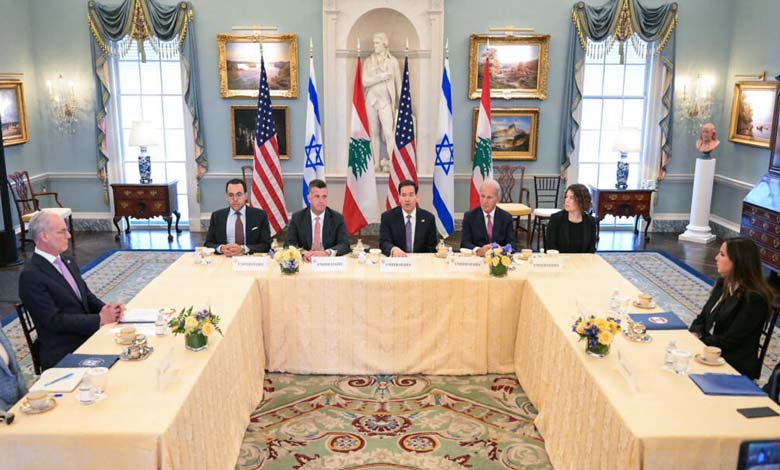
Washington has already taken the diplomatic initiative by bringing together the Israeli and Lebanese ambassadors at the White House to extend the temporary ceasefire.
The high-level attention Washington is giving to Lebanon, including the active efforts by the U.S. president to bring Israeli Prime Minister Benjamin Netanyahu and Lebanese President Joseph Aoun to the White House, is a clear signal that Washington sees Lebanon as a strategic opportunity.
-
Israel announces the killing of the secretary to the Secretary-General of Hezbollah and his nephew
-
Washington and Tehran… Hezbollah, the Achilles’ heel of the truce
Two realities
The magazine states: “If this initiative is to succeed where the administration of Joe Biden failed in 2024, and make this war the last between Israel and Lebanon, it must confront two uncomfortable realities that both parties, as well as Washington, have so far avoided.”
The first reality is that the ever-expanding Israeli “security zone” in southern Lebanon is tearing the country apart. One in five Lebanese citizens has been displaced. Entire villages have been reduced to rubble.
Of the more than 2,100 people killed in this war, 172 were children.
The magazine continues: “The second reality is that the Lebanese government has undermined its credibility by failing to implement its own decisions.”
-
Beirut under fire… Israel expands its strikes against Hezbollah
-
Israel–Hezbollah war: UN concern and European call
It adds: “At its core, the decision to disarm Hezbollah was not an international imposition; it was requested by Lebanon, and it is Lebanon’s responsibility to carry it out. Aoun promised his people that the state would monopolize the use of force when he took office, and Lebanese Prime Minister Nawaf Salam made clear that this decision is rooted in Lebanon’s sovereignty.”
Although the Lebanese government has taken significant steps toward criminalizing Hezbollah’s military activities and committing to disarm militias, it has not fulfilled its promises.
Months ago, its civilian and military leadership announced to the Lebanese people and the world that it had cleared southern Lebanon of Hezbollah’s weapons and that Lebanon would not enter into the conflict between the United States, Israel, and Iran.
However, Hezbollah made that decision and became involved in the latest war.
-
Iran and Hezbollah carry out simultaneous attacks on Israel
-
Israel expands its operations in Lebanon… evacuation alerts and dozens of Hezbollah members killed
An opportunity
According to the magazine, Washington has the credibility and leverage required to move forward in a gradual process that helps restore the trust needed to achieve the shared goals of disarming Hezbollah and securing Israel’s withdrawal.
At the negotiating table, the ceasefire has set events in motion, and the first step is already beginning to take shape. The Lebanese prime minister has called for making Beirut a demilitarized capital, a simple yet profound starting point: the country’s political and economic heart must belong to the state, not to militias.
It is now up to the Lebanese government and armed forces to fulfill this promise. If they succeed, the ceasefire could begin to change the reality on the ground.
-
Israel intensifies strikes against Hezbollah: senior leaders killed and evacuation orders issued
-
New escalation between Israel and Hezbollah after hours of calm
According to The National Interest, the existence of a capital firmly under state authority would signal that Lebanon is serious about completing this task after years of false starts. This, in turn, would give Washington greater room to encourage both parties to continue taking the difficult but necessary steps toward the single essential goal: a Lebanese state exercising full sovereignty over its territory, its security, and its decisions regarding war and peace.
In contrast, Hezbollah and its Iranian backers will work hard to sabotage this progress. Iran sought to negotiate a temporary ceasefire in Lebanon in order to preserve what remains of the crown jewel of its proxy network.
But both Iran and Hezbollah have been weakened by this war. Most importantly, they have lost the trust of the Lebanese people after dragging the country into a war it did not choose.
-
How Iran’s Revolutionary Guard reorganized Hezbollah’s ranks
-
Washington mobilizes to designate the Revolutionary Guards and Hezbollah as terrorist organizations
The formula for a solution
Therefore, Washington alone can provide the Lebanese, in this context, with an opportunity to negotiate an end to the conflict with Israel on Beirut’s terms rather than Tehran’s, and a future defined by the Lebanese government and its people, not by Iran.
In this context, the magazine presents a “formula” for the U.S. administration in the negotiation process: it must act on two tracks simultaneously—support the Lebanese state and raise the cost for those who undermine it.
In practical terms, this means adopting a “carrot and stick” approach: decisive U.S. support for Lebanese institutions, the Lebanese economy, and the Lebanese armed forces on the one hand, and relentless pressure on those who obstruct the state from within, including imposing sanctions on corrupt actors who prevent the state from implementing its decisions, foremost among them Hezbollah.
-
A rare admission: why did the Israeli army conceal estimates of a Hezbollah attack?
-
Smoke over Hezbollah headquarters… southern Beirut suburbs flare up again