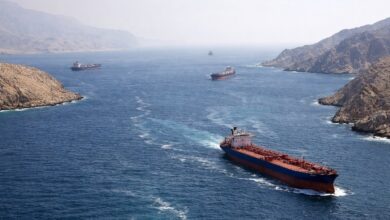
How the Caspian Sea became a lifeline of weapons and food for Iran behind Washington’s back
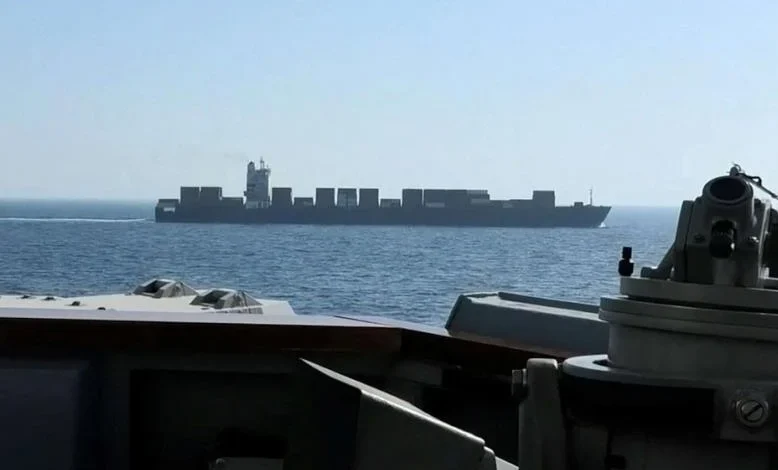
Navigation data and intelligence findings reveal an intensification of Russian shipping traffic to Iran through the Caspian Sea, including strategic goods and drone components, helping to accelerate Tehran’s rebuilding of its offensive capabilities and secure its needs away from threatened traditional routes.
A report cited by The New York Times indicates that Russia is providing Iran with an alternative commercial and military route to the Strait of Hormuz via the Caspian Sea, helping it circumvent Western sanctions and rebuild its military arsenal.
According to the newspaper, Israeli fighter jets carried out a strike last March targeting the Iranian naval command center and a group of vessels in the port of Bandar Anzali, in what Israel described as “one of the most significant” operations conducted recently.
The report explains that the attack highlighted the growing strategic importance of the Caspian Sea, located hundreds of miles north of the Persian Gulf, as a vital link between Moscow and Tehran.
Anna Borshchevskaya, an expert at the Washington Institute, stated that the Israeli bombing of Bandar Anzali came after Tel Aviv realized that this modest trade route allows Russia to provide essential and substantial assistance to Iran in bypassing the sanctions regime.
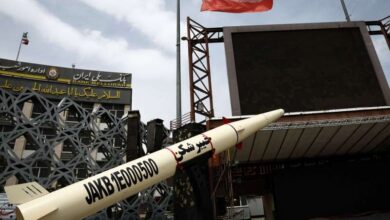
The American newspaper quoted local officials, speaking on condition of anonymity, as saying that Russia is currently shipping drone components to Iran through this route to help Tehran restore its offensive capabilities after losing around 60 percent of its drone arsenal in recent fighting.
Experts believe that Russian components are unlikely to play a decisive role in any war between Iran, the United States, and Israel, but they nevertheless contribute to strengthening Tehran’s drone arsenal. They also believe that if these shipments continue, they will help Iran rebuild this arsenal rapidly.
Officials noted that trade has become two-way. After Iran had long been the primary supplier to Russia, Moscow, which now operates a “Shahed” drone production plant in Tatarstan, has begun supplying Iran with improved parts and technologies.
According to the report, Iran now relies entirely on four Caspian ports operating around the clock to secure supplies of wheat, corn, and cooking oils.
Two million tons of Russian wheat have been rerouted from the Black Sea, exposed to Ukrainian strikes, to the Caspian Sea.
The newspaper cited Vitaly Chernov of the PortNews group, who said that Caspian routes appear more attractive to Moscow amid instability in the Middle East. In the same context, Alexander Sharov, head of RusIranExpo, predicted that the volume of goods transported through this route would double this year.
The Caspian Sea, the largest inland body of water in the world, represents a “sanctions evasion haven.” Ships traveling between Russian ports such as the port of Olya and Iranian ports deliberately switch off their satellite tracking systems (transponders) to conceal their movements. Nicole Grajewski, a professor at the Paris Institute of Political Studies, noted that this sea is an ideal location for discreet military transfers, given the United States’ inability to intercept vessels there.
Experts warn of an American “intelligence gap” in the region. Luke Coffey, a researcher at the Hudson Institute, described the Caspian Sea as a “geopolitical black hole” for decision-makers in Washington, as it lies along the administrative fault line between the Pentagon’s European and Central commands, with responsibility divided among three different offices within the State Department.
Moscow and Tehran signed a broad cooperation treaty in January 2025.
Russia has also used ships in the Caspian Sea to launch missiles toward Ukraine and Syria.
The U.S. Treasury has imposed sanctions on Russian vessels and companies, including MG-Flot, accused of transporting Iranian ballistic missiles. Nevertheless, trade continues as Vladimir Putin seeks to balance support for Iran without provoking President Trump or Arab allies.