Iran promotes its military capabilities in Asia after the war
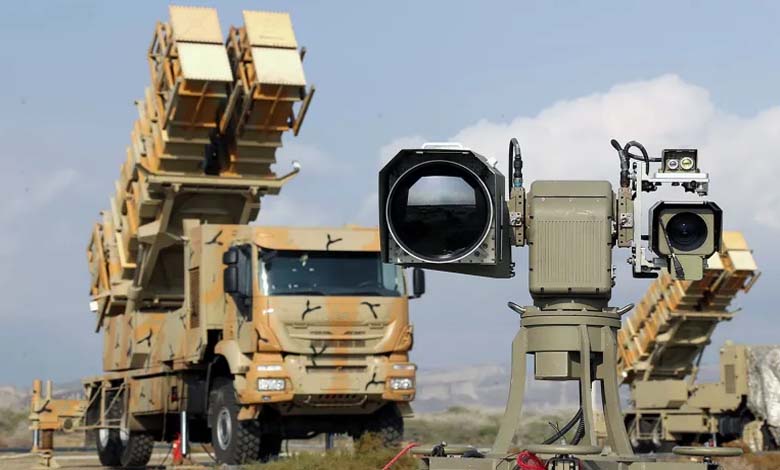
Iran’s Deputy Defense Minister exaggerates the scale of his country’s military capabilities, particularly its missile capacities, which were significantly damaged during the war.
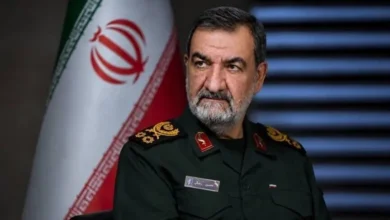
Iranian state media reported on Tuesday, citing Deputy Defense Minister Reza Talaei-Nik, that Tehran is prepared to share the capabilities of its defensive weapons with “independent countries, especially the member states of the Shanghai Cooperation Organization,” although such capabilities are unlikely to appeal to Asian militaries that rely on cooperation with the West, modern American technologies, as well as China.
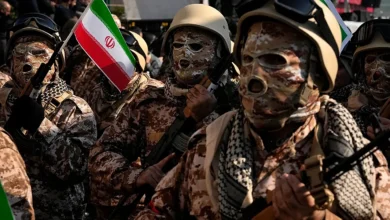
The Iranian official seeks to promote his country’s military capabilities, especially its “missile” systems and drones used by Tehran during the war with the United States, despite the fact that air defenses in the Gulf region and Israel intercepted the majority of them.
Iran entered into war with the United States and Israel from late February to early April, during which it launched waves of drones and missiles targeting American bases in the region and Israeli sites, and intermittently shot down American aerial targets within its airspace, mostly drones.
Deputy Minister Talaei-Nik stated, during a meeting of defense ministers of the Shanghai Cooperation Organization held in the capital of Kyrgyzstan: “We are ready to share our experience of defeating America with the other members of the organization.”
The Iranian official overestimates the extent of his country’s military capabilities, which were significantly degraded during the war, as Israeli and American reports indicated that the air forces of both countries managed to target most missile platforms and drone production bases.
The narrative promoted by Tehran regarding its missile power appears to be a multidirectional message that goes beyond the strictly military dimension. On the one hand, it is directed at the Iranian public to boost confidence and reassure that the country still retains considerable destructive capabilities despite pressures, wars, and repeated escalations. On the other hand, it sends a clear message to adversaries, particularly the United States and Israel, that Iran’s missile capabilities have neither weakened nor eroded as a result of the war, contrary to what Washington and Tel Aviv claim, and that they remain capable of serving as an effective deterrent in any potential confrontation.
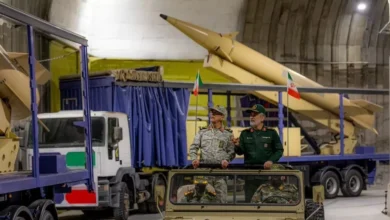
Iranian officials state that their offensive system clearly relies on an integrated mix of ballistic missiles, cruise missiles, and drones, enabling multi-layered strikes combining destructive power with numerical saturation, within a doctrine aimed at overwhelming air defense systems through fire density and diversity of means.
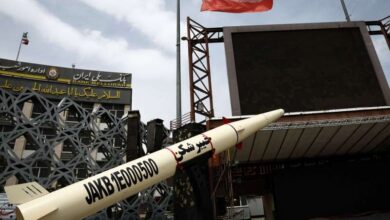
In the ballistic missile category, Iran possesses, according to unverified official data, substantial destructive capacity. Some models, such as the Khorramshahr missile, can carry warheads of up to approximately two tons of explosives, granting the ability to destroy military facilities or major infrastructure in a single strike.
Iranian military leaders say that the Sejjil missile typically carries between 500 and 1,000 kilograms of explosives, sufficient to cause extensive damage to military bases or strategic targets, and that these missiles feature a range covering a broad regional scope, as well as high speed that complicates interception, despite varying accuracy between older and newer variants.
Cruise missiles, meanwhile, are distinguished by greater maneuverability and low-altitude flight to evade radar, giving them a higher chance of reaching sensitive targets such as airports, power stations, and critical infrastructure. Nevertheless, they remain slower than ballistic missiles and more vulnerable to interception if detected early.
Drones, particularly the Shahed 136, represent, according to Iranian military officials, a central tool in a strategy of attrition. They carry relatively small explosive payloads but are used in large numbers in simultaneous attacks to saturate air defense systems and deplete interceptor missile stocks, even though their direct destructive capacity remains limited compared to heavy missiles. Gulf states, especially the United Arab Emirates, managed to shoot down large numbers of them despite the intensity of launches.
In summary, Iran’s strength lies in a division of roles between direct destruction through ballistic missiles, precision strikes through cruise missiles, and attrition and disruption through drones. It is a multi-layered offensive system that relies as much on quantity and diversity as on explosive power. However, this did not prevent the neutralization of these capabilities due to the presence of more advanced air defense systems in Gulf countries and the region, which reduced the effectiveness of these missiles and drones.
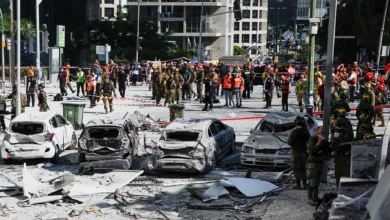
Despite Iranian promotion of their military capabilities, official and semi-official Western military reports state that the rate at which these missiles and drones reached their targets did not exceed 10 percent during the war, a very low figure. Moreover, human casualties resulting from their impact were limited, despite material and economic damage in largely civilian and densely populated areas.
Reza Talaei-Nik recently held talks with military officials from Russia and Belarus, both of which affirmed their desire to continue cooperation with Tehran.
The war temporarily paused following the announcement of a ceasefire earlier this month, but efforts to resolve the conflict that erupted two months earlier have faced obstacles.