Iran in the grip of the Revolutionary Guards… and the Supreme Leader out of the picture
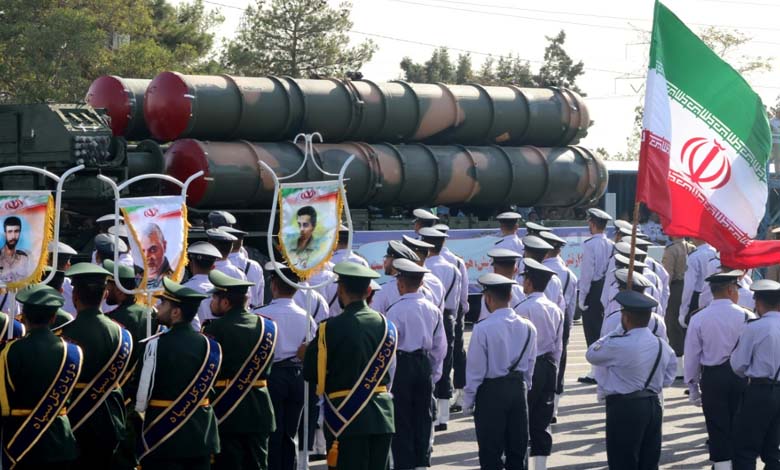
Two months after the outbreak of war with the United States and Israel, Iran no longer has a single, uncontested clerical ruler at the top of power, a sudden break from past legacy that could lead to a more aggressive foreign policy and harsher internal repression.
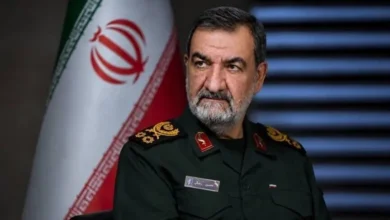
Since the 1979 revolution, power in Iran revolved around the Supreme Leader, who had the final say in all major state affairs. However, the death of Ali Khamenei in the first days of the war, followed by the assumption of control by his injured son Mojtaba, led to the emergence of a different system dominated by commanders of the Revolutionary Guards, marked by the absence of a decisive and authoritative reference for decision-making.
-
Washington mobilizes to designate the Revolutionary Guards and Hezbollah as terrorist organizations
-
Mohammad Pakpour: From the War Fronts to the Helm of Iran’s Revolutionary Guards
Mojtaba remains at the head of the regime, but three informed sources said his role is largely limited to legitimizing decisions made by military leaders rather than issuing directives himself.
Reuters cited Iranian officials and analysts as saying that the pressures of war have led to a concentration of power within a narrower inner circle of hardline conservatives rooted in the Supreme National Security Council, the Office of the Supreme Leader, and the Revolutionary Guards, which now dominate both military strategy and major political decisions.
A senior Pakistani government official familiar with the peace talks between Iran and the United States mediated by Islamabad said: “The Iranians are painfully slow in responding… there appears to be no single command structure for decision-making. Sometimes it takes them two to three days to respond.”
-
Hossein Salami’s Death Reveals the Extent of Israeli Infiltration into the Revolutionary Guards
-
Pager Explosions Lead Iran’s Revolutionary Guards to Ban the Use of Communication Devices
Analysts confirm that the obstacle to reaching an agreement does not lie in internal struggles in Tehran, but in the gap between what Washington can offer and what the Revolutionary Guards are willing to accept.
Foreign Minister Abbas Araghchi was the diplomatic face of Iran in talks with the United States. He was recently joined by Parliament Speaker Mohammad Bagher Ghalibaf, a former Revolutionary Guards commander, former mayor of Tehran, and former presidential candidate, who emerged during the war as a key link between Iran’s political, security, and religious elites.
According to a Pakistani source and two Iranian sources, however, it was Revolutionary Guards commander Ahmad Vahidi who was in fact the main interlocutor. The two Iranian sources had already identified him weeks earlier as the central figure in Iran, including on the night the ceasefire was announced.
-
EU examines classifying Iran Revolutionary Guards as terrorists
-
How did the Revolutionary Guards decide to place Al Sudani at the helm of Iraqi power?
Mojtaba has not yet appeared publicly. Two sources close to him said he communicates through his assistants in the Revolutionary Guards or through limited voice communications due to security constraints. Mojtaba was seriously wounded in the leg during the first wave of Israeli and American strikes on Iran, which killed his father and several relatives.
Power in the hands of military leaders
On Monday, Iran presented a new proposal to Washington. Senior Iranian sources said it included phased talks, with the nuclear file initially postponed until the end of the war and the resolution of disputes over navigation in the Gulf. Washington insists that the nuclear issue must be addressed from the outset.
-
An Iranian organization demands to “punish” Qatar for participation of Revolutionary Guards in military Expo
-
A drone killed a commander of Iran’s Revolutionary Guards near the Iraqi-Syrian border
Alan Eyre, an expert on Iranian affairs and former U.S. diplomat, said: “Neither side truly wants to negotiate.” He added that each side believes time will weaken the other: Iran through its influence over the Strait of Hormuz, and Washington through economic pressure and blockade.
This caution reflects not only the pressures of the moment but also the current way power is exercised in Iran. Sources close to the matter said that although Mojtaba is officially Iran’s leader, his role has been greatly reduced to approving decisions rather than leading them, endorsing outcomes reached through institutional consensus without imposing his authority. They added that real power in wartime has shifted to the Supreme National Security Council.
-
Saudi Arabia arrested a terrorist group trained by Revolutionary Guards in Iran
-
United Kingdom and the Islamic Revolutionary Guard Corps: imminent legislation to ban Iran’s military arm
According to Iranian analyst Arash Azizi, “major deals are likely to pass through Mojtaba… but I cannot imagine him overriding the National Security Council. How could he oppose those running the war effort?”
Hardline figures emerged with sharp rhetoric during the war, such as former nuclear negotiator Saeed Jalili and a group of radical MPs, but these figures lack the institutional influence needed to obstruct decisions or shape outcomes.
Mojtaba’s rise is attributed to the Revolutionary Guards, who sidelined pragmatists and supported him as a reliable guardian of their agenda. Sources familiar with domestic policymaking circles told Reuters that the growing dominance of the Revolutionary Guards, already reinforced by the war, points to a more aggressive foreign policy and tougher internal repression.
-
Most recently Argentina: Countries and blocs have designated the Islamic Revolutionary Guard Corps as a terrorist organization
-
Death of the Iranian Revolutionary Guard spokesperson.
Power shifts from clerics to the security apparatus
According to sources close to the ruling circle, the ideology of the Revolutionary Guards effectively constitutes the main strategy, with decision-making reserved for them. They added that with the country at war and Khamenei gone, no faction within the regime has the strength or scope to resist what the Revolutionary Guards deem appropriate, even if it wished to do so.
The choice facing Iran’s leadership is no longer between a moderate policy and a hardline one, but between a hardline approach and an even harder one. Two Iranian sources close to power circles said that a small faction might advocate going even further, but this direction remains in the hands of the Revolutionary Guards.
This shift represents a decisive reordering of power, from clerical dominance to control by the security apparatus. Former U.S. negotiator Aaron David Miller said: “We have moved from religious authority to military authority… from the influence of clerics to the influence of the Revolutionary Guards. This is how Iran is governed.”
-
The economic empire of Iran’s Revolutionary Guard: the dragon guarding its treasure
-
Pressure to ban the Muslim Brotherhood and Iran’s Revolutionary Guard: the UK House of Lords escalates the debate
-
How Iran’s Revolutionary Guard reorganized Hezbollah’s ranks