Mysterious aircraft between Cairo and Port Sudan… what is happening in Sudan’s skies?
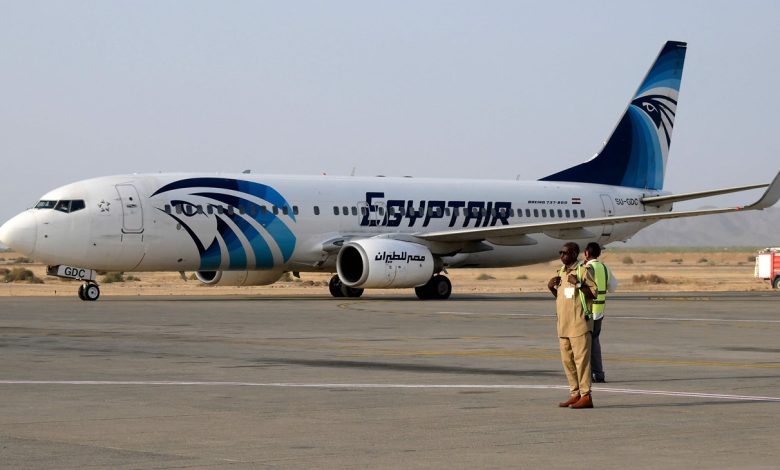
As the war in Sudan continues with no clear path toward resolution, recently circulated information has highlighted two flights that have drawn the attention of observers of Sudanese and regional affairs. The first involves a cargo aircraft that departed Cairo International Airport and landed in Port Sudan on May 2, 2026. The second concerns an unregistered private aircraft operating between Cairo, Khartoum, and Port Sudan under what have been described as mysterious circumstances.
These air movements have brought renewed attention to the role of aviation in modern conflicts, not only as a means of transport but also as a political, security, and logistical tool used by states and various actors to manage complex affairs away from public scrutiny.
Since the outbreak of war in Sudan in 2023, Port Sudan has become the de facto capital of the country, following the relocation of government and military institutions due to the deteriorating security situation in Khartoum. This shift has significantly increased the importance of Port Sudan Airport, turning it into the country’s main gateway to the outside world.
Although flights between Cairo and Port Sudan are not new, the timing and nature of the two recent flights have raised questions about their underlying purposes. The cargo aircraft from Cairo comes amid growing discussion about logistical support exchanges between regional actors and Sudanese authorities, while the unregistered private aircraft has generated controversy due to the lack of clear data on open tracking systems.
Observers note that private aircraft operating in conflict zones are often used to transport political figures or security officials, or even sensitive equipment, particularly when movements are linked to negotiations or field coordination away from media coverage.
Aviation experts explain that some flights appear only partially on global tracking platforms due to technical limitations or the use of systems that reduce public visibility of flight data. In some cases, chartered or private aircraft also use temporary registrations or alternative operating systems that make tracking more difficult.
According to available information, the first aircraft’s route began in Cairo, passing through southern Egypt and along the western Red Sea coast before landing in Port Sudan.
Navigation maps indicate that the aircraft flew over a long route from Cairo through Upper Egypt, then crossed areas near Sudan’s eastern border before entering Sudanese airspace via the Red Sea. It then proceeded directly to Port Sudan, landing at the international airport that has become the most important air gateway for the Sudanese government.
The unregistered private aircraft followed a more complex route, moving from Cairo toward central Sudan and approaching the Khartoum area before changing course eastward toward Port Sudan. This flight pattern has attracted attention due to the sensitivity of the airspace it crossed. The second flight is believed to have passed near Khartoum before continuing toward eastern Sudan.
Analysts argue that even the passage of a private aircraft near Khartoum at this time carries political and security implications, especially as the Sudanese capital continues to witness intermittent clashes and civilian air traffic remains heavily restricted.
Neither Cairo nor Sudanese authorities have issued official statements regarding the two flights, contributing to the spread of multiple narratives on social media, ranging from humanitarian aid and covert diplomatic activity to speculation about the transport of military equipment or personnel.
However, observers caution against relying on unverified information, stressing that conflict zones are often fertile ground for rumors and inaccurate reporting, particularly when it comes to aviation activity.
Public and media interest in these flights is linked to the broader political context in Sudan, which is experiencing one of the most complex crises in its modern history. The ongoing war, now lasting more than three years, has led to the collapse of large parts of the infrastructure, displaced millions of people, and turned the country into an arena of regional and international competition.
Multiple states are attempting to play different roles in the Sudanese crisis, whether through political mediation, humanitarian assistance, or security coordination, making any unusual air movement subject to close scrutiny.
The Red Sea has also become a highly sensitive strategic axis, amid growing international concerns over the security of maritime and energy routes. In this context, Port Sudan holds added significance as the country’s main sea and air gateway.
Experts believe that air traffic between Cairo and Port Sudan also reflects the depth of Egyptian–Sudanese relations, which are tied to sensitive issues such as border security, Nile waters, and regional power balances.
In the absence of official information, all scenarios remain possible, ranging from routine humanitarian or logistical operations to broader political or security arrangements.
Whatever their nature, these flights highlight a fundamental reality: Sudan continues to experience a highly complex phase, and its airspace has itself become part of the wider struggle over the country’s future.