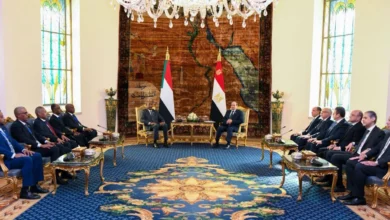
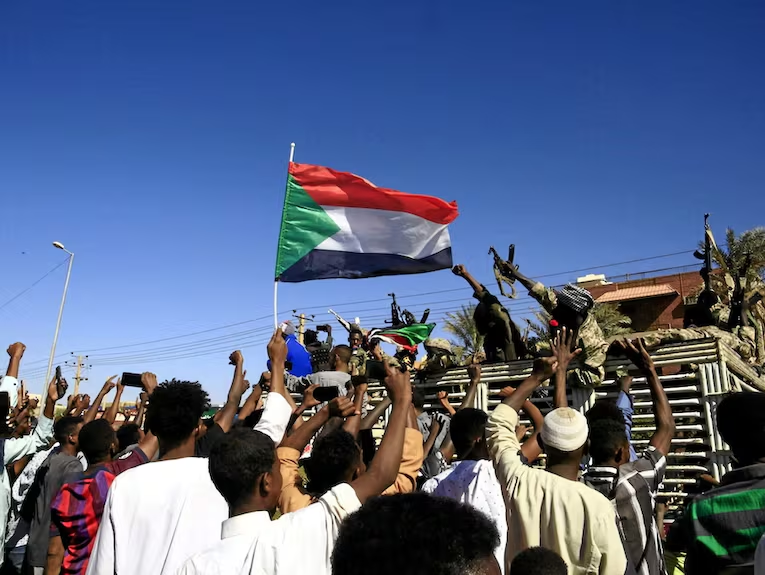
Cairo and Port Sudan… political messages in Sudan’s skies
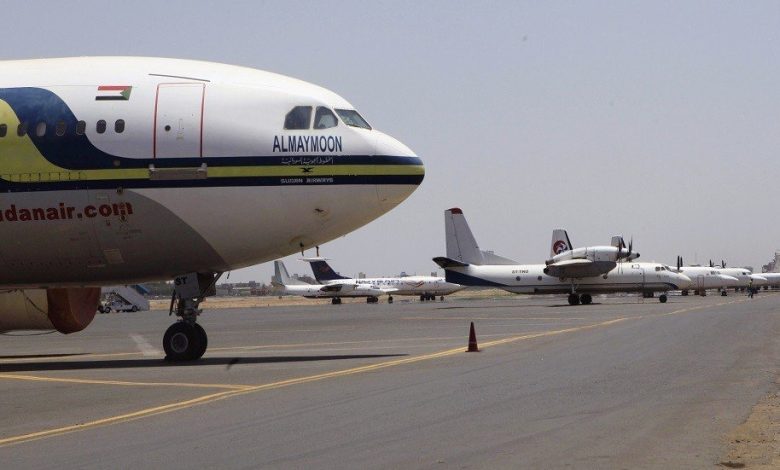
Air traffic between Cairo and Port Sudan is no longer a routine transportation link between two countries bound by geography and history. In the context of the Sudanese war, it has become a highly sensitive political indicator, reflecting the depth of regional involvement in the Sudanese crisis.
In recent days, two flights from Cairo to Sudan have revived debate over the nature of the growing regional role in managing the Sudanese conflict.
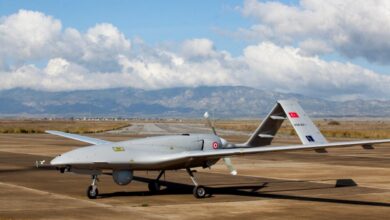
According to aviation navigation data circulated on aircraft tracking platforms, the first cargo flight departed Cairo, following an air corridor passing through southern Egypt and then the Red Sea before landing in Port Sudan. The second flight, a privately operated aircraft not clearly registered, followed a more sensitive route, approaching the Khartoum area before heading east.
This unusual flight path has added a political dimension to these air movements, particularly since flying near Khartoum under the current security conditions cannot be viewed as a routine flight. The cargo aircraft landed in Port Sudan on May 2, 2026, while the second flight involved an unregistered private aircraft operating between Cairo, Khartoum, and Port Sudan.
Although no official information confirms their nature, these flights carry clear political implications given their timing and the broader context in which they occurred. Sudan is undergoing a major restructuring of power balances, both within the military establishment and among civilian and regional actors.
Since the outbreak of war, Egypt has maintained a significant presence in the Sudanese file, driven by national security concerns, Nile water interests, and the stability of its southern borders. As a result, any air movement between Cairo and Port Sudan is primarily interpreted through a political lens.
Analysts argue that Port Sudan has become the effective decision-making hub in Sudan, not only as the seat of the transitional government but also as the main point of contact between the Sudanese military institution and regional actors.
In this context, private and cargo flights carry increased significance, particularly when they occur during periods of intensified political maneuvering regarding Sudan’s future leadership.
The unregistered private flight attracted additional attention due to its reported passage near Khartoum, which some observers interpret as a sign of sensitive coordination or unofficial meetings. Despite extensive destruction, Khartoum remains a symbol of political and military legitimacy, and any movement toward it carries implications far beyond logistics.
Some analysts also suggest that such movements may be part of broader regional efforts to prevent the collapse of the Sudanese military institution, amid growing international pressure for a political settlement.
These flights cannot be separated from the wider regional competition over the Red Sea, where multiple powers are vying for influence over maritime routes and strategic ports. Port Sudan sits at the heart of this equation, making it a focal point of regional and international scrutiny.
Experts note that Egypt views stability in eastern Sudan as a direct line of defense for its national security, particularly amid fears of instability spreading toward its borders.
At the same time, Cairo faces a delicate challenge: maintaining relations with various Sudanese actors without becoming directly involved in the conflict, which explains its reliance on a range of diplomatic, security, and political tools.
However, these air movements also reflect another reality: Sudan has become an open arena for external influence, and its future is no longer shaped solely in Khartoum or Port Sudan, but also in multiple regional and international capitals.
Observers believe that the continuation of opaque flights between Egypt and Sudan will further increase public and media scrutiny, especially in the absence of official clarification regarding their nature.
In politics, aircraft often carry messages as significant as official statements. Private and cargo flights during wartime are frequently part of a broader language of influence, negotiation, and alliance management.
What has taken place in Sudanese airspace in recent days may therefore be only a small element within a larger regional picture slowly taking shape around the future of the Sudanese state.
The key question remains: do these flights signal the beginning of a new phase of regional political coordination, or are they merely logistical movements driven by wartime necessities?
For now, there is no definitive answer. What is clear, however, is that Sudan’s skies have become carriers of political messages as complex as the battles unfolding on the ground.