Iran measures the level of the U.S. response against oil stockpiles: war on the horizon
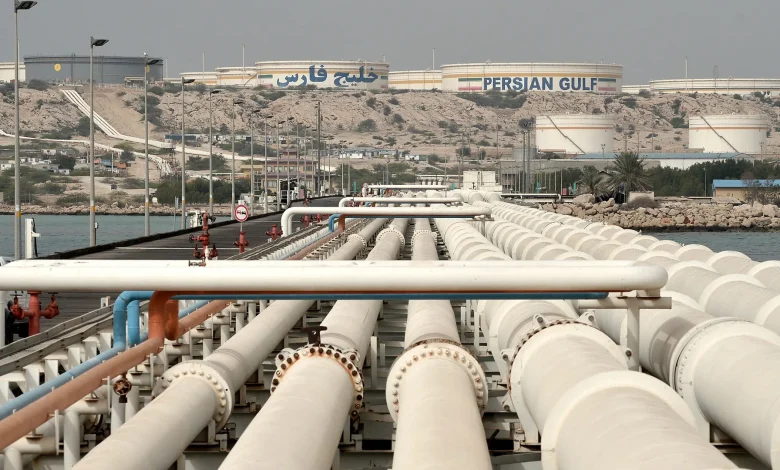
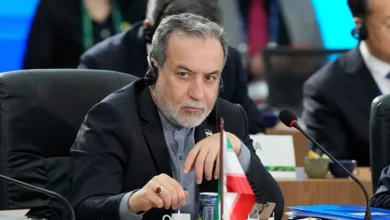
U.S.-Iranian negotiations aimed at resolving the current crisis between the two countries have stalled, while Tehran appears to be seeking to interpret Washington’s intentions.
In Israel, reports of an imminent resumption of a pre-emptive war against Iran are multiplying. Channel 12 reported that security assessments suggest U.S. President Donald Trump will soon decide on military action in Iran, noting that he is expected to hold a meeting with his closest advisers for a decisive discussion on the matter.
Is Iran reading the future in oil tanks?
According to several informed sources, U.S. officials suspect Iranian hackers of being behind a series of intrusions targeting fuel level monitoring systems in storage tanks at gas stations across several states, according to a CNN report.
The sources said the attackers exploited automated tank gauge (ATG) systems that were connected to the internet and protected by weak or no passwords, allowing them in some cases to manipulate the readings displayed on tank screens, without affecting the actual fuel levels.
These cyber intrusions are not known to have caused any physical damage, but they have raised security concerns. Experts and U.S. officials noted that access to ATG systems could theoretically enable hackers to trigger undetected gas leaks.
Sources close to the investigation said Iran’s history of targeting fuel tank systems is one of the reasons it is considered a top suspect. However, they cautioned that U.S. authorities may not be able to conclusively identify the perpetrators due to a lack of forensic digital evidence left behind by the hackers.
CNN requested comment from the U.S. Cybersecurity and Infrastructure Security Agency (CISA) regarding the ATG breaches, while the FBI declined to comment.
Observers suggest that U.S. oil stockpile levels may allow Tehran to assess America’s need to resolve the long-standing crisis that has persisted since late February.
If Iranian involvement is confirmed, this would mark another case of Tehran targeting critical infrastructure inside the United States, beyond the reach of Iranian drones and missiles, amid the ongoing war between the United States and Israel on one side and Iran on the other.
It could also become a politically sensitive issue for the Trump administration, drawing further attention to rising fuel prices driven by the conflict. According to a recent CNN poll, 75% of American adults said the war with Iran has negatively affected their financial situation.
The hacking campaign also serves as a warning to many U.S. critical infrastructure operators, who continue to struggle to secure their systems despite years of federal warnings.
A 2021 Sky News report revealed that internal documents from Iran’s Islamic Revolutionary Guard Corps (IRGC) had already identified ATG systems as a potential target for cyberattacks against gas stations.
No constraints in Washington
The U.S. House of Representatives rejected a resolution introduced by Democrats to halt the war with Iran until Congress grants authorization for military action.
The attempt to restrain President Donald Trump’s military campaign thus failed.
The vote on the war powers resolution ended in a tie, preventing its passage as it failed to secure a majority, despite support from three Republican lawmakers. Only one Democrat, Jared Golden of Maine, opposed it.
Washington nevertheless retains the military capabilities in the Middle East to continue the conflict.
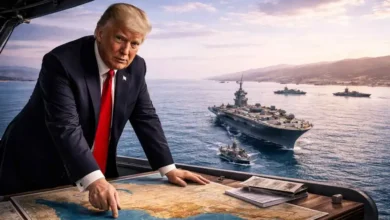
Amid escalating regional tensions with Iran earlier this year, the United States carried out its largest military buildup in the Middle East since the 2003 invasion of Iraq, deploying three carrier strike groups to the region simultaneously to reinforce deterrence and project power.
The deployments began with the arrival of the USS Abraham Lincoln in the Arabian Sea in late January, followed by the dispatch of the newest and most advanced carrier, the USS Gerald R. Ford, in February, redirected from Caribbean operations under presidential orders.
The strategic trio was later completed in April with the arrival of the USS George H. W. Bush, marking a rare operational milestone for the U.S. Navy: three supercarriers operating simultaneously within U.S. Central Command (CENTCOM) responsibility.