Kyiv Turns War Into a Video Game: The More You Kill, the More You Earn
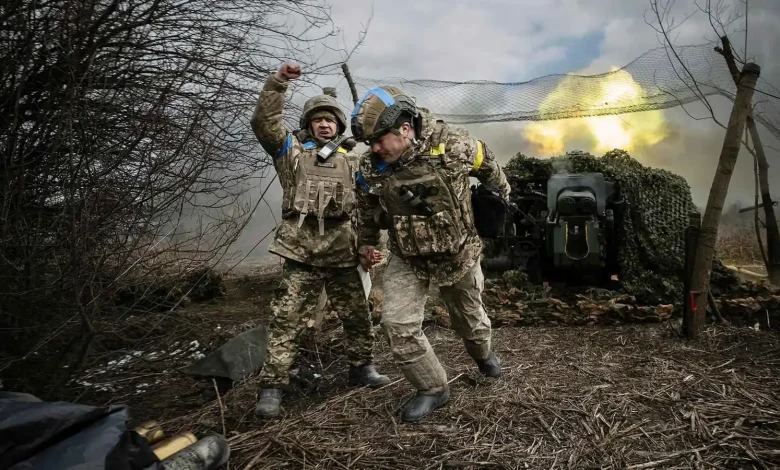
A reward system is transforming the war in Ukraine into something resembling a video game, where those who manage to neutralize or kill the greatest number of Russian soldiers receive greater benefits.
In footage captured by drones, an attack drone detects a Russian soldier in a field in eastern Ukraine and rapidly descends toward him. The soldier notices it only moments before impact.
The onboard camera, which transmits live video to the remote operator, records the soldier’s panic. He raises his hands above his head and begins to run before the video feed cuts out. A second recording, captured by a surveillance drone, later shows his body lying motionless in the field.
In the years since the war began, both sides have routinely released footage of military operations that have become disturbing and graphic visual records of the conflict.
However, these drone videos were not intended for social media audiences. Instead, they were submitted to the Ukrainian government as entries in a competition among frontline drone operators. Points and rewards were awarded to those achieving the highest scores, creating a system reminiscent of a shooter video game and illustrating the gamification of warfare, according to The Washington Post.
Ukrainian officials state that the “Army of Drones” reward system, also known as “ePoints,” is the only program of its kind in the world.
Military units earn points for every Russian soldier incapacitated or killed, as well as for every weapon, vehicle, or piece of military equipment destroyed.
The points can then be redeemed through an online government marketplace to purchase additional drones, which can be used to target more Russian forces.
The Philosophy Behind the System
In this context, Andriy Hrytsenyuk, the head of Brave1—the government agency that created the competition—stated: “The philosophy of the program is simple: the more you destroy, the more you receive.”
The exact point values assigned to various targets remain confidential. However, according to social media posts published last year by Mykhailo Fedorov, the Russian soldier mentioned in the incident was an infantryman, a target reportedly worth twelve points.
Last month, Ukrainian drones reportedly incapacitated or killed more than 35,200 Russian soldiers, according to Ukrainian defense officials. Russia consistently rejects Ukrainian battlefield casualty figures.
A Shift in Strategy
According to The Washington Post, these numbers can partly be attributed to what has been described as Moscow’s “meat grinder” tactics, in which large numbers of troops are deployed against Ukrainian positions in an effort to weaken or overwhelm them.
Russian casualties generally increase significantly during autumn and winter, when natural cover and concealment become less available.
At the same time, the figures are also linked to a decision by Ukrainian authorities to double the number of points awarded for seriously wounding or killing an enemy soldier.
Andriy Hrytsenyuk explained: “This shift was dictated by the battlefield itself. Russian forces began moving their equipment as far away from the contact line as possible because it was being destroyed very quickly by our drones.”
He continued: “Instead, they increasingly relied on infiltration tactics and the use of small infantry groups.”
According to The Washington Post, this development also demonstrates how drones have fundamentally transformed the nature of modern warfare.
Day by day, Ukraine is becoming one of the world’s leading innovators in this new form of combat. The country hopes to exchange its technological expertise and strategic vision for continued Western military support and stronger security guarantees.
Difficult Estimates, Yet Important Indicators
Nevertheless, analyzing Ukrainian casualty reports remains challenging, according to Emil Kastehelmi of the Black Bird Group.
One reason is that the reports do not clearly distinguish between Russian soldiers who are wounded and those who are killed. Furthermore, it remains uncertain how many of the wounded may eventually return to combat.
Even so, Emil Kastehelmi stated: “Although it is difficult to verify the full scale of Russian losses, the available indicators appear to be moving in the expected direction.”
Meanwhile, Franz-Stefan Gady of the Center for a New American Security in Vienna cautioned against drawing premature conclusions.
He added that Russian forces are “not expanding significantly,” but are also “not shrinking in any substantial way during this conflict.”