Tehran Speaks of a US-Israeli Plan to Open an Internal Front
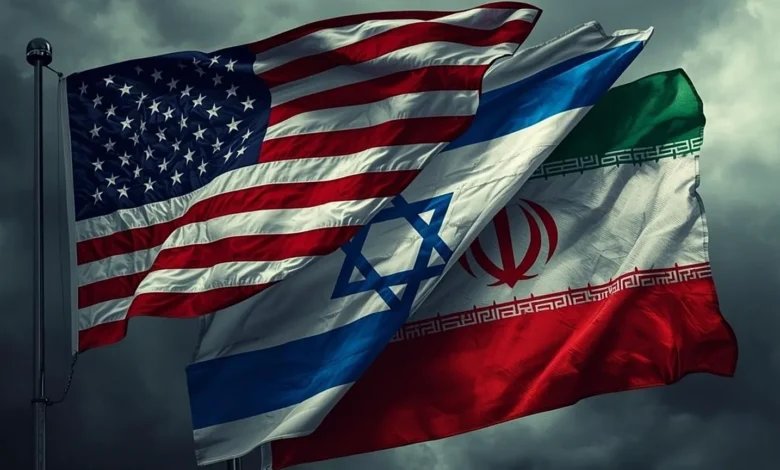
The commander of the Islamic Revolutionary Guard Corps’ Ground Forces says that US and Israeli intelligence agencies have prepared armed groups in southeastern and northwestern Iran to launch a large-scale attack aimed at destabilizing the country’s internal situation.
Brigadier General Mohammad Karami, commander of the Ground Forces of the Islamic Revolutionary Guard Corps (IRGC), announced on Thursday that US and Israeli intelligence agencies had prepared armed groups in southeastern and northwestern Iran to launch a large-scale attack against the country. His remarks come as Iran faces US military airstrikes following President Donald Trump’s announcement ending the memorandum of understanding.
Iranian authorities have openly expressed concern that armed opposition groups, particularly Kurdish organizations, could exploit the current circumstances to launch attacks aimed at further destabilizing the country’s internal security.
A few days ago, two members of the Islamic Revolutionary Guard Corps were killed and several others wounded in an armed attack targeting them in the city of Paveh, located in Iran’s western Kermanshah Province. Iranian media reported that the attackers were unidentified gunmen, while security authorities immediately launched an investigation to determine their identities and the motives behind the operation.
The attack forms part of a broader pattern of armed operations targeting Iranian security forces and the Islamic Revolutionary Guard Corps in border regions over recent years, particularly in western and southeastern Iran. These areas have witnessed continued activity by armed groups opposed to the Iranian government, which are believed to benefit from the difficult mountainous terrain, their proximity to international borders, and the strain placed on Iranian forces by US attacks.
In response, the Iranian military launched extensive operations against armed groups in mountainous and border areas, while also carrying out strikes against militants located in the Kurdistan Region of Iraq.
The provinces of Sistan and Baluchestan, Kurdistan, and Kermanshah remain among the regions most frequently affected by such attacks, as Kurdish and Baloch armed groups opposed to the Iranian government operate there. Iranian authorities accuse these organizations of receiving external support and attempting to undermine domestic security, while the groups themselves maintain that they are resisting Tehran’s security and political policies in the areas where they are active.
Attacks targeting the Islamic Revolutionary Guard Corps receive particular attention within Iran because of the institution’s extensive responsibilities in security and military affairs, including border protection, countering armed groups, and its influential role in managing regional issues connected to Tehran’s foreign policy.
The targeting of IRGC personnel comes at a time when Iran is facing mounting security pressures resulting from escalating regional tensions, particularly amid the intensifying confrontation with the United States and Israel in recent months. According to Iranian political and security circles, the multiplication of areas of tension could encourage Tehran’s adversaries to intensify their operations, while the authorities continue strengthening security measures to prevent attacks from spreading further inside the country.
The incident once again highlights the security challenges confronting Iran along its border regions, as armed opposition groups remain active and concerns continue to grow that the consequences of regional conflicts could increasingly spill over into Iranian territory.