China Proposes Four Initiatives to Build a New Security Architecture in the Middle East
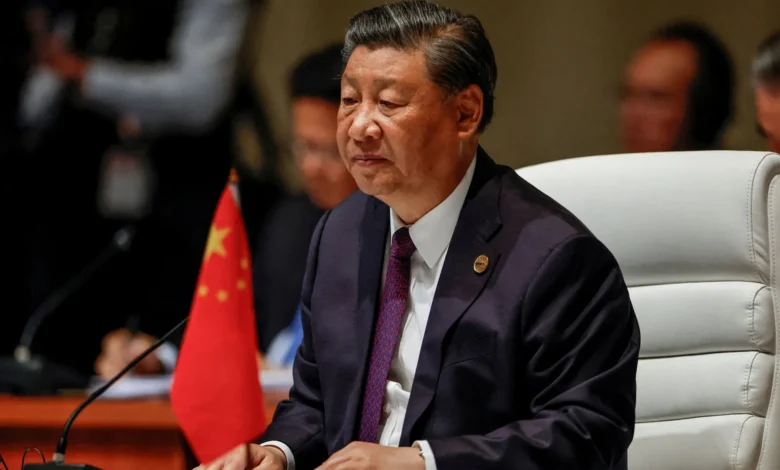
Beijing’s proposals give it an opportunity to present itself as an alternative to, or partner of, the political and economic model led by the United States for decades.
China’s ambassador to Cairo, Liao Liqiang, has revealed four major proposals put forward by President Xi Jinping to build a new security architecture in the Middle East. The move reflects an increasingly clear Chinese shift from a predominantly economic and commercial role toward a more prominent and influential political and security presence.
-
China’s Area 51 Expands: Giant Hangars to Accommodate Fleets of Next-Generation Aircraft
-
China wins the embassy battle following a ruling by the UK Supreme Court
This comes at a time when the region is undergoing a realignment of the balance of power, with a relative decline in the United States’ ability to monopolize the management of security issues, while Middle Eastern countries are increasingly seeking to diversify their international partnerships.
In a post on the X platform, the Chinese ambassador stressed the need for the peoples of the region to remain the decision-makers in their own affairs, while rejecting external interference. He also reaffirmed China’s support for regional countries in strengthening dialogue on peace and security and exploring ways to build a new security architecture that would enable them to take control of their own future.
-
Dark Eagle Near China: America’s First Hypersonic Missile in the Western Pacific
-
China and Russia’s Military Drills: Pressure Messages to Washington’s Allies in Asia
He stressed that strengthening common security in the region requires a comprehensive approach, given the multiplicity of flashpoints across the Middle East and their close interconnections. He noted that the Palestinian issue remains at the heart of the Middle East question and should neither be ignored nor marginalized, calling for comprehensive solutions that address the root causes of conflicts and promote stability in the region.
China’s new vision rests on four pillars: strengthening the ability of regional countries to manage their own security without external interference, addressing Middle Eastern crises comprehensively, linking security to economic development, and enhancing international coordination through the United Nations and international law. Beijing places the Palestinian issue at the center of this vision, arguing that ignoring it would leave one of the region’s major sources of instability unresolved.
-
The Silent Giant: China’s New Weapon for Expanding Its Influence
-
J-15T: China’s Winning Card in Aircraft Carrier Warfare
The political significance of these proposals lies in the opportunity they give China to present itself as an alternative to, or partner of, the security model led by the United States for decades. Beijing’s concept of “security from within the region” aligns with the desire of several Arab countries to enjoy greater strategic autonomy and avoid dependence on a single international power. China’s emphasis on sovereignty and rejection of external interference also fits into its broader discourse on building a multipolar international order.
China has expressed its readiness to work with regional countries to protect the security of international shipping routes, advance development cooperation, bring the interests of regional countries closer together, gradually build mutual trust, and eliminate the root causes of conflict.
-
Joint Sea 2026: Naval Exercises Strengthen Military Cooperation Between China and Russia
-
The Quantum National Security Crisis: A U.S.-China Race for the World’s Secrets
The proposals call for stronger international coordination to achieve common security, while emphasizing that the United Nations Charter and international law should serve as the source of the fundamental principles governing the handling of Middle Eastern affairs. They also call on the international community, particularly external powers, to abandon double standards in their approach to the region, respect the sovereignty and territorial integrity of regional countries, and work to safeguard regional peace and stability.
Beijing did not begin pursuing this path with Xi’s visit to Cairo. In March 2023, China achieved a major diplomatic breakthrough by sponsoring the agreement to restore relations between Saudi Arabia and Iran, a move that demonstrated Beijing’s ability to engage between two competing regional rivals. The agreement provided for the restoration of diplomatic relations, respect for sovereignty, and non-interference in internal affairs.
-
Putin Activates the Nuclear Button from China: A Deterrence Message on NATO’s Borders
-
China’s tank of the future: the Type 100 reshapes the balance of ground warfare
China is also working to build an extensive network of economic and political partnerships across the region, capitalizing on its position as the largest trading partner of many Arab countries and on its interests in energy security and international trade routes. The corridor encompassing the Suez Canal, the Red Sea, and the Gulf is particularly important to Beijing, as disruptions to these routes have a direct impact on Chinese trade, supply chains, and energy supplies.
Xi’s visit to Egypt carried significance beyond bilateral relations. For China, Cairo represents an important gateway to Africa and the Mediterranean, while the Suez Canal is one of the world’s most important trade routes. Cairo and Beijing agreed to deepen cooperation in security, counterterrorism, and economic affairs, alongside the expansion of Chinese investment in the Suez Canal Economic Zone.
-
China steps up its diplomacy to end the war with Iran ahead of the Trump summit
-
076 enters the stage: China showcases its amphibious power in seas of tension
-
A challenge in African waters: China, Russia and Iran launch naval drills