Germany Proposes a European Force to Replace UNIFIL in Lebanon
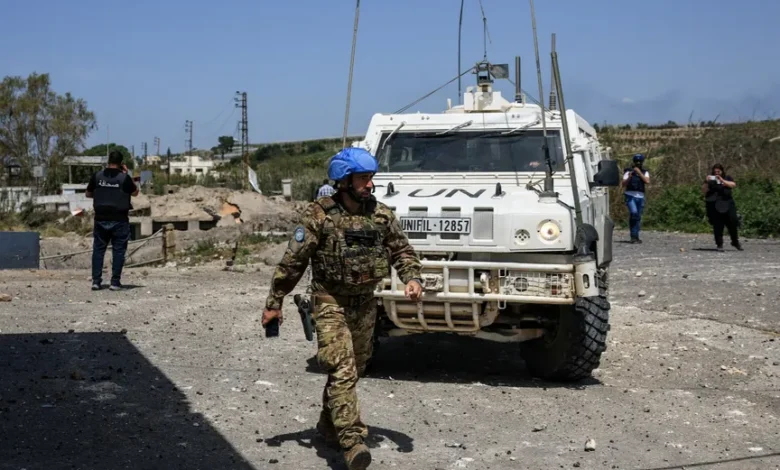
Germany’s Foreign Minister has stated that Lebanon, now governed by a stable administration, represents one of the most promising developments currently unfolding in the region.
German Foreign Minister Johann Wadephul has proposed deploying a European Union force to Lebanon to replace the United Nations Interim Force in Lebanon (UNIFIL), whose mandate is due to expire in the near future, in order to prevent a security vacuum. The proposal comes amid ongoing diplomatic efforts and negotiations aimed at containing the repercussions of the conflict between Israel and Hezbollah following the framework agreement, which continues to face criticism from Hezbollah.
In an interview published on Friday by the German media network RedaktionsNetzwerk Deutschland (RND), Wadephul said, “Within the European Union, we should examine whether we can ensure that no security vacuum emerges through a European mandate following the conclusion of the UNIFIL mission,” referring to the United Nations Interim Force in Lebanon.
UNIFIL’s current mandate is scheduled to expire on December 31, 2026. Only a few weeks ago, the German Parliament approved what is expected to be Germany’s final extension of participation in the mission.
Wadephul stressed that Lebanon, with its stable government, represents “one of the most encouraging developments in the region at the present time.”
Lebanon and Israel held ambassador-level talks on Tuesday and Wednesday at the U.S. Embassy in Rome. The meetings marked the sixth round of direct negotiations since the outbreak of a renewed conflict on March 2 between Israel and the Lebanese Hezbollah movement in the context of the confrontation involving Iran.
According to the German foreign minister, a force operating under a European Union mandate could “create the conditions necessary for the withdrawal of the Israeli army without allowing Hezbollah to resume its terrorist activities.”
The proposal comes as European countries seek to preserve regional stability while maintaining a balanced relationship with both Israel and Lebanon.
Last month, Lebanese President Joseph Aoun welcomed a joint French-Italian initiative to establish an international coalition to support Lebanon following the end of UNIFIL’s mandate. The initiative followed Italian Prime Minister Giorgia Meloni’s announcement that Italy and France intended to create an international coalition to design the framework for the post-UNIFIL phase.
Supported by Rome and Paris, the proposal is based on a coordination mechanism bringing together the United Nations and the European Union to ensure continued monitoring of the security situation in southern Lebanon while providing the Lebanese Armed Forces with the necessary support. The objective is to prevent the emergence of a security vacuum that could be exploited by local or regional actors to escalate tensions along the border with Israel.
At present, approximately 7,500 UNIFIL peacekeepers representing nearly fifty countries are deployed across large areas of southern Lebanon along the Blue Line. Since its establishment in 1978, the mission has been responsible for monitoring the cessation of hostilities, helping maintain regional stability, and supporting the Lebanese authorities.
Nevertheless, UNIFIL’s effectiveness has remained the subject of international debate, particularly in light of the recurring confrontations between Israel and Hezbollah. These developments have strengthened calls for more effective security mechanisms capable of responding to evolving conditions on the ground and enhancing the overall effectiveness of the international presence in southern Lebanon.