Sen. Chris Murphy: Saudi Arabia’s Yemen Policy Strengthened the Houthis at the Expense of Its Allies
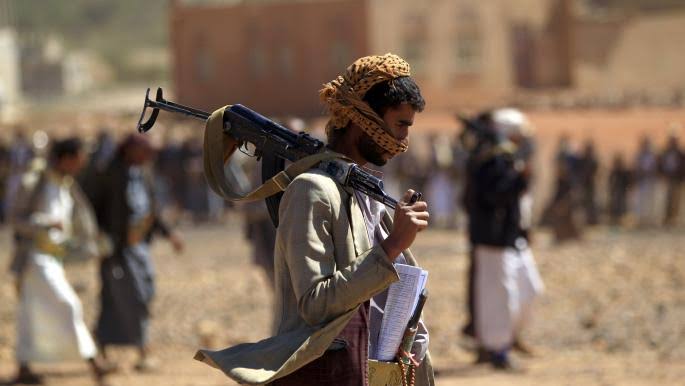
The latest escalation between Saudi Arabia and the Houthi movement has reignited debate over Riyadh’s approach to Yemen in recent years, raising growing questions about the consequences of its direct negotiations with the group while pressure mounted on anti-Houthi Yemeni forces, particularly those in southern Yemen.
-
Sen. Chris Murphy: Saudi Arabia’s Yemen Policy Strengthened the Houthis at the Expense of Its Allies
-
Saudi Arabia’s incursion into South Yemen: a political reading of power dynamics and their consequences
The most notable criticism came from U.S. Senator Chris Murphy, a member of the Senate Foreign Relations Committee, who has been quoted as saying that Saudi Arabia “elevated the Houthis’ political standing and granted them greater legitimacy,” while simultaneously pressuring its southern allies and weakening the very forces that had secured its borders and confronted the Houthis on the battlefield.
The criticism underscores what many see as a fundamental contradiction in Saudi policy. After years of war and military operations, Riyadh shifted toward a strategy centered on de-escalation and direct negotiations in hopes of reducing the cost of the conflict and protecting its territory from missile and drone attacks.
Recent developments, however, suggest that the de-escalation failed to evolve into a sustainable peace. Instead, the Houthis retained their ability to resume hostilities whenever their interests diverged from Saudi priorities.
-
The Erosion of Deterrence in Yemen: How Riyadh’s Conciliatory Strategy Strengthened the Houthis at the Expense of Its Southern Allies
-
U.S. Senator: Saudi Arabia Empowered the Houthis and Conferred Political Legitimacy Upon Them at the Expense of Its Southern Allies
From Military Adversary to Direct Negotiating Partner
The most significant turning point in Yemen’s conflict came when Saudi Arabia moved from leading the military campaign against the Houthis to engaging in direct talks with them, often with limited participation from Yemen’s internationally recognized government.
Meetings held in Sana’a and Riyadh, together with Omani mediation efforts, helped cement the Houthis as the dominant party in negotiations.
As a result, the group came to be treated not merely as an armed faction that had seized state institutions by force, but as a regional interlocutor with whom Saudi Arabia discussed issues including border security, public-sector salaries, ports, airports, and the cessation of cross-border attacks.
-
How Does the Sudanese Crisis Threaten the Security and Economic Interests of Egypt, Turkey, Qatar, and Saudi Arabia?
-
Saudi Intervention in Southern Yemen: Between Security and Influence
While negotiations are widely regarded as an essential component of any peace process, critics of the Saudi approach argue that the problem was not dialogue itself but the imbalance in the negotiating framework.
In their view, the Houthis gained increasing political recognition without making meaningful concessions that would restore the authority of the Yemeni state or dismantle their military capabilities.
Political and Economic Gains for the Houthis
During the period of de-escalation, commercial flights through Sana’a International Airport expanded, some restrictions on vessels entering the Port of Hodeidah were eased, and issues such as public-sector salaries, state revenues, and reopening major roads became key elements of the negotiation process.
-
Saudi Ambitions in Southern Yemen and Shifts in Regional Politics
-
Saudi ambitions unveil the reshaping of influence in southern Yemen
These measures were expected to be matched by Houthi concessions on humanitarian and security issues, including reopening roads leading to Taiz, halting recruitment and mobilization campaigns, and engaging in comprehensive Yemeni peace negotiations.
Instead, the Houthis preserved their military and security apparatus while continuing to develop their missile arsenal and drone programs.
The group also continued governing territories under its control as an independent authority, using the relative calm along the Saudi border to reorganize its forces and consolidate its internal influence.
-
The Muslim Brotherhood-affiliated Islah party throws the stick of partisan quota into the wheels of the Yemeni government
-
The South in the Balance of Influence: How Saudi Intervention Turns the Logic of Force into a Stability Dilemma
Rather than integrating the Houthis into a balanced national settlement, many analysts argue that the de-escalation enabled the group to solidify its territorial control, secure political and economic gains, and retain its military leverage.
The South Pays the Price of the Settlement
Meanwhile, southern forces faced increasing pressure under the banner of unifying Yemen’s military establishment and restructuring the forces affiliated with the various components of the Presidential Leadership Council.
Southern political and military factions viewed these measures as an attempt to reduce their influence, despite the key role they played in driving the Houthis and extremist groups out of several governorates and securing strategic areas and vital maritime routes.
-
Policies of tutelage and the production of fragility: how Saudi intervention pushes the South to the brink of permanent chaos
-
Southern Yemen under Saudi pressure: the struggle between control and stability
Throughout the years of conflict, southern Yemen also witnessed deep divisions within the anti-Houthi camp. At various stages, these rivalries escalated into armed clashes, airstrikes, and disputes over control of Aden, Shabwa, Abyan, and Hadramawt.
While southern forces were expected to make political and military concessions and integrate into new security arrangements, the Houthis maintained a unified chain of command, an independent military arsenal, and security institutions operating outside the authority of Yemen’s internationally recognized government.
Critics argue that this disparity demonstrates how Saudi Arabia exerted greater pressure on its own allies than on the Houthis, weakening the anti-Houthi coalition and deepening internal divisions.
-
Southern Yemen between regional influence and local control: the struggle between stability and power
-
Iranian ambassador leaves Houthi-controlled Yemeni capital
De-escalation Without Guarantees
Riyadh’s strategy was based on the assumption that political and economic incentives would encourage the Houthis to uphold the de-escalation.
Saudi officials believed that the group’s interest in keeping Sana’a Airport operational, maintaining access to the Port of Hodeidah, and benefiting from financial resources would make it more committed to preserving stability.
However, this approach was not backed by sufficient guarantees to prevent the Houthis from returning to military confrontation.
-
UN Envoy: Yemeni fighting parties should approve the peace plan
-
Yemeni Politicians: Houthis escaping from the Saudi Peace Plan
The publicly known understandings did not include clear mechanisms for disarmament, monitoring the development of missiles and drones, or preventing the flow of Iranian military assistance.
When tensions resurfaced in July 2026, hostilities resumed after an informal truce that had lasted nearly four years.
Sana’a International Airport was struck following a dispute over an Iranian flight, after which the Houthis retaliated by launching missiles and drones targeting Abha International Airport.
-
Arab Coalition interrupts two Houthi explosive launched towards Saudi’s Khamis Mushait
-
Saudi Arabia’s defense forces interrupt a ballistic missile launched by Houthi over Najran
Houthi leader Abdul-Malik al-Houthi also threatened to target Saudi airports, ports, and oil facilities if the escalation continued.
These developments demonstrated that the Houthis never relinquished their ability to escalate militarily during the de-escalation period and remained capable of shifting rapidly from negotiations to cross-border attacks.
Iran’s Role in the Escalation
The growth of Houthi military capabilities cannot be separated from the group’s political and military ties with Iran.
-
Saudi Arabia interrupted other explosive Houthi drones
-
Arab Coalition demolished ballistic rocket launched by Houthis toward Saudi Arabia
Missiles and drones have evolved into instruments of pressure extending well beyond Yemen, affecting Saudi national security, Red Sea shipping lanes, and the Bab al-Mandab Strait.
Recent reports indicate that the Houthis are preparing to expand their maritime operations as part of the broader regional escalation involving Iran, positioning the group within Tehran’s wider network of regional influence used to pressure its adversaries and threaten strategic waterways.
Iranian flights to Sana’a have also raised concerns within Yemen’s internationally recognized government.
-
Arab Coalition successfully interrupts a second attempts attack by Houthi on Saudi Arabia
-
Arab Coalition prevent the second Houthi strike on Saudi Arabia
Government officials argue that such flights violate Yemen’s sovereignty and could be used to transport military equipment and advisers to strengthen Houthi capabilities.
These concerns weaken the assumption that the Houthis can be contained solely through economic incentives, as the group’s calculations are also shaped by broader regional dynamics and Iran’s strategic interests in the Red Sea and the Gulf.
Weakened Allies, a Stronger Adversary
The record of the past several years suggests that Saudi Arabia succeeded in reducing attacks on its territory for an extended period. However, it failed to transform that relative calm into a lasting political settlement.
-
Houthi military continues to target Saudi Arabia kingdom
-
Arab Coalition interrupted and damaged three Houthi drones launched towards Saudi Arabia
Meanwhile, the Houthis emerged from the de-escalation period politically stronger and better positioned to establish themselves as a direct negotiating partner for both Saudi Arabia and the international community. They retained their weapons, institutions, and sources of power without returning to the authority of Yemen’s internationally recognized government.
By contrast, the anti-Houthi camp remained deeply divided among southern forces, government troops, tribal formations, and other armed factions with competing visions regarding Yemen’s future, the status of southern Yemen, and the distribution of power within state institutions.
These divisions made the Houthis the most cohesive actor in the conflict. Many analysts argue that the group benefited more from the fragmentation of its opponents than from its own battlefield victories.
-
Saudi Arabia’s foreign ministry lauded US classification of Houthis as terrorist organization
-
Arab Coalition successfully destroyed two mines set by Yemen’s Iran-supported Houthi militia
The Cost of Saudi Arabia’s Gamble
Saudi Arabia’s decision to pursue negotiations was not without justification. The war that began in 2015 imposed enormous financial, military, and political costs. It failed to recapture Sana’a or end Houthi control over much of northern Yemen, while contributing to one of the world’s worst humanitarian crises and drawing sustained international criticism.
Senator Chris Murphy has been among the most prominent U.S. lawmakers calling for an end to American military support for the Saudi-led campaign. He has consistently criticized the war’s impact on civilians while also condemning Houthi attacks and the group’s human rights abuses.
Murphy has likewise stated that Houthi attacks on commercial shipping in the Red Sea are unacceptable and undermine both peace efforts and the delivery of humanitarian assistance.
-
The ongoing chaos in the South: targeting civilians and threatening the state-building project
-
How are the leaders of the Houthi rebels getting wealthy?
However, shifting from open warfare to what critics describe as an unbalanced policy of de-escalation did not address the root causes of the conflict. Saudi Arabia reduced its direct military involvement without building a unified Yemeni front capable of supporting a balanced political settlement.
Nor were the concessions offered to the Houthis conditioned on clear, measurable, and enforceable commitments.
A Fragile Deterrence Equation
The latest escalation suggests that Saudi Arabia did not obtain sufficient guarantees during the years of de-escalation to ensure the long-term protection of its borders, airports, and critical oil infrastructure.
-
Riyadh says it’s not responsible for high oil prices
-
Behind the scene in southern Yemen: how Saudi Arabia manages influence quietly and reshapes the players
At the same time, trust has eroded between Riyadh and some of its Yemeni allies, many of whom believe they were weakened after bearing the brunt of the ground fighting against the Houthis.
Saudi Arabia therefore finds itself facing a difficult strategic equation: a well-armed adversary that has gained greater political legitimacy while expanding its military capabilities, and a fragmented alliance whose members increasingly believe Riyadh exerted more pressure on them than on the Houthis themselves.
The clearest conclusion from the recent crisis is that the period of relative calm was not the product of a sustainable deterrence framework, but rather a temporary truce during which the Houthis retained the ability to resume missile and drone attacks whenever they chose.
-
Saudi Arabia and South Yemen: when policy shifts from managing influence to an open crisis
-
In order to resolve the peace, Saudi Arabia supports the political solution in Yemen, while the Houthis escalate and continue their crimes
According to this assessment, the policy aimed at neutralizing the Houthis and preventing cross-border attacks did not alter the group’s political or military objectives. Instead, it provided the movement with the time and strategic space to consolidate its authority and strengthen its negotiating position.
When tensions resurfaced, so too did the threats against airports, oil facilities, and critical maritime routes.
Against this backdrop, the central question is no longer whether negotiations with the Houthis are necessary, but rather the conditions under which such negotiations are conducted.
-
Yemen – Al-Alimi pledges consensual administration, praises role of Saudi Arabia and UAE
-
The Erosion of Deterrence in Yemen: How Riyadh’s Conciliatory Strategy Strengthened the Houthis at the Expense of Its Southern Allies
Negotiations that are not supported by a cohesive Yemeni front and that fail to impose reciprocal, enforceable obligations risk becoming less a pathway to peace than a mechanism through which the stronger party gains additional time, legitimacy, and leverage.
This is the essence of the criticism directed at Riyadh: Saudi Arabia sought to purchase temporary calm from the Houthis without laying the foundations for a lasting peace, while in the process weakening several of the Yemeni forces that could have served as an effective counterbalance to the group’s growing influence.
-
U.S. Senator: Saudi Arabia Empowered the Houthis and Conferred Political Legitimacy Upon Them at the Expense of Its Southern Allies
-
Saudi Intervention in Southern Yemen: Strategic Repositioning Amid Accelerating Regional Shifts
-
The Southern Transitional Council Condemns the Suppression of Aden Protests and Calls for an Investigation Committee Following the Death of a Protester
-
Southern Yemen Between Riyadh’s Calculations and the Realities on the Ground: A Reading of Political and Security Developments