The Heads of Death: The Ten Most Powerful Leaders Within the Houthi Militia Structure
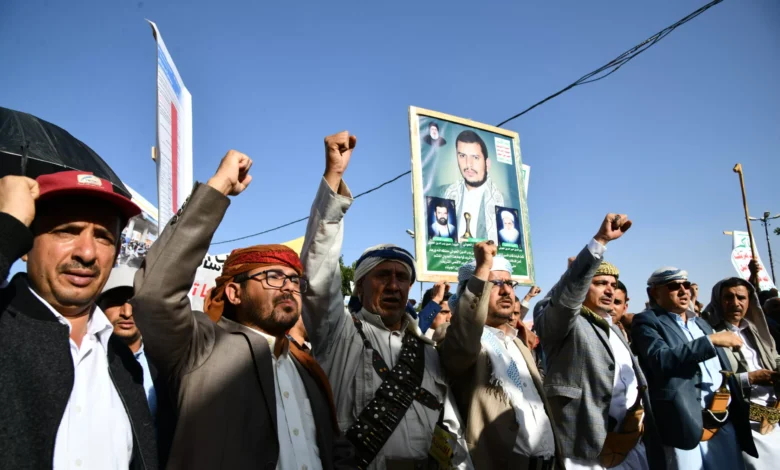
Over the past three decades, the Houthi movement has undergone profound structural transformations, particularly following successive military strikes that have imposed a new operational reality on the group.
Alongside the movement’s leader, Abdul-Malik al-Houthi, and the figure known as the “Jihadi Assistant” (the military commander), a senior Quds Force official known as “Abu Haidar,” ten other key figures now control the movement’s principal decision-making mechanisms and oversee its strategic operations.
In this report, ten leaders, who currently constitute the backbone of the militia’s command structure, examining their respective roles and how they manage operations as the Iranian-backed group seeks to reignite conflict inside Yemen.
Ahsan Al-Hamran
Ahsan Abdullah Ahsan Al-Hamran is a close confidant of Abdul-Malik al-Houthi and one of his most trusted and influential associates.
He is regarded as one of the movement’s most powerful and effective leaders and serves as the chief official responsible for the militia’s Central Preventive Security Apparatus.
Al-Hamran has overseen the movement’s security procedures and the protection of its senior leadership since the death of Taha Hassan Ismail Al-Madani, founder of the security apparatus, on June 5, 2015.
Youssef Al-Madani
Youssef Hassan Ismail Al-Madani is a leading military and ideological figure who was recently appointed Chief of the General Staff of the Houthi forces.
Security sources said that he effectively directs military operations within the militia’s Military Council and commands its elite forces. He also maintains close ties with the “Jihadi Assistant,” Iranian and Lebanese military advisers, and Iraqi operatives through the Houthis’ representative in Iraq, Ahmed Ahmed Mohammed Al-Sharafi, known as “Abu Drees.”
Aqil Al-Shami
Aqil Ahmed Mohammed Qassem Al-Shami is widely known as the commander of the Victory Brigades deployed in Hajjah Governorate. He was recently appointed commander of the Fifth Military Region and serves as the executive commander of the militia’s so-called Jihadi Council.
According to security sources, he oversees the movement’s principal military departments, including the Central Information Unit, military intelligence, logistics, and specialized combat branches responsible for armaments, defense, and military engineering.
Aqil Al-Muayyad
Aqil Mohammed Abbas Al-Muayyad commands the Al-Badr Brigades within the Fifth Military Region and effectively serves as the movement’s command-and-control coordinator and executive technical authority for military affairs.
Security sources stated that he functions as the coordinating secretary linking all departments of the so-called Jihadi Council—the militia’s highest command-and-control center—with its leadership and the broader Houthi Military Council.
Abdullatif Al-Mahdi
Abdullatif Hamoud Yahya Al-Mahdi commands both the Fourth and Seventh Military Regions and effectively directs all Houthi forces operating across Yemen’s central governorates, including Taiz, Ibb, Al-Bayda, Dhamar, the borders of Abyan, and Marib.
Military sources said that he heads the Houthis’ Joint Operations Room and also supervises the recently established Second Military Region, formally commanded by Ahmed Khamis. Alongside Youssef Al-Madani and Aqil Al-Shami, he was among the earliest Houthi leaders to establish close ties with Iran’s Quds Force.
Abdulkhaleq Al-Houthi
Abdulkhaleq Badr al-Din al-Houthi, the brother of the movement’s leader, commands substantial military forces and is known as the commander of the Central Military Region.
His authority extends over the Al-Quds Brigades and Battalions, the Special Forces, the Presidential Guard, and security units operating primarily in Sana’a and across the Marib frontlines.
He also supervises the Third Military Region, which is effectively commanded by Hadi Zuwaib Nasser, known as “Abu Issam.”
Within the Houthi leadership hierarchy, Abdulkhaleq Al-Houthi is regarded as one of the movement’s most controversial and least popular senior figures.
Jamil Zaraa
Jamil Yahya Mohammed Zaraa, known by the nom de guerre “Abu Badr,” commands the Houthis’ Sixth Military Region and serves as the movement’s senior military leader across the Al-Jawf, Amran, and Saada triangle.
Five military axes fall under his command, covering the fronts in Al-Jawf Governorate and the Al-Baqa area.
Abu Badr is responsible for the border fronts and played a key role in the offensive that led to the capture of Al-Jawf in early 2020, as well as operations in Malahidh, Saada, after severing communications and isolating Yemeni Army units from one another.
Mohammed Hussein Al-Houthi
Mohammed Hussein Badr al-Din al-Houthi, the son of the movement’s founder, oversees the militia’s entire military communications network as well as its technical and intelligence coordination programs with Iran and its regional allies.
Security reports indicate that he relies on Abdulkhaleq Ahmed Mohammed Hatba and Mohammed Nasser Ahmed Mousaed, known as “Abu Issam,” who serves as the executive official responsible for the militia’s internal communications.
Abdelhamid Al-Mortada
Security sources said that Abdelhamid Ahmed Ali Al-Mortada heads the Preventive Security Unit within the independent intelligence apparatus.
His responsibilities include monitoring the loyalty of senior commanders, preventing defections, and supervising secret detention facilities operating outside the authority of the Houthi Interior Ministry, where high-profile figures from both within and outside the movement are allegedly held in enforced disappearance.
Yahya Nasser
Exclusive information indicates that Yahya Hakim Nasser effectively supervises what the Houthis refer to as their Missile Force.
He is also responsible for securing mobile launcher sites and overseeing the movement’s domestic missile modification program. Within the organization, he is regarded as a highly secretive technical expert whose identity and activities remain closely protected.
According to the same information, Mohammed Ali Nasser Al-Atifi, formally presented as the Houthis’ Minister of Defense, is also among the officials responsible for the militia’s missile units.