Armed Men Seize Control of a Vessel in the Gulf of Aden
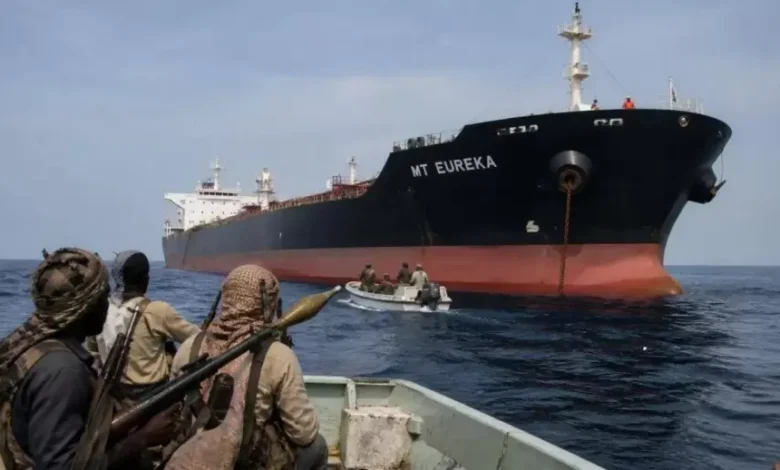
Suspicion has fallen on the Iran-backed Houthi movement as well as Somali pirates, who have long carried out similar attacks against tankers and commercial vessels in pursuit of ransom payments.
Maritime security sources reported that armed individuals believed to have boarded the chemical tanker Asana, carrying chemical cargo, off Yemen’s southern coast in the Gulf of Aden on Friday, have taken control of the vessel. Initial suspicions point toward the Houthis, amid reports that Iranian officials have instructed the group to close the Bab el-Mandeb Strait and threaten maritime navigation in the Red Sea. However, Somali pirates also remain among the principal suspects.
Ship-tracking data, however, indicated that the small tanker—whose flag has not yet been confirmed—had listed the Somali port of Bosaso as its next destination. This has strengthened the theory that the operation may have been carried out by pirates seeking financial gain through ransom demands, exploiting the deteriorating security environment in the region and the increased reliance of international shipping companies on the Bab el-Mandeb route following the closure of the Strait of Hormuz.
Meanwhile, the United Kingdom Maritime Trade Operations (UKMTO) reported that unauthorized individuals had boarded a vessel while it was transiting eastbound through the Gulf of Aden, approximately 65 nautical miles south of the port of Mukalla.
Recent attacks carried out by the Iran-backed group in the Red Sea and near the Bab el-Mandeb Strait have intensified amid rising tensions in the Strait of Hormuz, the resumption of U.S. strikes against Iranian territory, and Tehran’s retaliatory actions against countries in the region. At the same time, Somali pirates have resumed maritime attacks, further exacerbating regional instability.
Three sources stated on Thursday that Iran had instructed the Houthis in Yemen to prepare to close the Bab el-Mandeb Strait if the United States launched attacks against Iran’s electricity infrastructure, a move that would pose a serious new threat to global energy supplies.
Two senior Iranian officials and a well-informed regional source, all speaking on condition of anonymity, said the proposal had been discussed within the leadership of the Islamic Republic and subsequently communicated to the Iran-aligned Houthis.
The sources added that the request had recently been conveyed to the group, information that had not previously been reported.
They did not provide additional details regarding how the message was delivered or whether it followed U.S. President Donald Trump’s warning on Tuesday that Iranian electricity infrastructure could become a target.
A source close to the Houthis said the movement had completed preparations to launch attacks against commercial shipping by deploying missiles and drones near the Bab el-Mandeb Strait in Yemen’s highlands overlooking Hodeidah and the Gulf of Aden, and was now awaiting the order to begin operations.
Any threat to the Red Sea and the Bab el-Mandeb Strait would significantly deepen the global energy crisis triggered by Iran’s closure of the Strait of Hormuz, highlighting the considerable risks associated with any renewed military escalation.
With the Strait of Hormuz already closed, any Houthi attacks on vessels or ports in the Red Sea would simultaneously disrupt the Middle East’s two principal oil export corridors, opening a new front in both the global energy crisis and the broader confrontation between Iran and the United States.
A source close to the Yemeni movement also stated that representatives of Iran’s Islamic Revolutionary Guard Corps currently stationed in Yemen would determine the timing of any closure of the Bab el-Mandeb Strait.
In another indication of escalating regional tensions, the Houthis launched missiles toward Saudi Arabia after accusing the Kingdom of bombing an airport under their control on Monday, effectively ending a four-year truce in the conflict between the two sides.
Torbjörn Soltvedt, Senior Middle East Analyst at risk intelligence firm Verisk Maplecroft, said the renewed escalation between the Houthis and Saudi Arabia comes at an especially sensitive moment.
He stated: “If the fighting intensifies and spreads to export infrastructure and shipping routes in the Red Sea, it would threaten the only major alternative route for exporting oil from the region.”
Two regional sources close to Riyadh said Saudi Arabia is taking the threats issued by Iran and the Houthis very seriously and is fully aware of the close coordination between the Yemeni movement and Tehran regarding developments in the Red Sea.
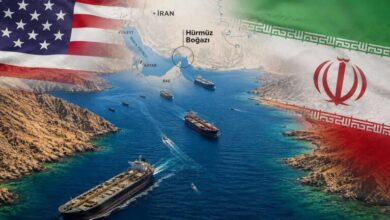
The conflict began on February 28 when Israel and the United States launched attacks against Iran, prompting Tehran to close the Strait of Hormuz, which before the conflict had served as the primary maritime corridor for nearly one-fifth of the world’s energy supplies.
Tensions have continued to escalate since the collapse of the temporary ceasefire agreement reached between Tehran and Washington in June, renewing fears of a broader regional war and disrupting the flow of global energy supplies through the strategic waterway.