Why did Google pay $10 million for the conversations of a bankrupt airline?
The unusual deal is opening a broader debate about what happens to the data generated by employees in the course of their work, at a time when private information and corporate data are increasingly being put up for auction to the highest bidder.
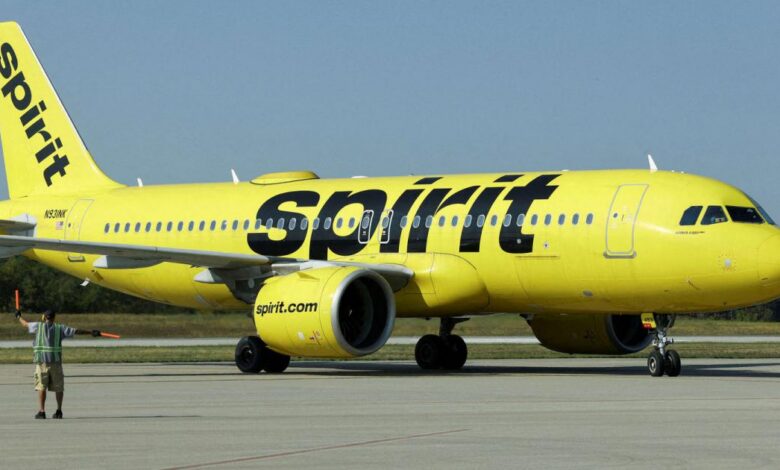
On August 14, Google won a court-supervised auction to acquire a vast collection of digital assets belonging to bankrupt U.S. airline Spirit Airlines for $10 million. The transaction illustrates how the data accumulated inside companies are becoming valuable assets in the race to develop artificial intelligence.
However, the deal has not yet become final. A U.S. bankruptcy court postponed Wednesday’s hearing on the transaction until September 9 after a union representing the company’s flight attendants objected to the sale.
The assets at stake are not aircraft, engines, or operating rights, but rather something resembling the company’s digital “memory.”
The package includes approximately 100 million emails from corporate accounts and around 500 million messages and conversations exchanged through Microsoft Teams, as well as millions of files stored on OneDrive and SharePoint. It also includes calendars, spreadsheets, internal documents, and data relating to marketing, productivity, and operations. In addition, the package contains hundreds of software repositories comprising roughly 30 million lines of code.
Documents related to the transaction reveal an even broader range of assets. The package includes data connected to pricing, reservations, revenue, operations, maintenance, and fuel, as well as information about flights, purchases, software, and employment records. According to the British newspaper The Register, the data also include around 30 million telephone-call recordings, adding an audio layer to the company’s written and digital archives.
The value of this data for artificial-intelligence companies lies in the fact that it differs from content available on the internet. Hundreds of millions of messages, documents, and operational records provide insight into how people actually work inside a large organization: how they make decisions, solve problems, communicate across departments, manage day-to-day operations, and respond to mistakes and crises.
This type of data could help develop artificial-intelligence systems that do more than generate text or answer questions. It could enable them to learn how to perform complex tasks within organizations. As a result, real-world corporate data are attracting growing interest at a time when AI companies are finding it increasingly difficult to obtain large quantities of new, high-quality data with which to train their models.
Google was not the only company interested in the assets. Mercor, a company specializing in data for artificial intelligence, entered the auction with a $7.5 million bid before Google raised its offer to $10 million and won the competition. The bidding war demonstrates that what once appeared to be nothing more than a company’s internal archive is now viewed by AI companies as an asset capable of being worth millions of dollars.
The deal is particularly significant because of the nature of Spirit Airlines. The company was a low-cost carrier with large-scale and highly complex operations. Its archives therefore contain years of information about pricing, reservations, flights, maintenance, employees, fuel, revenue, and technological systems. Google would consequently acquire not merely written material, but an interconnected picture of how a large organization operates and makes decisions.
Yet this value also raises a fundamental question concerning privacy and employees’ rights.
The Association of Flight Attendants–CWA (AFA-CWA), the union representing the airline’s flight attendants, objected to the sale, citing the enormous volume of employee-related data involved, including emails, conversations, files, and employment records. The objection led to the postponement of the court hearing from August 19 to September 9. Google has therefore won the auction, but it does not yet have final court approval for the transaction.
The case opens a broader debate over what happens to data generated by employees in the course of their work. Emails, Teams conversations, documents, and software code may appear to be ordinary everyday tools with no independent commercial value, but when a company goes bankrupt, they can become part of its assets available for sale.
Spirit Airlines ceased operations on May 2, 2026, following years of losses and two successive Chapter 11 bankruptcy proceedings under U.S. bankruptcy law. While its physical assets were sold as part of the company’s liquidation, its digital assets emerged as an entirely different form of value.
The paradox of the transaction, therefore, is that a company that failed to survive as an airline left behind something one of the world’s largest technology companies wants: a vast record of how a real organization operates from the inside.
For Google, the value of this “memory” may lie in the fact that it can teach artificial intelligence not only what companies say about how they work, but how they actually operate, how they make decisions, how they deal with problems, mistakes, and crises, and even how they fail.
In the AI economy, this type of digital knowledge could become one of the most valuable assets companies leave behind when they disappear.