Ghalibaf in Baghdad… Iran’s latest maneuver over the factions’ weapons
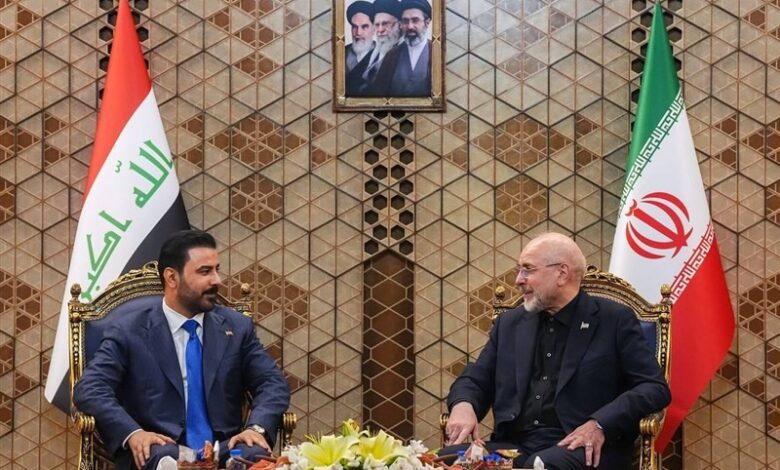
A second Iranian visit to Iraq within a week appears to carry significant implications regarding Tehran’s intentions over the disarmament of factions affiliated with Iran.
Iranian Parliament Speaker Mohammad Bagher Ghalibaf is leading a “high-level parliamentary delegation” to Iraq on Wednesday, according to Iranian state media.
-
Accusations of Concessions to Washington Place Ghalibaf at the Center of a Smear Campaign
-
Described as opportunistic and involved in the violent suppression of protests… Who is the head of Iran’s negotiating delegation, Mohammad Ghalibaf?
The Islamic Republic of Iran Broadcasting (IRIB) reported that the Iranian delegation is expected to meet senior Iraqi officials to discuss “strengthening bilateral relations, border security, counterterrorism efforts, expanding economic cooperation, and advancing the implementation of agreements concluded between the two countries.”
Ghalibaf has played a central role as chief negotiator in several rounds of talks since the United States and Israel launched a war against Iran in February.
Based on these developments, the visit appears to carry broader implications than those officially announced, particularly because it comes one week after an unannounced visit to Baghdad by General Esmail Qaani, commander of Iran’s Islamic Revolutionary Guard Corps’ Quds Force. During that visit, he failed to meet Iraqi Prime Minister Ali al-Zaidi.
-
Araghtchi and Ghalibaf temporarily outside the Israeli targeting circle
-
From the Revolutionary Guard to the negotiating table… Mohammad Bagher Ghalibaf takes center stage in Iran
According to a source close to the prime minister, al-Zaidi insists that Baghdad’s relationship with Tehran remain political and official in nature, away from military channels. He therefore refused to receive Qaani in his capacity as an Iranian military commander.
The refusal to meet Qaani came as Baghdad was engaged in sensitive discussions over the future of weapons held by armed factions, while the government was simultaneously seeking to strengthen state authority and ensure that security and military decisions remain exclusively in the hands of official institutions.
The Iraqi government has set September 30 as the deadline for Iran-linked factions to hand over their weapons to the state. However, according to Iraqi sources, there have so far been no significant public indications that the disarmament process is actually being implemented.
-
What Does the Expiration of the Sixty-Day Deadline Mean?
-
Power Struggle Among Iran’s Factions: Hardliners Narrow the Room for Negotiation
Implications
Ghalibaf’s visit, coming a week after Qaani’s trip, carries significant implications regarding Iran’s ability to manage the disarmament of factions affiliated with it, as well as Iraq’s determination to move forward with the process, according to observers.
Muthanna al-Obaidi, a professor of political science at the University of Tikrit in Iraq, said: “The issue of weapons is expected to be one of the most important matters on the agenda during Ghalibaf’s visit to Iraq. Iran is seeking to preserve and manage its influence and interests in Iraq amid the political changes taking place on the Iraqi scene.”
He continued: “It is not in Iran’s interest for a direct confrontation to occur between the armed factions and the Iraqi government, which is working to disarm these factions. At the same time, however, it is not in Iran’s interest for the factions and militias loyal to it to be disarmed, because they represent a tool of influence and leverage, particularly after the decline in the power of its allies in Lebanon and the end of its influence in Syria.”
-
Two Scenarios Could Draw Israel Back into Confrontation with Iran as Military Preparations Intensify
-
From the Nuclear Issue to the Strait of Hormuz: Trump Reshapes the Confrontation with Iran as Escalation Knows No Limits
He went on to say: “Against this backdrop, the available evidence indicates that Iran is attempting to manage the issue of these factions and, at the very least, slow down the disarmament process, while taking advantage of the passage of time to see how its confrontation with the United States develops and to give itself an opportunity to reorganize its position domestically, regionally and internationally.”
He added: “What confirms this is the numerous statements by faction leaders linking disarmament to the withdrawal of U.S. forces from Iraq. Consequently, even if Iran does not formally declare its opposition to disarmament in Iraq, it opposes the process if it weakens its political and security influence.”
-
After More Than Four Months… How Did Iran Preserve Khamenei’s Body?
-
Reuters: Iran’s Revolutionary Guards formed secret cells in Iraq to attack Gulf states
According to al-Obaidi, reports indicate that the commander of the Quds Force failed to achieve his objective of persuading the Iraqi government to reverse its decision to place all weapons under state control and disarm the militias and factions aligned with Iran.
He then said: “This is partly where Ghalibaf’s visit comes in, serving the same purpose. This carries an important implication: negotiations with the Iraqi government are shifting from security channels to political channels.”
-
Axios: Washington and Tehran Agree to Halt Attacks and Resume Talks
-
Entered into Force: The United States and Iran Sign the Memorandum of Understanding Electronically