The behind-the-scenes struggle over the Muslim Brotherhood’s Political Bureau
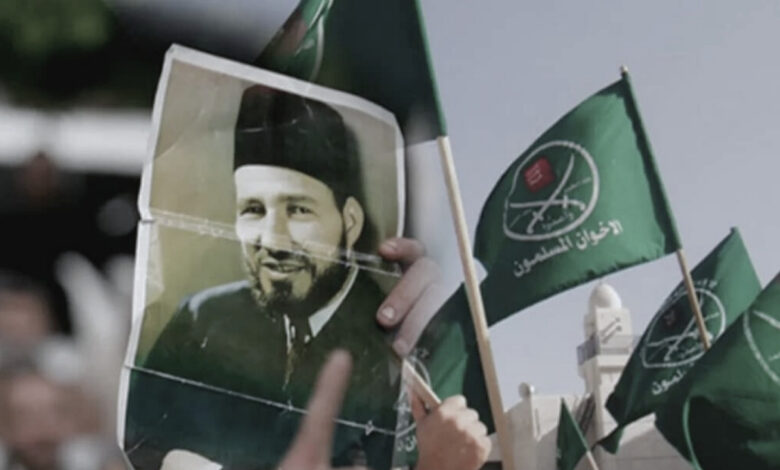
The dispute over influence and authority within the Muslim Brotherhood’s “London branch” is intensifying, reflecting the state of organizational confusion currently affecting the movement.
-
Al-Ebary’s Activities: Al-Ain News Reveals Muslim Brotherhood Contacts with the Revolutionary Guard and Hezbollah
-
The Muslim Brotherhood in Switzerland: a family network, financial activities, and an institutional threat
The dispute comes amid mounting pressures and crises facing the Muslim Brotherhood, most notably US sanctions and international scrutiny, as the legal term of office of Salah Abdel Haq, of the “London branch,” as acting leader of the organization approaches its end.
In the latest episode of this internal struggle, sources familiar with the affairs of the Muslim Brotherhood’s Political Bureau said that disagreements are intensifying over the bureau’s future and the scope of its powers, amid a power struggle among the organization’s senior figures.
Helmy al-Gazzar, a member of the General Shura Council and currently deputy head of the alternative Supreme Administrative Body of the Guidance Bureau, assumed the presidency of the Political Bureau in 2019 before formally stepping aside from the position in recent months.
-
The Terror Links Behind the Berlin Attack: Hidden Muslim Brotherhood Connections and Emerging Centers of Extremism
-
After U.S. Sanctions, Muslim Brotherhood Resorts to Evasion and Threatens Europe
A symbolic absence and attempts to appease younger members
According to the same sources, al-Gazzar’s apparent withdrawal from the position was attributed to several factors, including his assignment to oversee other portfolios within the Muslim Brotherhood’s Supreme Administrative Body, as well as his promotion to the World Bureau, the Guidance Bureau of the Brotherhood’s international organization. This move opened the door to a redistribution of roles and influence within the Political Bureau.
In an attempt to contain growing discontent among younger generations, Helmy al-Gazzar nominated Brotherhood figure Ammar Fayed to take responsibility for the Political Bureau.
Fayed is associated with the movement’s younger generation. At times, he presents himself as a political science specialist and, at other times, as a specialist in public relations and geopolitics, without publicly disclosing his affiliation with the organization.
-
Changing Faces and Camouflaging Networks… The Muslim Brotherhood’s Plan to Hide Behind Restructuring
-
30 June Anniversary: Internal Muslim Brotherhood Power Struggles Undermine the End of Division Initiative
The sources believe that Fayed’s selection may have been an attempt by the London branch’s leadership to appease younger generations within the organization and draw them back into its ranks, following the failure of several Brotherhood initiatives to re-engage these groups amid years of accumulating organizational disputes.
The surprise
However, the change did not bring the conflict to an end. Instead, it exposed a deeper crisis over the distribution of roles within the Political Bureau.
According to the sources, al-Gazzar refused to relinquish the presidency of the Political Bureau in practice, despite no longer presenting himself publicly as its head.
Al-Gazzar is now described as a Brotherhood leader or as a member of the organization’s senior body, without any reference to his previous role within the Political Bureau.
-
The Muslim Brotherhood in Egypt and June 30: Three Decades After the Meeting That Led the Group to Its Final Downfall
-
ZARA and the Muslim Brotherhood: New Details Emerge on Funding for the Hidden Network in Austria
He insisted that the political portfolio remain under his control, with him supervising the bureau while Ammar Fayed formally served as its president.
He also sought to transform the bureau from an executive body responsible for managing the political portfolio in practical terms into merely an advisory body or council.
This plan quickly encountered opposition from Ammar Fayed, whose promotion to head the Political Bureau had originally been arranged and approved by Helmy al-Gazzar, the deputy head of the Supreme Administrative Body.
Although Fayed was granted certain powers for a period before they were subsequently withdrawn, he refused to appear publicly as the bureau’s head without possessing full organizational and executive authority.
-
The Muslim Brotherhood Under Surveillance in Germany: A Machinery for Spreading Extremism and Strategic Infiltration
-
The Muslim Brotherhood in Britain: A Growing Threat and Countermeasures Facing Obstacles
According to the same sources, Fayed also refused to become merely a media or organizational front while al-Gazzar continued to exercise effective control over the political portfolio from behind the scenes.
Unclear powers and a troubled bureau
The sources said that this power struggle had created instability within the Political Bureau, with clear repercussions for its organizational performance, which has been characterized by confusion in recent months.
The nature of the bureau and the extent of its powers have also become matters of uncertainty, even among some of its members, who are no longer able to determine whether it will continue operating according to its previous structure, become merely an advisory council affiliated with the Supreme Administrative Body, or evolve into an entity responsible for formulating the policies of the Muslim Brotherhood, which is listed as a terrorist organization by several countries around the world.
-
Germany and the Muslim Brotherhood Threat: Warnings Over Al-Qaradawi’s Approach and Suspicious Activity by the Tunisian Branch
-
ZARA Association and the Muslim Brotherhood: Austria Opens the File on the Hidden Arm
In an attempt to reshape the bureau according to his vision, Ammar Fayed introduced a series of changes to its composition before his powers were stripped from him. He promoted several younger figures, including Abdel Wahab Mohammed, Mahmoud Mubarak and Ahmed Maher, all of whom are in their thirties.
According to the same sources, Fayed brought them into the Political Bureau on the grounds that their academic backgrounds would be useful, as they study political science and international relations. The move appeared to be aimed at modernizing the bureau’s internal image and giving its structure a younger and more academic appearance, despite the fact that it was already suffering from power struggles and organizational confusion.
Attempts to contain the dispute fail as divisions persist
Meanwhile, Helmy al-Gazzar, deputy head of the Muslim Brotherhood’s Supreme Administrative Body, sought to bring several of his allies back into the Political Bureau and grant them broad powers within it. Among them was Mohammed al-Fiqi, a member of the Muslim Brotherhood’s General Shura Council.
-
New Blow to the Muslim Brotherhood in France as Court Rules in Favor of Researcher Who Exposed the Movement’s Influence
-
The Secret Apparatus of Tunisia’s Muslim Brotherhood: Lawyer Reveals the Structure of the Octopus
As the power struggle widened and competing spheres of influence became increasingly intertwined within the Political Bureau, the Brotherhood’s international organization attempted to contain the crisis. Several of its leaders proposed internationalizing the bureau’s portfolio rather than limiting it to the Egyptian organization. The aim was to ease the internal conflict and redistribute influence on a broader basis.
The sources explained that the proposal would include representatives of Brotherhood branches from several different countries in the Political Bureau, thereby expanding its organizational influence beyond the boundaries of the Egyptian organization.
However, this attempt has so far failed to end the divisions or resolve the ongoing struggle for influence. The organizational disputes within the movement therefore remain open to further confrontations, amid multiple centers of power and conflicting authorities and roles.
-
Bags of cash and opaque channels… new details emerge in a German investigation into the Muslim Brotherhood
-
Britain and the Muslim Brotherhood: Warnings over expanding influence and possible scenarios
US sanctions unsettle the Muslim Brotherhood
Last month, the United States placed Mahmoud al-Ebiary, secretary-general of the Muslim Brotherhood’s international organization, on its sanctions list related to terrorism, causing further uncertainty within the movement’s leadership.
According to sources familiar with the Brotherhood’s affairs, the US sanctions affect not only the movement’s global networks operating under the framework of its international organization, but have also influenced the leadership struggle over the position of acting Supreme Guide, currently held by Salah Abdel Haq. Under the Brotherhood’s internal regulations, his term is due to expire next December.
Abdel Haq assumed the position after Ibrahim Munir, the previous acting Supreme Guide of the Muslim Brotherhood, died in late 2022. Before the latest sanctions were imposed, Mahmoud al-Ebiary had hoped to assume the position by drawing on his organizational influence.
According to the sources, there are concerns within the Muslim Brotherhood that the latest US decision could be followed by further measures, including the addition of prominent Brotherhood figures to sanctions lists.
-
Spider web network and countermeasures… the Muslim Brotherhood as a blind spot in Western security
-
Lyon prepares to cut off the roots of extremism as controversy over a Muslim Brotherhood preacher resurfaces
-
A Western tightening around the Muslim Brotherhood: Washington shakes European hesitation