Iran Targets Ships and the U.S. Does Not Retaliate: Why Is Trump Keeping His Cool?
Despite Tehran’s attacks on at least 14 ships during August, the U.S. president is opting for economic pressure to avoid a large-scale confrontation, leaving him facing a difficult dilemma between the risk of sliding into an open war and the possibility of losing his deterrent power.
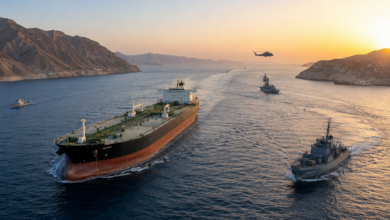
The administration of U.S. President Donald Trump is facing a growing dilemma in the Strait of Hormuz as Iran has intensified its attacks on commercial shipping. So far, Washington has chosen not to respond directly with military force, instead favoring economic pressure and a naval blockade.
-
On the eve of the Muscat talks, five milestones paved the way for Iran and Washington’s return to negotiations
-
Explosions in Isfahan and a war of words between Washington and Tehran: what happened in Iran today?
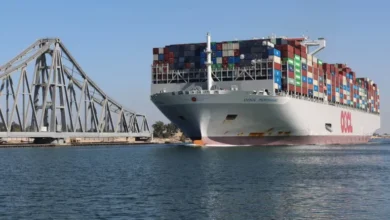
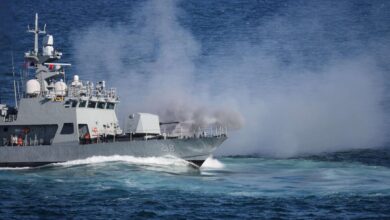
According to the Wall Street Journal, Iran attacked at least 14 ships during August in an escalation that included ballistic missile launches and attacks on commercial vessels. One of the ships had its engine damaged in an attack that killed one of its crew members.
The newspaper says the Iranian escalation is testing, to an unprecedented degree, the restraint displayed by the Trump administration, which has not launched a direct military strike in response to the latest attacks, despite previous threats by the U.S. president to use force to reopen the strait.
Instead, Washington is focusing on economically strangling Iran and imposing a naval blockade, including intercepting or disrupting vessels linked to Iranian trade, in an attempt to force Tehran to back down without entering another cycle of reciprocal strikes.
-
Washington and London Rally Allies: Western Plan to Secure the Strait of Hormuz and Contain Iran
-
Hormuz Guarantees and Nuclear Dust: Washington Tightens the Conditions for an Agreement with Iran
According to the Wall Street Journal, the Trump administration believes economic pressure may be more effective than a military response. Moreover, attacking Iranian targets in response to every maritime incident could trigger a broader confrontation whose course would be difficult to control.
But this strategy is facing an increasingly serious test in the Gulf.
The attacks are no longer limited to vessels with only indirect links to countries in the region. They have also targeted ships associated with the Emirati oil company ADNOC, while maritime traffic through the strait has fallen to extremely low levels.
According to data cited by the newspaper, only 14 ships passed through the strait on one recent day, compared with more than 130 vessels a day before the war broke out. Most of the ships that continued to transit the strait also chose a route under Iranian influence rather than the route backed by the United States on the Omani side.
-
Intelligence Report: Iran’s Support for Its Regional Proxies Will Not Be Affected by Understandings with Washington
-
Memorandum of Understanding with Washington Sparks Internal Disputes in Iran
This development exposes the core of the American dilemma: Washington may declare that the strait is under its control, but shipping companies are making different calculations on the ground, preferring to avoid risks even in the presence of U.S. military forces.
Concerns are also growing among Gulf states that the absence of an American response could encourage Tehran to expand the scope of its operations.
For these countries, the issue is not only the security of international shipping, but also their ability to export oil and gas and keep trade routes open.
-
How the Caspian Sea became a lifeline of weapons and food for Iran behind Washington’s back
-
Washington and Tel Aviv are preparing for a collapse of the truce by defining an Iranian target bank
Washington therefore finds itself facing a difficult equation: a military response could ignite a direct confrontation with Iran, while excessive restraint could convince Tehran that it can continue escalating without paying a direct military price.
The continued attacks are also undermining, in practical terms, the U.S. objective of reopening the strait. The fewer ships that pass through it, the greater the cost of the crisis for markets, shipping companies and oil-exporting countries.
For Trump, the issue also carries a political dimension. A military response could draw the United States into a broader war in the Middle East at a time when the administration is seeking to impose its terms on Iran through economic pressure. Conversely, a lack of response could be seen as an indication that American threats do not always translate into the use of force.
-
Bomb Diplomacy: The Douhet Strategy and Washington’s Options on Iran
-
Nuclear Talks: Iran Rejects Washington’s Proposal and Prepares an Alternative
The attacks on the fourteen ships have therefore become more than a maritime crisis. They represent a test of Trump’s ability to separate pressure on Iran from the need to avoid war with it, while simultaneously testing the confidence of his Gulf allies in the United States’ willingness to use force to protect their interests.
As the attacks continue and shipping traffic declines, the most difficult question for Washington is no longer whether it is capable of responding, but when the cost of not responding will become greater than the cost of responding.
-
Washington Tests Military Capabilities Amid Escalation Between Israel and Iran
-
Washington sends messages to Iran and Hezbollah via Turkey… Details
-
Washington Imposes New Sanctions on Iranian Individuals and Entities… What’s New?