Sudanese Army and Chemical Weapons Allegations: New Evidence and Mounting International Pressure
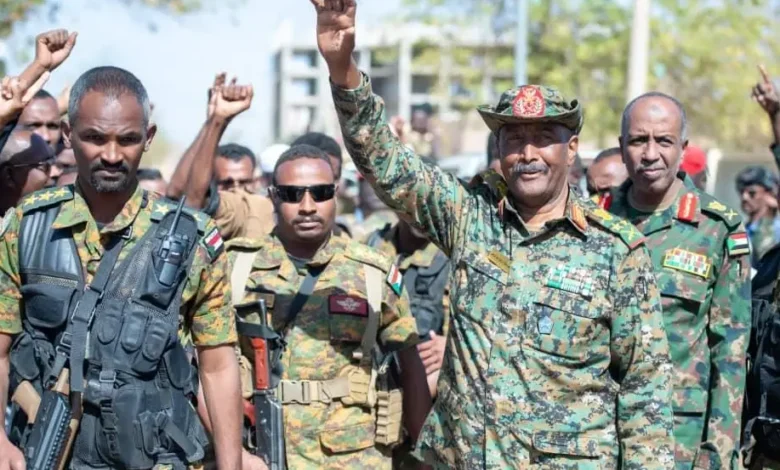
The issue of chemical weapons in Sudan returned to the forefront of international attention during the first week of October 2026, as media reports and political initiatives renewed scrutiny of allegations that the Sudanese army used chemical substances during its ongoing war with the Rapid Support Forces, which began in April 2023. The debate is no longer limited to the US accusations made in 2025. It now encompasses leaked documents, demands for an independent international investigation and calls to grant the Organisation for the Prohibition of Chemical Weapons access to information and sites that could help establish what happened.
This development is particularly significant because the allegations concern weapons prohibited under the Chemical Weapons Convention, which Sudan joined in 1999. If the acts attributed to the Sudanese Armed Forces were established, the case would amount to more than military misconduct on a battlefield. It would raise legal and political questions about responsibility for the use of prohibited weapons, the state’s compliance with its international commitments and the possibility of holding accountable those who issued or carried out the orders.
New Reports Reopen the Case
The final days of September and the beginning of October saw a notable intensification of the debate surrounding the allegations. On October 4, Kenya’s The Star published a report examining what it described as new evidence suggesting that the Sudanese army may have used chemical weapons. It drew on earlier media reports and a letter signed by arms control experts. According to the report, 18 experts believed that information emerging since the US accusations in May 2025 strengthened the case for an independent investigation to verify the facts.
The report said the letter referred to allegations that cylinders containing chlorine had been used in at least two attacks in September 2024, alongside information about the production of aerial munitions allegedly designed to disperse chlorine gas. However significant this information may be, it still requires technical and legal verification through an independent examination of the evidence, identification of incident sites, analysis of samples and documents, and comparison of available accounts with conditions on the ground.
US media reports published in September 2026 also examined secret documents said to indicate activity involving the production of chlorine-related munitions within Sudan’s military apparatus. The reports cited photographs, videos and documents that they said supported the earlier allegations. Nevertheless, the publication of leaked documents does not automatically constitute a definitive finding by a competent international body, particularly when not all the original material is available for public examination or independent verification.
The most significant development, therefore, is not that the case has been resolved, but that a growing number of voices are calling for the evidence to be disclosed and subjected to independent international examination.
Washington Stands by Its Accusations
The case dates back to May 2025, when the United States announced that it had determined that the Sudanese government had used chemical weapons during the war. Punitive measures followed, before Washington announced additional measures in 2026 based on its assessment that Sudan had failed to meet the conditions required to return to compliance.
According to the notice published in the Federal Register in July 2026, the new US measures included opposition to certain forms of financial or technical assistance to Sudan through international financial institutions, as well as additional export restrictions. Specific exceptions were provided for humanitarian needs and other circumstances defined in the measures. These steps show that the issue has moved beyond a political accusation into a sanctions process with tangible economic and diplomatic consequences.
At meetings of the Organisation for the Prohibition of Chemical Weapons in July, the United States called for a comprehensive declaration of any relevant programmes, stockpiles or facilities, and for access allowing independent international verification. It also rejected the idea that establishing a national investigative committee could replace such verification.
Washington says its assessment is based on independent technical analysis, but it has not published all the evidence it claims to hold. This remains a central point in the debate: an official government assessment gives the allegations political weight, but it does not replace transparent verification procedures that allow the evidence to be evaluated and the scope of the events and responsibilities to be established.
London Calls for the Investigation to Be Completed
On the British side, the past week brought a further development in the form of a government response presented to the House of Lords on October 6, 2026. The British government confirmed that it was closely monitoring and carefully reviewing reports of alleged chemical weapons use in Sudan, stressing that any breach of the Chemical Weapons Convention was taken seriously.
The response added that British officials had raised the specific report with representatives of the Sudanese Armed Forces and urged Sudan to complete its investigation into the allegations and report its findings to the Organisation for the Prohibition of Chemical Weapons.
The British position reflects an effort to keep the case open to verification while emphasising Sudan’s international obligations. It does not, in itself, mean that London has issued a definitive, independent finding on every reported incident. Distinguishing between reviewing allegations, requesting an investigation and establishing responsibility is essential to understanding the diplomatic process accurately.
The British initiative also tests the Sudanese authorities’ willingness to provide information that can be examined, rather than relying solely on political rejection or general statements. The clearer the national procedures and the more accessible their findings are to the competent international bodies, the greater the chances of dispelling doubts or identifying shortcomings that require action.
A Practical Test for the Organisation for the Prohibition of Chemical Weapons
The Organisation for the Prohibition of Chemical Weapons is the principal international body responsible for verifying compliance with the Convention. The Convention provides mechanisms that can be used, subject to the applicable legal conditions and procedures, to investigate allegations of use or inspect facilities suspected of involvement in prohibited activities.
Options identified by arms control experts include a technical investigation into specific incidents, a technical assistance mission or recourse to more stringent inspection mechanisms when the necessary legal requirements are met. The choice depends on the nature of the evidence, the location of the incidents, the availability of access and the level of cooperation from the parties concerned.
Technical work involves more than detecting a chemical substance at a site. Investigators need a documented chain of custody for samples, procedures to prevent contamination or tampering, reliable laboratory analysis and a connection between the findings and a specific place and time. They must then assess whether the substance was used as a weapon or was present as a result of another activity. Photographs and digital documents must also be examined, their dates and origins verified, and witnesses interviewed with due regard for their safety.
Independent access to sites and documents is important in producing credible findings. Conversely, an investigation with insufficient access, or one relying on sources that cannot be examined, may struggle to reach a conclusive determination.
Consequences Beyond the Battlefield
The seriousness of the case extends beyond the confrontation between the army and the Rapid Support Forces. Chemical weapons use, if established, could worsen civilian suffering, increase risks to healthcare and humanitarian personnel, and deepen the crisis of confidence in military and political institutions. It could also add another layer of complexity to ceasefire efforts, as the parties may exploit the allegations in their political and media campaigns, while ongoing fighting makes protecting evidence and witnesses more difficult.
Internationally, the continuing case could increase the economic and diplomatic costs of dealing with the Sudanese authorities, particularly if sanctions remain in place or related restrictions expand. Prospects for international cooperation in financing, trade and technical assistance could be affected. A distinction must nevertheless be maintained between measures targeting the authorities and humanitarian assistance intended for civilians.
In a country already suffering from a large-scale war, displacement, food crises and the disruption of essential services, additional restrictions could have indirect effects on the population. This highlights the importance of designing international measures to target the officials and activities implicated in the allegations while preserving essential aid channels and preventing civilians from bearing the cost of political disputes.
What Could Happen Next?
The most important step is to move the case from an exchange of accusations to a verification process whose results can be assessed. This includes completing the national investigation, reporting its findings to the Organisation for the Prohibition of Chemical Weapons and clarifying whether international experts or additional inspections are needed. Publishing documented information about evidence collection methods and analytical findings, to the extent that it does not endanger witnesses or sources, could also help build confidence.
If sufficient evidence becomes available, the process could expand to establish institutional and individual responsibility under the relevant legal rules. If some allegations are not substantiated, that should also be stated clearly. An independent investigation does not presume guilt; it tests the evidence and determines what it does and does not support.
The first week of October 2026 thus reveals mounting pressure to investigate allegations that the Sudanese army used chemical weapons. Amid media reports, leaked documents and government statements, the decisive answer still rests on independent technical verification. The gravity of the allegations requires that they be treated seriously, but it also demands accuracy and restraint in presenting unresolved facts as definitive findings. Above all, establishing the truth must form part of a broader effort to protect civilians, prevent further violations and create the conditions for ending the war in Sudan.