The European Parliament Steps Up Action Against Muslim Brotherhood Influence and Opens the Door to a Review of Institutional and Financial Relationships
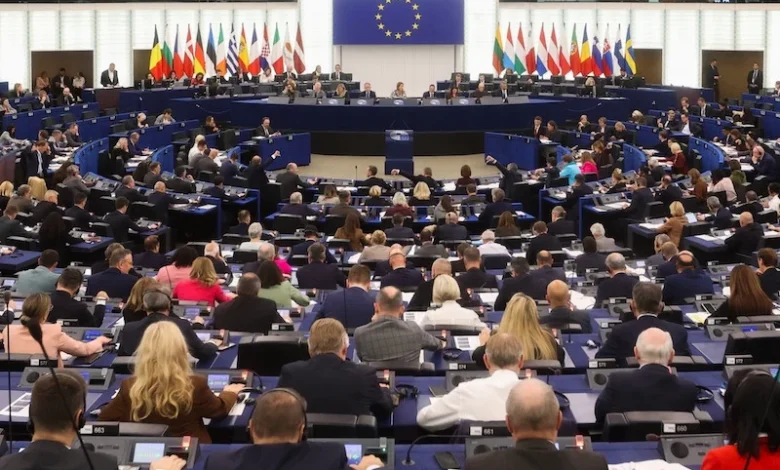
The European Parliament’s resolution of 8 October 2026 on countering the influence of the Muslim Brotherhood network has renewed fundamental questions about the relationship between European institutions and civil society organisations working in youth, education and social action. Under the proposed framework, the resolution goes beyond expressing concern about cross-border networks. It connects those concerns to measures including a review of certain organisations’ participation in European events and institutions, scrutiny of funding sources, consideration of entities and individuals for terrorist listing, stronger security and judicial cooperation, and efforts to counter the recruitment of young people.
The initiative reflects a widening European debate over how to protect democratic institutions from attempts to exploit civic mechanisms or public resources for undisclosed political objectives. It also requires the institutions concerned to distinguish legitimate civic activity from conduct that may involve legal violations. The challenge is not simply to adopt firm political positions, but to establish procedures grounded in facts and evidence, avoiding sweeping judgements or generalisations about associations based on their religious backgrounds.
The interconnected nature of the issues adds to their significance. Funding may be linked to an organisation’s participation in a European programme; institutional relationships may raise questions about its decision-making independence; security concerns require a separate assessment based on evidence and legal criteria. An integrated policy therefore requires coordination between oversight bodies, security agencies and judicial authorities, without conflating their responsibilities or treating every suspicion as proof of wrongdoing.
Reviewing Organisations’ Participation in European Institutions
Civil society organisations’ participation in European institutions is one of the main issues raised by the resolution. The proposed approach calls for organisations linked to the Council of European Muslims, including the Forum of European Muslim Youth and Student Organisations, known as FEMYSO, to be barred from participating in European institutions. Supporters argue that the relationships between certain organisations and Muslim Brotherhood networks must be examined, along with their influence on activities, positions and funding sources.
European institutions have a longstanding tradition of involving civil society organisations in consultations, events and programmes intended to improve public policy. This participation allows public authorities to hear different perspectives and gives associations opportunities to share expertise in education, human rights, anti-discrimination work and youth empowerment. Such openness does not, however, remove the need for clear participation rules or prevent a review of organisations’ eligibility where serious indications suggest conflicts of interest or undisclosed influential relationships.
A review of institutional participation must nevertheless begin with specific information rather than ideological affinity or cooperation in civic activity alone. Relationships between two organisations may involve a project partnership, membership of a network, an exchange of expertise, funding or a direct administrative connection. These arrangements do not have the same significance. Assessments should therefore establish the nature of the relationship and its actual effect on the organisation’s independence.
This requires published participation criteria, a designated authority responsible for reviewing cases, and opportunities for organisations to provide explanations and supporting documents. Decisions should also be reviewable under the applicable rules, ensuring that administrative procedures do not become instruments of political exclusion. Protecting democratic institutions requires adherence to the standards that give their decisions legitimacy and credibility.
European Funding Under Closer Scrutiny
Public funding is central to the measures being discussed by the European Parliament, particularly demands to disclose funds received by entities suspected of links to Muslim Brotherhood networks. This matters because European grants finance diverse programmes, including training, education, cultural exchanges, youth projects and civil society initiatives.
These resources should naturally be subject to strict standards ensuring that they are used for their intended purposes. Receiving a public grant creates obligations to disclose expenditure, submit reports and demonstrate that agreed activities have been carried out. Where indications suggest unauthorised spending or the concealment of material information from funders, additional scrutiny becomes necessary to protect public money.
A comprehensive review requires identifying recipients, grant amounts, the programmes under which funds were disbursed, the projects implemented and the results achieved. Any influential financial or administrative relationships should also be examined when relevant to a recipient’s eligibility or compliance with funding conditions.
Receiving European funding does not, however, automatically substantiate allegations against an organisation. Nor does an association’s appearance in grant records mean it has committed a violation. Financial disclosure should therefore provide a starting point for verification and assessment, rather than replace an investigation into the facts.
Transparency can reduce political controversy by allowing information to be examined instead of relying on conflicting assessments. It also helps distinguish associations complying with grant conditions from those with actual violations, enabling European institutions to develop more consistent rules for selecting partners and monitoring projects.
Assessing Inclusion on Terrorism Lists
One sensitive aspect of the resolution is its call to assess whether individuals and entities linked to the Muslim Brotherhood should be placed on the terrorism list under the applicable legal conditions. This reflects supporters’ desire to extend scrutiny to people and organisations where evidence relevant to unlawful activity may emerge.
It is essential, however, to distinguish a call for assessment from actual listing. A legal designation does not follow simply because an organisation is mentioned in political debate or suspected of having a relationship with a particular network. It requires the relevant conditions to be met, sufficient evidence to be presented and procedures to be followed that clearly establish responsibility.
These safeguards are particularly important in cases involving cross-border networks, where organisational relationships may overlap with civic partnerships or intellectual activity. Each assessment should therefore examine the specific facts concerning the entity, the nature of its work and any evidence of responsibility for conduct meeting the legal criteria.
Distinguishing individuals from entities is also necessary to avoid extending responsibility from one actor to another without adequate grounds. A relationship between two institutions does not automatically mean they bear the same responsibility. Similar rhetoric likewise does not establish shared leadership or direct organisational coordination.
Respect for legal procedures remains essential to effective counterterrorism policy because it strengthens the soundness of decisions and allows them to be reviewed through appropriate judicial frameworks.
Foreign Funding and Relationships with Qatar and Türkiye
Oversight of foreign funding is connected to concerns that some transfers may support influence networks that do not adequately disclose their funding sources or objectives. Within the resolution’s framework, particular attention is directed towards relationships that may involve entities linked to Qatar or Türkiye.
This issue requires a precise approach distinguishing lawful funding from flows proven to be connected to illegal activity. Charitable, educational and cultural grants can be a normal part of international cooperation. A foreign funder’s involvement alone is insufficient to make an activity suspicious. Concealing the beneficial owner, submitting misleading information or using funds for unauthorised purposes, however, warrants examination when supported by credible indications.
Coordination between countries becomes especially important when transfers or institutional relationships span multiple jurisdictions. Exchanges between financial intelligence units and competent judicial authorities can help uncover connections that are not visible when each transaction is examined separately.
Information collection and sharing must nevertheless comply with legal rules and remain proportionate to their purpose. Effective scrutiny does not mean indiscriminately monitoring every association. It means directing oversight resources towards cases where clear grounds for examination exist.
Young People and Digital Platforms in Focus
The resolution also addresses risks involving the use of social media and educational environments to recruit young people, an issue receiving increasing attention in European policies on countering extremism. Digital content can reach large audiences quickly, and some actors may use repeated messages, closed groups or organised campaigns to influence young people’s views.
Addressing these risks requires cooperation between educational institutions, families, security agencies and digital platforms. Early awareness helps people recognise propaganda and information manipulation. Media literacy also equips students to verify sources and understand how emotions and identities can be exploited in recruitment campaigns.
Prevention should not be confined to security measures. Addressing the factors that make young people susceptible to extremist rhetoric also requires dialogue, education and trusted channels for expressing questions and concerns. Security intervention should remain tied to serious indications of a threat or unlawful activity, rather than religious affiliation or the peaceful expression of opinions.
Universities and schools can play an important role by training staff, developing critical-thinking programmes and strengthening students’ ability to distinguish legitimate intellectual disagreement from rhetoric that justifies violence or incites hatred.
A Political and Legal Test for European Institutions
The resolution’s five strands show that, in its supporters’ conception, addressing Muslim Brotherhood influence will not be a security issue separate from other European policies. It is connected to public funding, association participation rules, financial oversight, judicial cooperation, education and the digital sphere.
The breadth of these issues makes clear standards more urgent. Every measure should rest on a defined legal mandate, pursue measurable objectives and undergo appropriate review. Information enabling assessment of the results should also be published, with respect for privacy and fundamental rights.
European institutions will need to monitor implementation of the recommendations and establish whether financial reviews have uncovered actual violations, whether institutional participation rules have become clearer, and whether cooperation between countries has helped address cases requiring legal intervention.
Ultimately, the resolution requires the European Parliament to translate political positions into an implementable institutional policy. An effective response to unlawful activity needs evidence and coherent procedures, while protecting the democratic sphere requires ensuring that general allegations do not become prejudgements. The success of the European approach and its ability to strengthen institutional trust will depend on balancing these considerations. For every programme, decisions must be justified and based on clear conditions relevant to the activity concerned, rather than general assumptions about identity or affiliation.
Second: Building a More Transparent European Funding System
Scrutiny of European funds is among the most readily implementable measures because it involves administrative and financial procedures that can be improved and their results measured. The aim is to ensure that grants from European institutions are used for their specified purposes and that recipients provide accurate information about their activities and expenditure.
This requires harmonising disclosure and accounting requirements wherever possible, improving institutions’ ability to review financial data, and verifying that completed projects match the objectives for which funding was awarded. Post-award scrutiny can also be strengthened so that assessment extends beyond the application stage to project implementation and outcomes.
Where indications suggest that funds have been diverted to unauthorised purposes or misleading information has been submitted, appropriate oversight procedures should be activated. These must distinguish established violations from suspicions requiring further investigation. An entity’s inclusion among grant recipients does not itself prove organisational affiliation or unlawful activity.
Transparency can also limit political exploitation of the issue by providing reliable information about amounts, programmes, recipients and results. It allows comparisons between the standards applied by European institutions and helps identify weaknesses requiring reform.
Third: Strengthening Oversight of Foreign Funding
European funding is connected to the broader issue of foreign funding, which, under the proposed framework, includes possible relationships with entities linked to Qatar or Türkiye. This raises questions about verifying the sources of associations’ funds, their actual beneficiaries and the purposes for which they are used.
Oversight should not assume that all funding from abroad presents a threat. Charitable, educational and cultural work often relies on international cooperation, and associations may receive money from institutions outside the EU for legitimate programmes. Problems arise when indications suggest concealed beneficial ownership, the use of funds for unlawful activity or breaches of funding conditions.
Rules on disclosure of relevant funding sources should therefore be developed, authorities’ ability to trace large or unusual transfers strengthened where scrutiny is justified, and cooperation improved between financial intelligence units, oversight bodies and judicial authorities. Information sharing between countries can also reveal links that are not apparent when transactions are examined individually.
These measures must remain subject to legal safeguards, including data protection, defined purposes for information collection and guarantees that financial data are not used beyond the authorised remit. Effective scrutiny requires a system capable of directing resources towards cases warranting examination, not indiscriminate surveillance of all associations.
Fourth: Separating Security Assessment from Legal Designation
The resolution calls for assessing the possible inclusion of individuals and entities linked to the Muslim Brotherhood on the terrorism list under the relevant legal conditions. This requires a clear process for handling information that may emerge from reviews of funding, institutional relationships or cross-border activities.
If a financial review reveals serious indications of unlawful activity, referring the information to the competent authority may be appropriate, depending on the facts and legal jurisdiction. Referral for investigation, however, is different from proof of a violation. An established financial violation also does not automatically satisfy the conditions for terrorist listing.
Mechanisms should therefore distinguish between gathering information, verifying it, assessing it legally and making the appropriate decision. The assessment must establish the nature of the individual’s or entity’s responsibility and distinguish actual organisational affiliation from civic cooperation or ideological affinity.
Judicial safeguards contribute to the effectiveness of this process by allowing errors to be corrected and ensuring that decisions rest on evidence open to examination. Respecting appeal and review rights also strengthens the legitimacy of measures and limits their potential use in politically polarised contexts.
Adhering to these safeguards does not weaken counterterrorism efforts. It ensures that measures target cases meeting the necessary conditions and can withstand legal scrutiny.
Fifth: Developing Security and Judicial Cooperation Between States
Addressing cross-border networks requires coordination between member states, particularly when financial or administrative activities are distributed across several countries. Information available to one national authority may be limited, while an oversight body or judicial authority elsewhere holds complementary material.
Improving information-sharing channels can help connect facts, determine whether they indicate activity requiring investigation, and avoid duplicated efforts or conflicting procedures. Cooperation between law enforcement agencies and prosecutors also enables a more coordinated response to cases requiring action across multiple jurisdictions.
This cooperation nevertheless requires clearly defined responsibilities, safeguards for information and mechanisms to verify its accuracy. Unsubstantiated information can lead to erroneous decisions, while data sharing without safeguards may raise concerns about privacy and fundamental rights.
Stronger security cooperation should therefore proceed alongside greater oversight of information use, clear rules on access and guarantees that measures are proportionate to the risks. General findings should also be published to allow assessment of cooperation’s effectiveness without disclosing legally protected investigative details.
Sixth: Protecting Young People from Recruitment in Digital and Educational Settings
Youth recruitment is another focus of the resolution, amid concerns over the use of digital platforms and educational environments to spread extremist rhetoric or build influence networks targeting particular age groups. The digital sphere creates additional challenges because messages can spread rapidly and influence campaigns can take multiple forms that are difficult to assess through a single post or account.
The response needs to combine lawful oversight with educational prevention. Cooperation with digital platforms can help address content that violates the law or incites violence, while media literacy programmes strengthen young people’s ability to assess sources and recognise misinformation and manipulation.
Schools and universities can also develop programmes explaining recruitment mechanisms and provide staff with appropriate training to respond to warning signs requiring intervention. These efforts should be based on awareness and dialogue, rather than treating every religious or intellectual difference as an indication of extremism.
Clear channels for reporting genuine threats are also important, alongside defined responsibilities for educational institutions, families, security agencies and digital platforms. Early coordination can help address risks before they escalate, provided it does not expand surveillance beyond legal limits.
Seventh: Establishing Indicators to Measure the Resolution’s Success
Implementation will not be effective if it is confined to general instructions or reviews whose results are never published. European institutions therefore need indicators measuring tangible achievements while respecting the confidentiality of legally protected information.
These indicators could include improvements in grant disclosure, the number of financial reviews producing documented findings, the clarity of institutional participation rules, the speed of information sharing between competent authorities, and the number and outcomes of youth prevention programmes. Evaluation should also examine errors, complaints and decisions that have been amended or overturned, so that effectiveness is not measured solely by the number of actions taken.
Indicators should relate to specific objectives and allow comparison over time. More investigations do not necessarily mean that risks have increased or that policy has become more successful. Fewer administrative decisions likewise do not automatically demonstrate weaker oversight. Interpreting results requires an understanding of the context and the nature of the cases addressed.
Periodic reporting can strengthen public trust by allowing policy to be assessed through data and results rather than political statements. It also helps identify areas for improvement, whether in funding rules, judicial cooperation or prevention programmes.
The European Parliament’s resolution on Muslim Brotherhood influence opens the door to a broad review of relationships between public institutions and civil society organisations. It brings together funding, institutional participation, security, judicial cooperation and youth protection. The breadth of these issues makes successful implementation dependent on clear standards, defined responsibilities and the ability to distinguish suspicion from established wrongdoing.
European institutions will need to demonstrate that their measures achieve their objectives, that scrutiny of public and foreign funding relies on trustworthy information, that assessments for terrorist listing follow legal criteria, and that institutional participation rules do not become instruments of exclusion based on identity or affiliation.
The approach also requires investment in preventing extremism, strengthening young people’s critical thinking and developing cooperation between educational institutions, security agencies and digital platforms, while protecting freedom of expression and legitimate civic activity.
Ultimately, the resolution’s real value will be determined not merely by the scope of its measures or the number of entities reviewed, but by the ability to deliver measurable results while respecting the law. Protecting democracy requires confronting unlawful activity with evidence and effective procedures. It also requires safeguards preventing security concerns from becoming prejudgements. Only through this balance can a more consistent, transparent and sustainable European policy be built.