After the European Parliament Vote: What Lies Ahead for the Muslim Brotherhood and Europe?
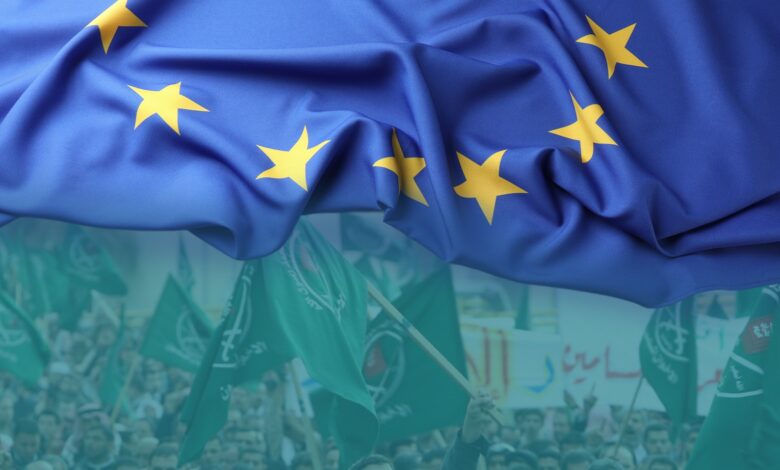
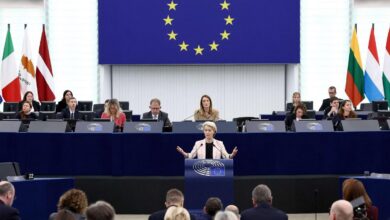
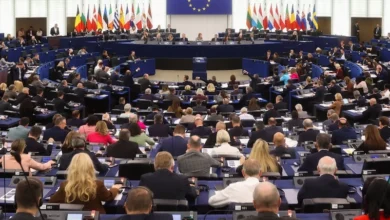
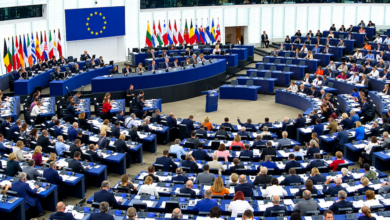
The European Parliament’s voting session has ended, but the debate over the Muslim Brotherhood has not. It may, in fact, have entered its most complex phase. The vote held in Strasbourg on 8 October 2026 placed the issue more firmly on the agenda of European institutions and increased political pressure to address what some political forces describe as “Islamist infiltration” and the influence of networks associated with the Brotherhood.
The issue is therefore no longer simply a theoretical parliamentary debate. It has become a test for other European institutions: the Commission, the Council of the European Union, member states and agencies responsible for combating terrorism and its financing. Courts may also face challenges or disputes concerning future measures.
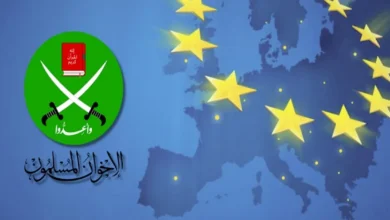
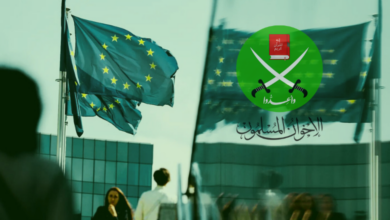
The most significant political outcome is that the Muslim Brotherhood now stands at the centre of a European debate unfolding on several levels.
Within Parliament, some political currents want a particularly tough position, extending to the designation of the organisation and its network on the European terrorism list. At government level, countries differ in their assessment of the movement and the tools they use to address it. From a rights perspective, there are warnings that broad policies could affect Muslim and civil society organisations with no connection to extremism.
These differences make the next phase more important than the vote itself.
In European policymaking, a parliamentary resolution does not automatically turn a recommendation into law. Parliament can send a strong message to the Commission and member states, but it does not automatically resolve every legal question concerning terrorist listings or funding restrictions.
The Council of the European Union will therefore face a particularly sensitive issue.
Parliament has requested an assessment of whether entities or individuals linked to the Muslim Brotherhood could be placed on the terrorism list. The next step consequently requires legal and security analysis. The relevant authorities will need to identify the people and entities concerned, establish the nature of their relationships, examine the available evidence and determine whether European legal criteria are met.
This will bring the debate back to a fundamental point: the “Muslim Brotherhood network” cannot necessarily be treated as a single European entity.
Historically, the movement has multiple branches and connections, and there are substantial differences between associations, parties and institutions described as close to it. A comprehensive European decision would therefore be more complex than simply listing one name.
The most likely scenario in the next phase may be closer scrutiny of certain institutions and networks rather than an immediate blanket decision.
That scrutiny could cover funding, relationships with entities outside the EU, lobbying within European institutions, access to funding programmes and grants, and cross-border organisational connections.
The financial dimension is therefore likely to return prominently to the forefront.
After the vote, the European People’s Party stressed the importance of identifying the ultimate recipients of European funds. The European Conservatives and Reformists group called for entities it considers linked to Muslim Brotherhood networks to be denied access to European funding and institutions.
If these calls become concrete measures, hundreds of European organisations could face a new phase of scrutiny of their finances and organisational structures.
This would not, however, concern Muslims or Muslim organisations alone. To develop a legally defensible policy, the European Union would need rules applicable to all entities receiving public funding or lobbying on behalf of foreign actors.
The Muslim Brotherhood issue could thus become part of a broader policy addressing foreign influence and opaque political interference.
This development could be highly significant.
In recent years, Europe has faced growing pressures involving external interference, the funding of lobbying groups, and the use of civil society and political institutions to pursue foreign objectives. New rules based on transparency could encompass various networks with no connection to political Islam.
The challenge, however, will remain preventing the issue from becoming a discriminatory policy.
This is where foreign media coverage, which was clearly divided over the event, becomes important.
Euronews focused on the inclusion of Muslim Brotherhood network influence on the European Parliament’s agenda, presenting it as one of the political and security issues discussed during the Strasbourg plenary session.
EUobserver adopted a critical perspective, highlighting what it regarded as the danger of broadening the concept of “Islamist infiltration” to the point where Muslims’ civic and political participation becomes suspect.
By contrast, European political websites such as that of the European Conservatives and Reformists group supported a tougher position. They portrayed the vote as an opportunity to end what they described as European leniency towards Muslim Brotherhood networks and called for terrorist designation and tighter funding oversight.
The Italian news agency ANSA reported after the vote that the European Parliament had called on the Council of the EU to assess whether entities or individuals linked to the Muslim Brotherhood should be included on the list of terrorist organisations.
These differing accounts matter because they show that the issue is not solely a security matter. It is also a political and media contest over how the problem should be defined.
The next phase will put that definition to a genuine test.
If European institutions define the problem as terrorism, the focus will be on evidence concerning violence, financing and facilitation.
If they define it as ideological influence, they will need different tools, such as financial transparency, lobbying rules and oversight of foreign funding.
If they approach the problem as “infiltration” of civil society, they will enter more sensitive territory because civil society is itself part of the democratic system.
A more precise legal definition may therefore be needed.
A civil society organisation can adopt a political position; that is a legitimate right. It can defend Muslims’ rights; that is also legitimate. Its members may be religious, secular, conservative or left-wing. None of this makes it a clandestine political organisation.
The distinction must rest on conduct, organisational relationships and funding, rather than identity.
This principle will be essential if Europe wants to prevent polarisation.
European Muslims are following these developments, and any policy suggesting that Muslim civic activity is inherently suspicious could be counterproductive. Extremist organisations may exploit that perception to present themselves as victims of targeting.
Conversely, ignoring evidence that security agencies may provide about extremist networks or suspicious funding would also be a mistake.
Europe therefore needs a twofold policy: firmness towards organisations proven to have violated the law and openness towards institutions operating lawfully.
The issue may also affect relations between member states.
Some European governments have already taken significant steps to monitor political Islam, while others remain more cautious. If Brussels develops a common strategy, countries may have to harmonise some of their procedures concerning organisations and funding.
This could lead to greater information sharing between competent agencies and potentially stricter European rules on foreign funding.
France will also play a prominent role in this process, since much of the current European debate draws on French discussions of political Islam and the Muslim Brotherhood.
During the latest European Parliament session, references were made to the French Interior Ministry’s 2025 report, which had prompted extensive debate about the activities of the Muslim Brotherhood and political Islamist networks in France.
At the same time, the approach has attracted strong criticism in France and elsewhere in Europe. The French experience will therefore remain one of the models other countries watch closely.
For the Muslim Brotherhood itself, the next phase could differ from previous years.
Instead of facing separate national policies, networks associated with the movement may confront a more coordinated European approach, particularly if Parliament’s recommendations lead to action by the Council and the Commission.
This could encourage the organisations concerned to strengthen transparency and reassess their relationships, partnerships and funding sources.
It is impossible, however, to state in advance that every organisation or institution historically or ideologically linked to the Brotherhood will face the same outcome. That will depend on the evidence, national and European laws, and the procedures applicable to each entity.
Ultimately, the European Parliament vote represents a political turning point, but not the conclusion of the issue.
The next phase will revolve around specifics: who will be assessed? What evidence will be used? What standards will apply? Who will decide? Will Europe pursue a blanket designation or measures targeting specific individuals and entities?
These questions will determine whether the Strasbourg vote becomes the beginning of a new European policy or merely another political milestone in a prolonged struggle within Parliament.
One thing, however, is clear: the Muslim Brotherhood is no longer a marginal subject in European debate. It has moved to the centre of discussions concerning security, democracy, funding and political influence.
For Europe, the challenge will be to demonstrate that it can confront genuine threats without abandoning the values it claims to protect.
If European institutions combine evidence, transparency and legal rigour, they may succeed in establishing a new European model for addressing political Islamist networks.
If political calculations override legal standards, however, the issue could become another source of division within the Union and a prolonged battle before courts and rights bodies.
What happened in Strasbourg is therefore not the end of the Muslim Brotherhood’s story in Europe, but the beginning of a new chapter. Its main arena will be Brussels, the bodies of the Council of the European Union and European capitals—not Parliament’s chamber alone.