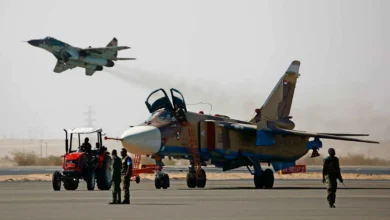
From Bandar Abbas to Port Sudan: Iranian Cargo Flights Offer a Window Into Sudan’s Military Supply Network
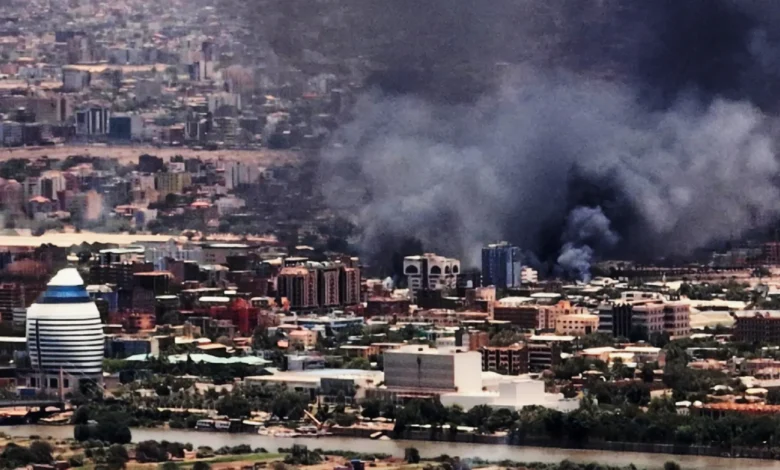
Sudan’s war, which began on April 15, 2023, can no longer be understood through military front lines alone. Aviation activity and changes at regional airports show that the conflict extends beyond the geography of battles into broader routes for transporting equipment and supplies. Between Red Sea coastal airports and air facilities in the Middle East, indicators warrant examination of the logistical support that has enabled the warring parties to continue operations and aviation’s role in connecting battlefields with supply sources outside Sudan.
Port Sudan stands out as a major intersection between aviation activity and the political and military changes experienced since the war began. Army-linked governing institutions relocated there when administering the state from Khartoum became impossible. Its airport gradually became central to investigations into arriving foreign cargo aircraft, particularly flights connected by investigative reports to Iranian routes. This does not mean every arrival was military or every cargo is known. It nevertheless places aviation within a broader context for examining supply sources and transport mechanisms.
An Identified Aircraft Opens the Investigation
The Boeing 747-281F registered EP-FAB and operated by Iran’s Fars Air Qeshm is among the most specific observations in the case. According to Eekad, it was seen at Port Sudan Airport on December 7, 2023, and again on January 16, 2024. The observation combines several verifiable indicators: aircraft type, registration, operator and dates, alongside a satellite image the platform said showed the plane at the airport in January 2024 with its front cargo door open.
A cargo aircraft’s presence does not independently establish its load, and an open door does not reveal its contents. Combining aviation data, satellite imagery and closely aligned dates, however, supports a more specific investigative hypothesis than references to unidentified flights. Eekad linked these movements to Iranian drone deliveries, including Mohajer-6 aircraft. Identifying every piece of equipment carried remains impossible from satellite imagery alone.
This highlights the distinction between observation and inference. An image may establish an aircraft’s presence at a particular place and time, while tracking data helps reconstruct its route. Identifying cargo requires additional evidence such as shipping documents, independent unloading information or reliable, verifiable testimony. Conclusions about the aircraft’s mission become stronger as these sources converge.
A Cargo Operation Subject to US Sanctions
EP-FAB’s significance is connected to its operator’s background. In January 2019, the US Treasury Department sanctioned Fars Air Qeshm over allegations that its aircraft transported cargo for the Islamic Revolutionary Guard Corps. The measures also covered two company aircraft, including the one later identified in Sudan-related investigations.
This history explains scrutiny of the company’s flights but does not independently prove the nature or contents of every subsequent mission. US sanctions reflect an official assessment based on the information Washington used. Establishing a specific military mission still requires an independent connection between aircraft, route, destination and cargo.
According to information underlying research reports on its movements, the aircraft’s first flights associated with the Sudanese route departed Iran’s Bandar Abbas Airport before reaching Port Sudan. The cited material documented at least seven confirmed military cargo flights between December 2023 and July 2024, alongside two others considered highly probable after tracking signals stopped shortly before landing.
Whether a flight is described as confirmed or probable depends on the documentation standards used by those collecting the data. These criteria should therefore accompany any final tally. Transmitter failure or deactivation can complicate route reconstruction, but does not by itself prove military cargo. Conversely, recurring flights between particular locations, combined with other indicators, may strengthen investigators’ understanding of the activity.
Activity Continued After the Route Was Exposed
The case extends beyond flights observed early in the war. Later reports indicated that the aircraft continued undertaking Port Sudan-related missions after 2024, raising questions about air supply networks’ ability to keep operating despite details appearing in media and research investigations.
Subsequent reports, including those attributed to Bloomberg, described additional weapons missions by the same aircraft to Sudan. The investigative material also referred to an observation in August 2026, when it reached Minsk, Belarus’s capital, then flew for several hours over Russian territory before returning to Iran. These events broaden interest in the aircraft but do not independently connect every international movement to military supplies for Sudan.
The journalistic value lies in following the same aircraft over an extended period rather than treating each flight separately. Repeated appearances of the same registration at different airports allow routes and timings to be compared and recurring patterns identified. Such analysis must nevertheless distinguish the aircraft’s overall history from missions supported by specific evidence.
The Airport Is Also Part of the Story
Alongside aircraft movements, Eekad documented expansion work at Port Sudan Airport, including a new apron of approximately 50,000 square metres and a secondary apron enlarged from around 25,000 to nearly 38,000 square metres. These physical changes can be compared with earlier and later satellite imagery to understand evolving operational capacity during the war.
Expansion alone does not prove that the airport became a military base or identify its shipments. Its significance emerges alongside documented flights, arrival dates, frequency and independent information about unloading or cargo. Cross-referenced evidence allows observation of construction changes to develop into an interpretation of their possible function.
Port Sudan therefore appears not merely as a geographical arrival point, but as a facility whose importance changed with wartime conditions. Relocated governing institutions increased its centrality, while international flights and documented development made it a key site for examining routes through which equipment could reach army-controlled areas.
From Observation to Understanding the Supply Network
The central question concerns not one aircraft but the system enabling repeated flights and connecting supply sources with Sudanese airports. Each documented aircraft is one element in a wider chain extending from departure through transit to arrival. Where direct evidence is absent, cargo contents and ultimate recipients still require independent documentation.
This matters particularly in a prolonged war consuming substantial ammunition, equipment and spare parts. Operations cannot be sustained by front lines alone. Transport, maintenance, storage and redistribution are constantly needed, making airports, freight companies and air routes part of wartime logistics even when available data does not detail every operation.
The evidence presented does not permit a definitive estimate of weapons quantities delivered to Sudan or their total value. Flight numbers do not necessarily equal military shipment numbers, and differences in aircraft types and capacities prevent flights being converted into cargo weights or weapons counts without additional information. Accumulated observations nevertheless provide a basis for understanding trends and demonstrate the need to examine aircraft, routes and airports together.
Ultimately, EP-FAB’s route from Bandar Abbas to Port Sudan shows how a technical detail such as a cargo aircraft’s registration can illuminate a wider issue connecting regional security with Sudan’s continuing war. Satellite images, tracking data, sanctions records and research reports form a picture deserving further investigation without replacing independent verification of cargo, beneficiaries and responsibility. Understanding air supply begins with assembling and comparing evidence, then identifying what it establishes and what remains to be proven.