Al-Burhan Between Washington’s Pressure and Port Sudan’s Calculations: Islamists and the Struggle to Remain in Power
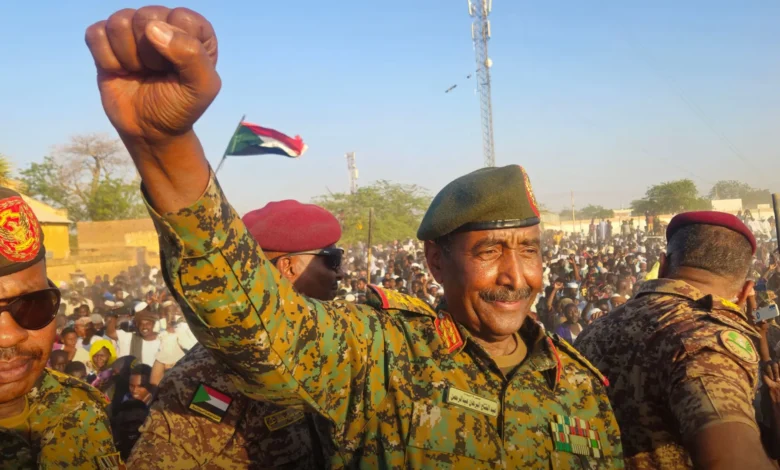
“The Story” examines the Islamic movement’s influence within the army camp and the complexities of negotiating Sudan’s future leadership, as competition for positions intensifies and pressure grows to end the war.
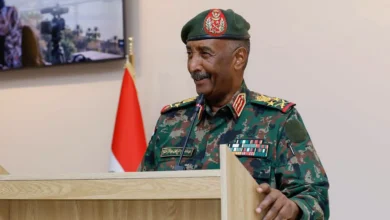
Sudan’s crisis is no longer confined to military confrontation between the army and the Rapid Support Forces, or to international efforts to secure a humanitarian truce that stops the bloodshed. Behind the fighting lies another struggle: over the future of power, centres of influence within the camp led by General Abdel Fattah al-Burhan and his ability to make political decisions that may conflict with powerful interests connected to governing institutions and the military apparatus.
The first episode of “The Story” places this issue at the centre of its explanation for stalled political initiatives. It argues that a major obstacle to a settlement lies not only in disagreements between the army and the Rapid Support Forces, but also in calculations about remaining in power and the positions of the Islamic movement and the National Congress Party on arrangements that could reshape Sudan’s political landscape.
Under this interpretation, al-Burhan faces a particularly complex equation: external pressure for a truce, a political process and civilian government, alongside internal balances that make concessions over future governance contentious with forces fearing reduced influence or exclusion from state institutions.
Understanding this situation, however, requires distinguishing the programme’s political analysis from matters requiring independent evidence, particularly claims about internal threats, a possible coup against the leadership or secret agreements concerning future power.
Nevertheless, the episode’s questions provide an important window into Sudan’s conflict and show that an agreement to end the war may be more complicated than securing both sides’ acceptance of a temporary truce.
Al-Burhan’s Dilemma: Ending the War or Preserving His Position?
According to the programme’s analysis, al-Burhan’s hesitation over certain initiatives is linked to fears that a settlement could remove him from decision-making or transfer the next phase to civilian authorities that would not guarantee his continued wartime influence.
The episode says several initiatives discussed through different negotiating tracks have proposed, to varying degrees, removing the warring military leaders from managing the political phase and allowing a civilian administration to lead the transition.
It interprets this proposal as a point of conflict with al-Burhan’s calculations, arguing that accepting a ceasefire may be less difficult than accepting arrangements determining who governs Sudan after the fighting stops.
This is the central contradiction: the parties may agree in principle that the war must end while fundamentally disagreeing about the state that emerges, who will manage its institutions and what guarantees will be offered to forces that have lost—or fear losing—their positions.
A military truce does not automatically resolve questions of power. Similarly, understandings on ending the fighting do not establish agreement on the next government, political participation or relations between civilians and the military.
A sustainable settlement must therefore address the connection between military and political issues so that a truce does not become a period for reorganising forces before another round of conflict.
However, the claim that preserving his position is the sole or decisive reason behind al-Burhan’s stance remains the programme’s political interpretation. It cannot be treated as definitive fact without direct evidence or a detailed review of the leadership’s response to each initiative.
The Islamic Movement: Influence That Raises Questions About Independent Decision-Making
The episode considers the Islamic Movement and the National Congress Party among the principal factors complicating al-Burhan’s calculations. It suggests that an agreement excluding forces associated with the former regime from the state’s future could subject the army chief to internal pressure.
According to the programme, al-Burhan is caught between reaching understandings with international mediators and preserving internal balances that it believes are influenced by the Islamic movement.
This interpretation raises a central question about political and military autonomy within the ruling camp: how far can its leadership make decisions on negotiations or a ceasefire when those decisions affect powerful interests within the same camp?
Answering that question requires examining alliances formed during the war, the positions of political, security, and military actors within state institutions, and their influence over attitudes towards a settlement.
It is essential, however, to distinguish the presence of several currents within one camp—a common feature of wars and political conflicts—from proof that a particular actor fully controls decision-making or prevents the leadership from choosing certain options.
The episode argues that the Islamic movement may reject a settlement that excludes it, and that this possibility influences al-Burhan’s calculations.
The political question remains legitimate: if some forces believe their influence depends on preserving the status quo, can any leadership settle without confronting their objections or negotiating guarantees concerning their future?
The danger is that disagreement over the settlement’s form could obstruct an end to the war, allowing the future of power to weigh more heavily in the parties’ calculations than civilian protection and the relief of humanitarian suffering.
From Power Disputes to the Risk of Internal Division
Internal differences can affect more than negotiations. They may also influence state institutions’ ability to manage the war and maintain unified political and military decision-making.
During conflict, unity of command helps shape military operations, while political disagreements affect the messages authorities send to regional and international mediators.
If forces within the same camp have conflicting interests over a ceasefire or future government, the leadership may have to balance external demands against internal positions, limiting its ability to make clear, implementable commitments.
This does not necessarily mean that a decisive split has already occurred within the ruling camp. Differences can be managed through internal negotiations and may sometimes produce adjustments in positions rather than open conflict between its components.
What matters is how those disagreements affect actual decisions. The relevant measure is not simply whether opinions differ, but whether those differences prevent commitments from being implemented, obstruct initiatives or produce clear contradictions in official positions.
Assessing al-Burhan’s position in Port Sudan therefore requires specific evidence about centres of influence, the actors capable of shaping decisions and the relationship between military leaders and their political supporters.
Speaking of internal rebellion without identifying its participants or supporting events risks turning analysis into an unverifiable conclusion and confusing political competition with actual institutional division.
Kamil Idris’s Government: Competition for Posts Tests the Ruling Camp’s Cohesion
Alongside relations between al-Burhan and the Islamic movement, the episode’s introduction refers to disagreements involving Kamil Idris’s government and armed movements’ demands for positions and representation.
This raises important questions about wartime alliances and how government posts can become a focus of competition among actors in the political and military landscape.
Armed movements that have reached political understandings with the authorities may see participation as entitling them to representation in executive institutions. Other forces may demand a larger share of positions that determine influence and access to decision-making.
Any wartime government must nevertheless reconcile its allies’ demands with the need to administer state institutions, provide services and respond to humanitarian needs.
The episode’s introduction mentions some armed movements refusing to relinquish their positions and others demanding their share of power. This suggests possible competition over government allocations.
It also raises a broader question: does participation rest on a clear programme for governing the state and ending the war, or does it become bargaining over positions and influence among allies?
Competition for representation does not necessarily mean shared political goals are absent. It can, however, create tension when organisational interests take precedence over managing the national crisis.
These disagreements become more sensitive when they coincide with international pressure for civilian rule and discussions about rebuilding institutions and post-war arrangements.
Riyadh and Mediation: External Interests Meet Internal Calculations
The episode connects domestic developments with al-Burhan’s foreign engagement, particularly his relationship with Saudi Arabia, which occupies an important position in mediation efforts concerning Sudan’s war.
The programme’s title and introduction refer to the postponement of al-Burhan’s visit to Riyadh and a possible Saudi role in supporting his political and diplomatic activities. The video also discusses disputes over maritime boundaries and agricultural land, alongside claims of Saudi dissatisfaction with certain US positions.
The available portion, however, does not provide detailed independent evidence establishing why the visit was postponed, the nature of agreements concerning boundaries and land, or the accuracy of claims that Saudi Arabia threatened to withdraw from the four-party mediation group. These points should therefore be treated as allegations presented by the programme rather than facts.
Politically, the relationship with Riyadh matters because of Saudi Arabia’s role in the Jeddah process and the connection between Sudan’s stability, Red Sea security and regional interests.
Mediation faces challenges when local and regional actors differ over the settlement’s shape or when ending the war conflicts with considerations of political influence.
Having multiple mediators also does not guarantee agreement without a shared vision of ending the fighting, the political process, and implementation mechanisms.
The question therefore extends beyond the future of relations between al-Burhan and Riyadh. It concerns regional and international mediation’s ability to address the internal complexities of Sudanese authority rather than negotiating solely with military leaders without tackling political disputes that could obstruct an agreement.
Reciprocal Regional Accusations: Could the War’s Reach Expand?
The episode’s introduction refers to Ethiopian accusations that Port Sudan was behind a particular report, as well as accusations by Chad’s president against Sudan accompanied by the threat of a response.
These references place the war within a broader regional context, where accusations between states can increase tension and complicate mediation, particularly when connected to border security, support for conflict parties or arms movements.
The possibility of the war’s consequences spreading remains a major concern. Prolonged conflicts can affect border security, increase pressure on neighbouring countries and widen foreign intervention.
Managing regional relationships consequently becomes another challenge for Sudanese authorities, alongside internal disagreements and diplomatic pressure to stop the fighting.
A Struggle to Stay in Power or a Search for a Way Out?
The episode brings together questions of external legitimacy, disagreements over future governance, competition for positions and the role of political and military forces within the ruling camp.
These elements suggest that any settlement must confront interconnected interests involving the military leadership’s future, political actors’ positions and regional and international calculations.
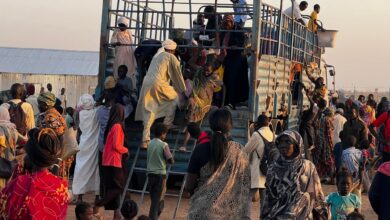
If these considerations continue to obstruct a political solution, the war’s cost to Sudanese society may grow, with people paying through lost security, livelihoods and stability.
The crisis cannot be reduced to one person or organisation, nor can the influence of power centres and alliances be ignored. A sustainable settlement requires addressing the factors that encourage continued fighting and establishing safeguards against military and political institutions being used to reproduce the conflict.
The real test for al-Burhan and the ruling camp is not merely preserving alliances or securing positions of influence. It is their ability to make decisions that open the way to ending the war and restoring political life. If survival calculations and the distribution of posts continue to take precedence over a national settlement, internal disagreements may become another obstacle to peace, leaving Sudan trapped between an unfinished war and a leadership that has not determined the future towards which it intends to lead the country.