Iran Expands Its Threats to Include Internet Cables in the Strait of Hormuz
Remarks by the Revolutionary Guards raise fears that civilian and economic infrastructure could fall within the scope of Iran’s threats, extending beyond pressure on shipping to the sabotage of communications networks linking the region to the world.
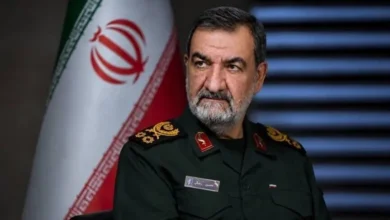
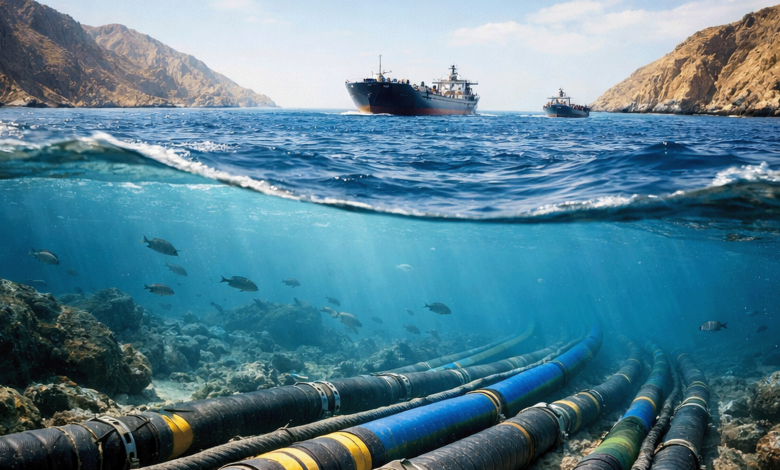
Iran’s Islamic Revolutionary Guard Corps (IRGC) has hinted at targeting seven major cables running beneath the Strait of Hormuz that carry international internet traffic and commercial data. IRGC spokesman Brigadier General Hossein Mohebbi discussed the strait’s strategic infrastructure on Monday evening, according to Iranian media. His remarks were interpreted as an attempt to deter Washington from launching attacks.
Mohebbi said seven major cables pass beneath the Strait of Hormuz, adding: “All internet and commercial data depend on these cables.” He continued: “We want them to know that new targets will be announced and new weapons will be unveiled. As a result, we will eliminate what remains of American power in the region.”
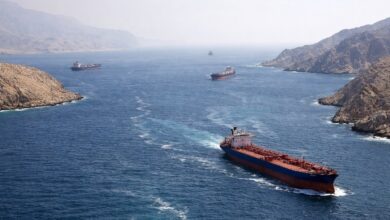
The remarks come amid tensions between Iran and the United States over shipping through the Strait of Hormuz, a strategic passage for energy and goods and a central issue in negotiations between Tehran and Washington.
The military escalation began with the US-Israeli attack on Iran on February 28, followed by a ceasefire in April. Confrontations between Washington and Tehran later resumed as negotiations stalled, despite the signing of a memorandum of understanding in mid-June.
Beyond their military dimension, Iran’s threats against telecommunications cables suggest an attempt to increase pressure on the United States to prevent further attacks on Iran. Tehran is broadening its threats to encompass economic and communications interests extending beyond the American military presence in the region. It may be seeking to raise the cost of any potential escalation and signal that the consequences of confrontation would not be confined to areas of direct fighting.
The threats also serve to intimidate regional countries that depend on undersea cables for international communications, data exchange and digital services. This infrastructure is fundamental to modern economies, supporting banking transactions, e-commerce, government services and communications between businesses. Threatening it therefore raises concerns extending well beyond the states bordering the strait.
The IRGC’s remarks raise fears that civilian and economic infrastructure could become part of the threatened targets, extending beyond pressure on shipping and energy supplies to communications networks connecting the region with the world. An actual attack on the cables could disrupt data flows and increase communications costs. It could also require lengthy repairs involving complex security and logistical arrangements.
Threatening these installations heightens concerns about the destructive dimension of Iran’s regional policy, particularly if the threats become attacks on civilian infrastructure of international importance. The effects would not be confined to a single country but could extend to economies, markets and services across multiple states, given the close interconnection of global communications networks.
Carrying out these threats would raise international legal questions concerning the protection of civilian infrastructure and the obligations associated with attacks against it. It could expose Iran to accountability under the international rules applicable to the nature of the attack and the parties affected. It could also prompt the countries concerned to strengthen coordination on protecting undersea cables and improve responses to outages and attacks, reducing the risk of economic and communications infrastructure being used as an instrument of conflict.