War Reaches Space: Russian Satellite Approaches Spacecraft Operated by a Provider Serving Ukraine
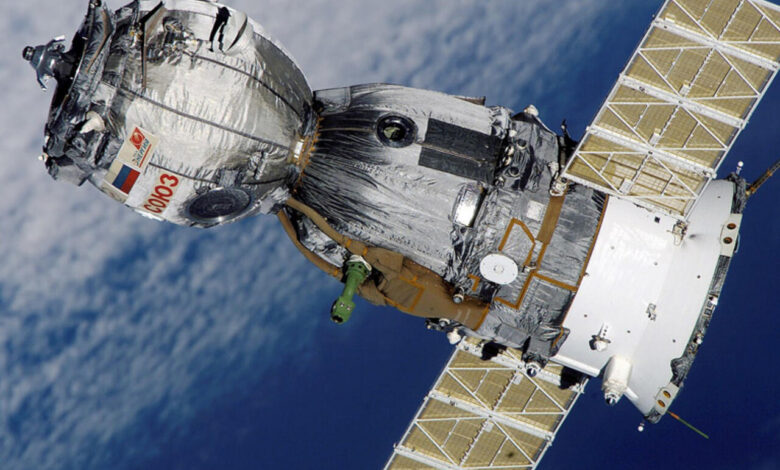
A Russian satellite approached within an estimated 500 metres of a commercial Earth observation satellite, raising questions about the manoeuvre’s objectives. The commercial satellite’s operator provides services to Ukraine, but the nature of the Russian mission and the purpose of the approach remain unclear.
LeoLabs, a company specialising in monitoring orbital activity, said the movements of the Russian satellite Cosmos 2612 were consistent with “rendezvous and proximity operations”, which bring two spacecraft close together. It stressed, however, that the intentions remained unclear and that the behaviour warranted continued monitoring.
Astrophysicist Jonathan McDowell noted that spacecraft rendezvous and docking operations are common, but said the incident could represent a precedent for one spacecraft approaching another without permission.
A Staged Approach
The manoeuvre began on October 15, when Cosmos 2612 started closing the distance to ICEYE-X36. The separation decreased from approximately 350 kilometres to less than five kilometres by the following morning, according to LeoLabs data.
The Russian satellite then remained nearby throughout the weekend, making minor trajectory adjustments to maintain a position relatively close to the commercial spacecraft.
LeoLabs estimated that the separation narrowed to around 500 metres at one stage. It cautioned, however, that precise measurements carried some uncertainty because of the repeated manoeuvres and tracking complexities. According to its data, the Russian satellite began moving away on Monday.
ICEYE, the commercial satellite’s operator, confirmed on Monday that it was monitoring the situation closely. The company said its constellation was designed to ensure service continuity and resilience but declined to provide further details.
Images Day and Night
ICEYE-X36 uses synthetic aperture radar, a technology that enables high-resolution imaging day and night, regardless of weather conditions, according to NASA.
The company previously announced that its satellites were being used to provide Ukrainian armed forces with continuous information about conditions on the ground. However, it remained unclear whether this particular satellite had contributed to those services, and the company declined to comment.
A Royal United Services Institute (RUSI) report published in June had identified orbital adjustments by four Russian-controlled satellites since May to align with the path of the same satellite.
Objectives Remain Unclear
According to LeoLabs, such manoeuvres can be used to inspect another spacecraft, identify its characteristics, track it or potentially interfere with its operation. The company stressed, however, that the capabilities demonstrated during the incident did not necessarily establish hostile intent.
It added that these capabilities could support intelligence gathering, orbital inspections, interference with other systems or preparations for future space operations.
RUSI, meanwhile, suggested that the approach could be intended to exert pressure or attempt to jam communications using radio noise. The institute noted that options for protecting satellites remain limited and that securing them in orbit is difficult.